
February 24, 2026

The network helping ex-Muslims become Catholic

Thomas Edwards
More
Related
Min read
share

Across the world, thousands of Muslims leave Islam each year to join the Catholic faith. Islam, which follows the teaching of the 7th-century merchant Muhammad, is the world’s second-largest faith and, according to some interpretations of its law, sharia, adherents must remain faithful to the religion or face execution, making the journey out potentially dangerous. 

Indeed, some Muslim countries have laws under which the state will execute anyone who commits apostasy. This has led to parts of the world where it is almost impossible to practise the Christian faith. In 2025, when International Christian Concern posted a video about the underground Church in Somalia, a country that is almost entirely Muslim, the responses were telling. Violent comments flooded in, such as: “They should be burned. If a person leaves the religion of Islam, they have no place to be sent to the hereafter,” and “May Allah destroy the people who are underground.”
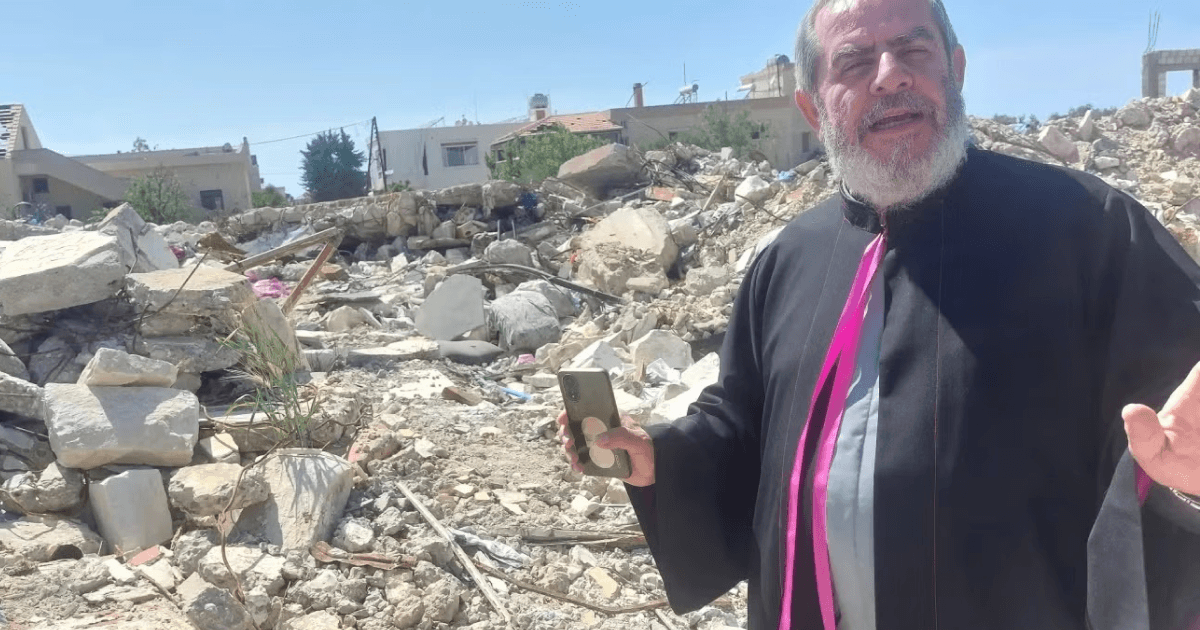
The hostility is not limited to Muslim-majority countries. In the United Kingdom, one of the most prominent Muslim apologists, Ali Dawah, has openly said that in an Islamic state capital punishment would be administered for those who leave Islam and speak ill of its doctrines. Calling for the killing of those who leave, he explained on his YouTube channel: “Little weaklings who leave their religion and cause corruption in the land by spreading it, the capital punishment in Islamic law would be applied to you. We have no doubt and we are proud of that.”

However, what is perhaps more shocking is that when Muslims do make the potentially perilous decision to leave their religion, they are sometimes met with indifference by local Catholic communities. Fear of reprisals, lack of evangelical commitment and even racial prejudice can prevent converts in some of the world’s most dangerous places from finding their way home to the Catholic faith.

Since 2024, the St Nicholas Tavelić Network has been working to address this. A 300-member underground network of former Muslims, it exists to encourage, inform and catechise. Named after St Nicholas Tavelić, a Croatian Franciscan martyred in Jerusalem after refusing to convert to Islam, the network spans countries across the world, with a presence on every continent. Hassan, one of the network’s founders, a former Shiite Muslim who uses only his first name for safety reasons, explains: “The mission is global. We work in the diaspora and throughout the Muslim world.”

Highlighting some of the problems converts from Islam experience, Hassan recounts several troubling stories. He describes a priest in North Africa reacting to a Christian convert by saying: “They must be mentally ill, because to become Christian in a country like this, an Islamic country, you have to give up everything.” In another case, he recalls how a priest in Egypt was so angered by a recent convert’s appearance in his congregation that, after a heated discussion, he slapped him across the face. He explains that a recent convert, baptismal certificate in hand, can arrive at Mass and be treated as if he were not Catholic, and that those seeking Baptism can be told: “Do not worry about being baptised. We cannot do that for you.”

The network is not in the business of westernisation, but of promoting devout and serious Catholicism which seeks the salvation of all. Hassan explains that for some the initial attraction to Christianity is the “biggest possible statement against Islam in their own family and community”.

But that is not the aim of the St Nicholas Tavelić Network. “When we become Catholic, we do not immediately try to replicate contemporary Catholic culture,” Hassan explains. “We are converting to a different understanding of who God is, what He has done for us and how we should live and worship.” Elaborating on some of the difficulties the network encounters, he says: “The biggest problem in the convert community is alcoholism. They discover that alcohol is permitted and suddenly think that because it is permitted, they can drink.”

In March 2024, the network took the extraordinary step of arranging its first sacramental tour, during which a missionary priest travelled across North Africa bringing the sacraments to former Muslims. Shortly afterwards, the priest presented the group’s charism to Pope Francis and received a papal exhortation, with the Pope instructing the group to continue preaching, administering the sacraments and catechising.

Since then, the network has grown significantly. It has adapted its own OCIA course to suit its context, developed liturgical formation and provides mutual support across different countries.

Each convert carries a distinct and often courageous path to Christ. For Hassan, leaving his Shiite faith was deeply troubling. “At a certain level, I did not want it to be true, because it was about to ruin my life. And at a certain level, it did,” he explains. He began studying Christianity with the intention of refuting it, but found Catholicism, as presented by Augustine and St Thomas Aquinas, intellectually convincing. The catalyst came during the consecration at Midnight Mass in 2018, when he recognised Jesus as truly present in the Eucharist. He was baptised at the end of 2019. Initially, he struggled to find his place in his new faith, noticing what he perceived as a laxity that he found difficult to accept.

He was also eager to learn more, but found that “every time I tried to learn about my own religion, the community did not have much to offer.” He recalls asking about custody of the eyes and being told: “That sounds a bit Tridentine.” Eventually, while in London, he found the Dominicans in north London, where the Traditional Latin Mass was offered in the Dominican rite, which he appreciated for its simplicity and reverence.

He notes the particular problems women from conservative Muslim families face when trying to become Catholic. Close family bonds, which expect them to live at home until marriage, do not afford the opportunities necessary to receive Catholic instruction in preparation for the sacraments. The network often advises these women to seek financial independence, with Hassan stating that there are hundreds across the UK alone.

Looking ahead, Hassan is clear about what must be done. He says it is a matter of urgency that the network becomes better known, as “we keep finding people who run into security crises because they did not meet us early enough to avoid those situations.” As well as signposting those in need to its work, he encourages Catholics to keep the First Friday and First Saturday devotions and to ask priests to mention the conversion of Muslims in their prayers, ideally with the congregation.

For Hassan, the group’s ministry is not merely a response to present needs but has a prophetic dimension. Citing Isaiah 60, which mentions Kedar, the descendants of Ishmael’s son, coming to Zion and acknowledging the God of Israel, and Psalm 72, which speaks of the kings of Sheba bringing gifts, he believes that Islam as a whole will one day come to the Catholic faith.

Readers who would like to know more about their work can visit their website

Across the world, thousands of Muslims leave Islam each year to join the Catholic faith. Islam, which follows the teaching of the 7th-century merchant Muhammad, is the world’s second-largest faith and, according to some interpretations of its law, sharia, adherents must remain faithful to the religion or face execution, making the journey out potentially dangerous. 

Indeed, some Muslim countries have laws under which the state will execute anyone who commits apostasy. This has led to parts of the world where it is almost impossible to practise the Christian faith. In 2025, when International Christian Concern posted a video about the underground Church in Somalia, a country that is almost entirely Muslim, the responses were telling. Violent comments flooded in, such as: “They should be burned. If a person leaves the religion of Islam, they have no place to be sent to the hereafter,” and “May Allah destroy the people who are underground.”
The hostility is not limited to Muslim-majority countries. In the United Kingdom, one of the most prominent Muslim apologists, Ali Dawah, has openly said that in an Islamic state capital punishment would be administered for those who leave Islam and speak ill of its doctrines. Calling for the killing of those who leave, he explained on his YouTube channel: “Little weaklings who leave their religion and cause corruption in the land by spreading it, the capital punishment in Islamic law would be applied to you. We have no doubt and we are proud of that.”

However, what is perhaps more shocking is that when Muslims do make the potentially perilous decision to leave their religion, they are sometimes met with indifference by local Catholic communities. Fear of reprisals, lack of evangelical commitment and even racial prejudice can prevent converts in some of the world’s most dangerous places from finding their way home to the Catholic faith.

Since 2024, the St Nicholas Tavelić Network has been working to address this. A 300-member underground network of former Muslims, it exists to encourage, inform and catechise. Named after St Nicholas Tavelić, a Croatian Franciscan martyred in Jerusalem after refusing to convert to Islam, the network spans countries across the world, with a presence on every continent. Hassan, one of the network’s founders, a former Shiite Muslim who uses only his first name for safety reasons, explains: “The mission is global. We work in the diaspora and throughout the Muslim world.”

Highlighting some of the problems converts from Islam experience, Hassan recounts several troubling stories. He describes a priest in North Africa reacting to a Christian convert by saying: “They must be mentally ill, because to become Christian in a country like this, an Islamic country, you have to give up everything.” In another case, he recalls how a priest in Egypt was so angered by a recent convert’s appearance in his congregation that, after a heated discussion, he slapped him across the face. He explains that a recent convert, baptismal certificate in hand, can arrive at Mass and be treated as if he were not Catholic, and that those seeking Baptism can be told: “Do not worry about being baptised. We cannot do that for you.”

The network is not in the business of westernisation, but of promoting devout and serious Catholicism which seeks the salvation of all. Hassan explains that for some the initial attraction to Christianity is the “biggest possible statement against Islam in their own family and community”.

But that is not the aim of the St Nicholas Tavelić Network. “When we become Catholic, we do not immediately try to replicate contemporary Catholic culture,” Hassan explains. “We are converting to a different understanding of who God is, what He has done for us and how we should live and worship.” Elaborating on some of the difficulties the network encounters, he says: “The biggest problem in the convert community is alcoholism. They discover that alcohol is permitted and suddenly think that because it is permitted, they can drink.”

In March 2024, the network took the extraordinary step of arranging its first sacramental tour, during which a missionary priest travelled across North Africa bringing the sacraments to former Muslims. Shortly afterwards, the priest presented the group’s charism to Pope Francis and received a papal exhortation, with the Pope instructing the group to continue preaching, administering the sacraments and catechising.

Since then, the network has grown significantly. It has adapted its own OCIA course to suit its context, developed liturgical formation and provides mutual support across different countries.

Each convert carries a distinct and often courageous path to Christ. For Hassan, leaving his Shiite faith was deeply troubling. “At a certain level, I did not want it to be true, because it was about to ruin my life. And at a certain level, it did,” he explains. He began studying Christianity with the intention of refuting it, but found Catholicism, as presented by Augustine and St Thomas Aquinas, intellectually convincing. The catalyst came during the consecration at Midnight Mass in 2018, when he recognised Jesus as truly present in the Eucharist. He was baptised at the end of 2019. Initially, he struggled to find his place in his new faith, noticing what he perceived as a laxity that he found difficult to accept.

He was also eager to learn more, but found that “every time I tried to learn about my own religion, the community did not have much to offer.” He recalls asking about custody of the eyes and being told: “That sounds a bit Tridentine.” Eventually, while in London, he found the Dominicans in north London, where the Traditional Latin Mass was offered in the Dominican rite, which he appreciated for its simplicity and reverence.

He notes the particular problems women from conservative Muslim families face when trying to become Catholic. Close family bonds, which expect them to live at home until marriage, do not afford the opportunities necessary to receive Catholic instruction in preparation for the sacraments. The network often advises these women to seek financial independence, with Hassan stating that there are hundreds across the UK alone.

Looking ahead, Hassan is clear about what must be done. He says it is a matter of urgency that the network becomes better known, as “we keep finding people who run into security crises because they did not meet us early enough to avoid those situations.” As well as signposting those in need to its work, he encourages Catholics to keep the First Friday and First Saturday devotions and to ask priests to mention the conversion of Muslims in their prayers, ideally with the congregation.

For Hassan, the group’s ministry is not merely a response to present needs but has a prophetic dimension. Citing Isaiah 60, which mentions Kedar, the descendants of Ishmael’s son, coming to Zion and acknowledging the God of Israel, and Psalm 72, which speaks of the kings of Sheba bringing gifts, he believes that Islam as a whole will one day come to the Catholic faith.

Readers who would like to know more about their work can visit their website

subscribe to
the catholic herald

Continue reading your article with a subscription.
Read 5 articles with our free plan.
Subscribe

subscribe to the catholic herald today

Our best content is exclusively available to our subscribers. Subscribe today and gain instant access to expert analysis, in-depth articles, and thought-provoking insights—anytime, anywhere. Don’t miss out on the conversations that matter most.
Subscribe