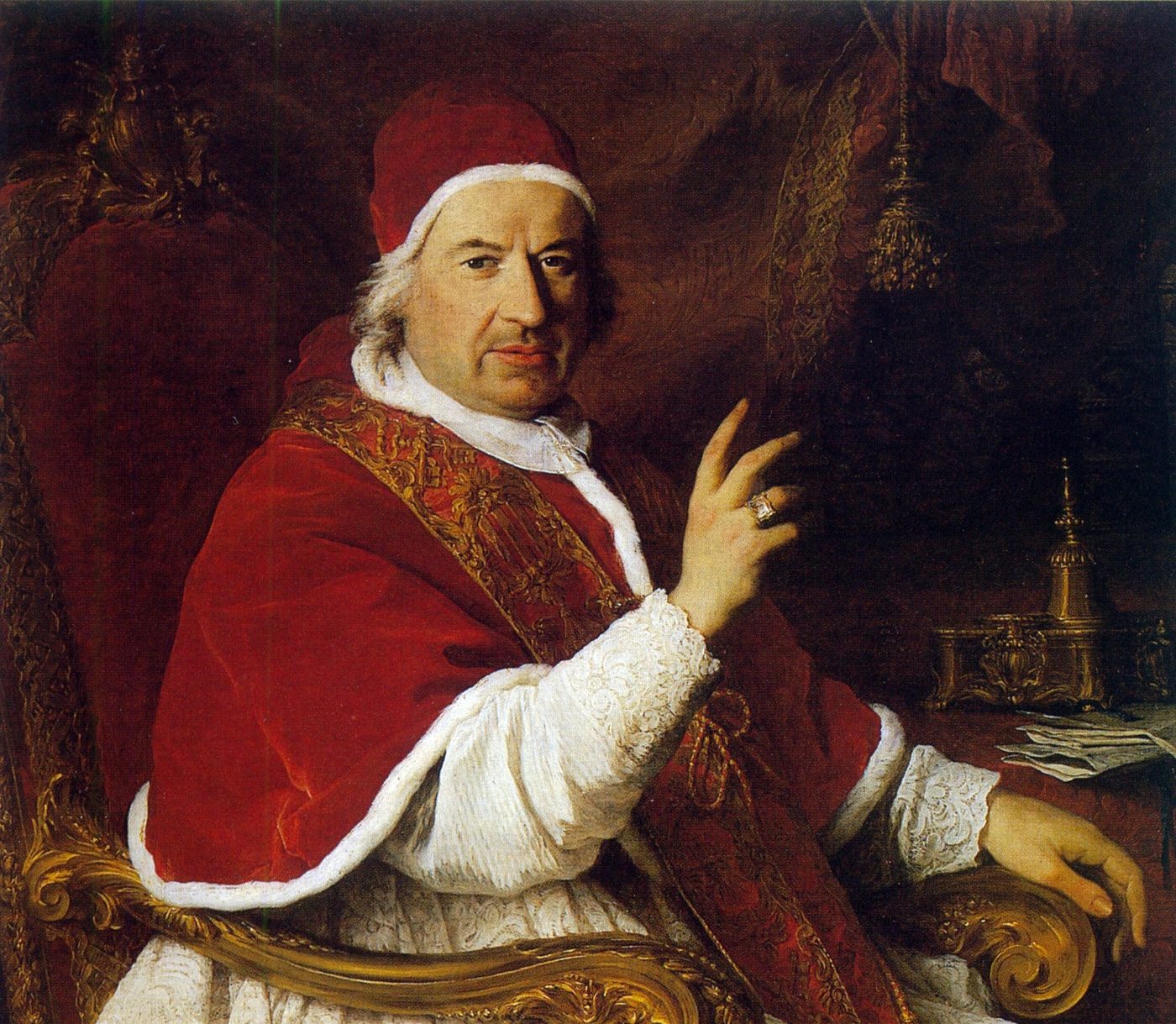






Thomas Storck looks at Benedict XIV's 1745 encyclical letter, Vix pervenit, which he says is surprisingly timely.
There is a certain group of Catholics, doubtless more often found in the US than in the UK, who reject the entire notion of Catholic social teaching. The popes, they say, have overstepped their bounds, they have no more right to teach on the morality of economic transactions than they have to give lectures on how to construct a building or how to bake a cake. Such critics usually know little of history. There is, in fact, a long list of papal interventions into matters of economic morality, dating back centuries. Since the time of the Fathers of the Church, Catholic theologians had condemned the taking of interest on loans. At first these denunciations were somewhat unfocused. But during the course of a sophisticated theological debate from the 12th through to the 18th century, it became clear that what was objectionable was the taking of interest simply because of a loan contract. The capstone of this debate was Benedict XIV’s 1745 encyclical, Vix pervenit. Benedict summed up more than six centuries of intense theological discussion in a few principles: