

Many find the Book of Ezekiel difficult. Although the vivid descriptions of Ezekiel’s visions are enticing, their complexity is challenging. In addition, Ezekiel contains several unrelenting and strongly worded oracles against Israel and neighbouring countries which are difficult for the modern reader to relate to. Ezekiel, however, has many hidden gems.
I was drawn to Ezekiel when, as a retired neurologist, I was studying the Bible in seminary, looking for science. I felt that science should be entrenched in the Bible, since it is a way of attaining new truth. In particular, the wheels of the Chariot Vision caught my attention, as wheels are such an important technological tool in our world, and I decided to look further.
Ezekiel was exiled to Babylon at the age of 25. His book covers 20 years of prophecy there. The Book of Ezekiel begins when he was 30 years old, and he says: “I was among the exiles by the River Chebar; the heavens were opened, and I saw visions of God.”
He saw an amber colour surrounded by fire emerging from a storm cloud. As it came closer and touched the ground beside him, he describes a structured vision with three distinct layers. At the top was a figure of a man with a glowing amber chest surrounded by fire, with fire also below his waist. In the middle layer were four creatures, each with four wings and four faces: human, eagle, lion, and ox. These were arranged at right angles to each other around flaming coals. The lower layer consisted of four wheels. This “chariot” darted back and forth, always in straight lines, obedient to the spirit’s directions like a flash of lightning, and made rumbling noises as it moved.
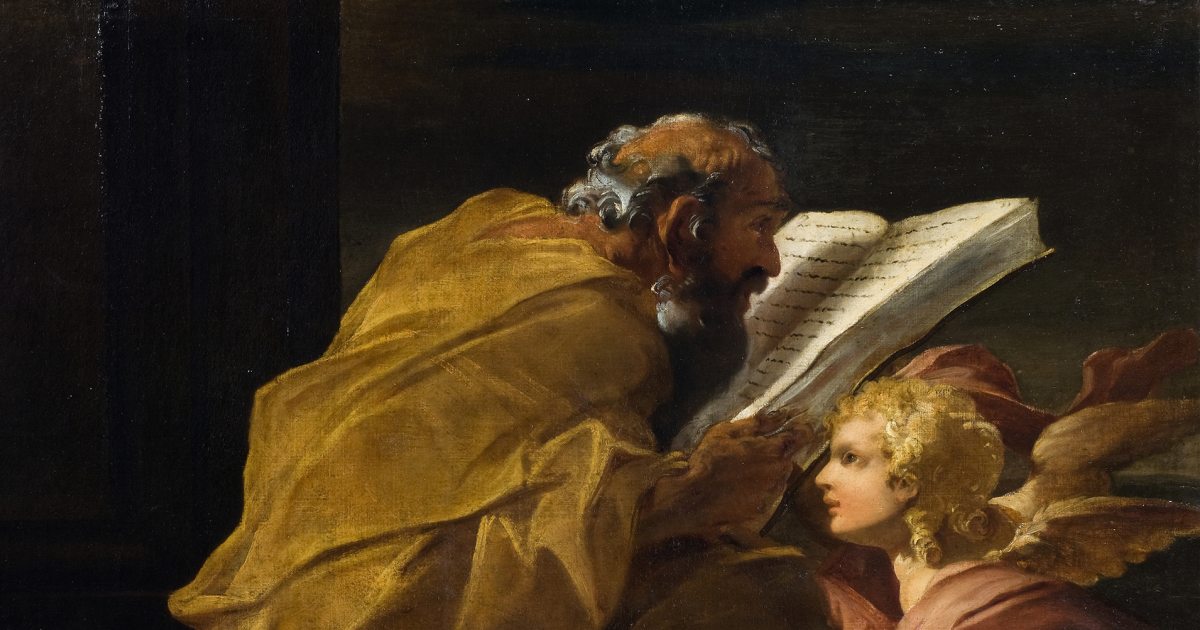
I was attracted by the mysterious creatures. Jewish sources say they were a type of angel. However, they also had human bodies and hands and so seem to be halfway between earthly and heavenly creatures. Early Christian Fathers inferred that the animal faces represented the four evangelists: Mark the lion, John the eagle, Luke the ox, and Matthew the human. This was partly through anthropomorphism, seeing the eagle as spiritual and the lion as decisive, but also seeing the ox as a sacrificial animal and the man as forming a link with Christ.
Plato, who lived two centuries after Ezekiel, compared the faces to parts of the soul. St Jerome, however, began to see the foursome as moral decision-making character forces. The faces had a fixed relationship with each other, with the human at the front, the lion to the right, the ox to the left, and the eagle at the rear. He thought that the eagle hovered above the other three and kept them under control, saying that the eagle is the seat of conscience. The chariot running straight equated with moral rectitude. To achieve this, the four character forces must be balanced by conscience and the spirit. The creatures are therefore an analogy of human decision-making.
How did these four animal faces come to be represented in Ezekiel’s chariot? The vision was almost certainly an objective phenomenon, and Ezekiel himself played no part in their choice. However, it is interesting that huge guardian statues called Lamassu were made in Babylonia to guard the king’s palace and were composites of three or four animals. King Ashurnasirpal II, over 200 years before Ezekiel, had a Lamassu made of the same four animals as the chariot vision: human, lion, ox, and presumed eagle.
Why would the king want those four particular animals? Kings in Babylon were allied to their gods, who were closely associated with the planets and stars. The pattern of constellations at different times of the year, an early zodiac, was used as a farming calendar. The king wanted to be associated with the most important times of the year: the summer and winter solstices and the spring and autumnal equinoxes. Animals that enhanced the king’s prestige were therefore used to name the overhead constellations at these times: lion and human (water bearer) for summer and winter, and ox and eagle for spring and autumn. These four faces thus became signs of kingly prestige and power, linking the king to the gods and to the four quadrants of the cosmos.
Through this link with Babylonian kings, the four faces of Ezekiel’s chariot also ascribed these highest symbols of power to God. Biblical critics using the historical-critical method would likely conclude that Ezekiel had been influenced by his surroundings. However, as seen in the prophet Isaiah, God may use existing cultural forms to express revelation.
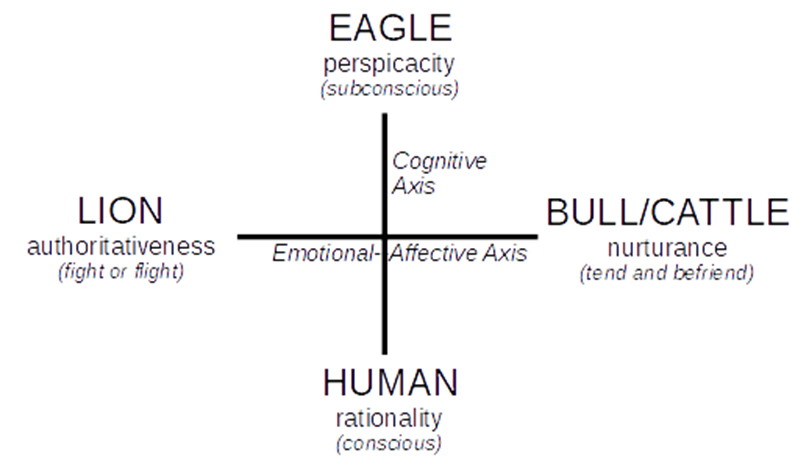
In terms of character forces, the traits commonly associated with the four faces are rationality for the human, perspicacity for the eagle, authoritativeness for the lion, and nurturance for the ox. In modern psychological terms, two axes of action can be discerned in the creatures: a cognitive axis from front to back and an emotional axis from side to side. On the cognitive axis, rationality and insight or intuition are traits used in gaining new knowledge. On the emotional axis, nurturance stands opposite authoritativeness. The balancing of authority and affectionate care is fundamental to decision-making.
In terms of the cognitive axis, it has been shown that insight and intuition markedly aid decision-making. These two axes, cognitive and emotional, represent the main systems of human decision-making. Psychology therefore tends to support the four animal faces as an analogy for decision-making.
Are there practical insights to be drawn from the creatures? First, it is important to note the pivotal role emotion plays in decision-making. This has been shown by Damasio, but the chariot reveals how tightly reason and emotion are balanced. Emotion can also influence intuition. If we sense a correct decision by intuition, it is important to check whether we are emotionally invested in the chosen outcome. If so, we should reconsider the decision rationally.
Thirdly, inputs from intuition, insight, conscience, and the spirit, represented by the eagle, are largely subconscious and rapid, whereas reason is conscious and deliberate. Conscience can err, but St Jerome says that within conscience is synderesis, an enduring principle which resists all evil and assents to everything good, which St Thomas Aquinas says cannot err. The eagle therefore has access to natural law.
We must also keep in mind that there are moral absolutes, such as putting God first, the sanctity of human life, and the sacredness of marriage, which should never be overturned. The chariot shows us that without the input of the spirit the chariot goes off course. Prayer for the guidance of the Holy Spirit is therefore essential in all important decisions.
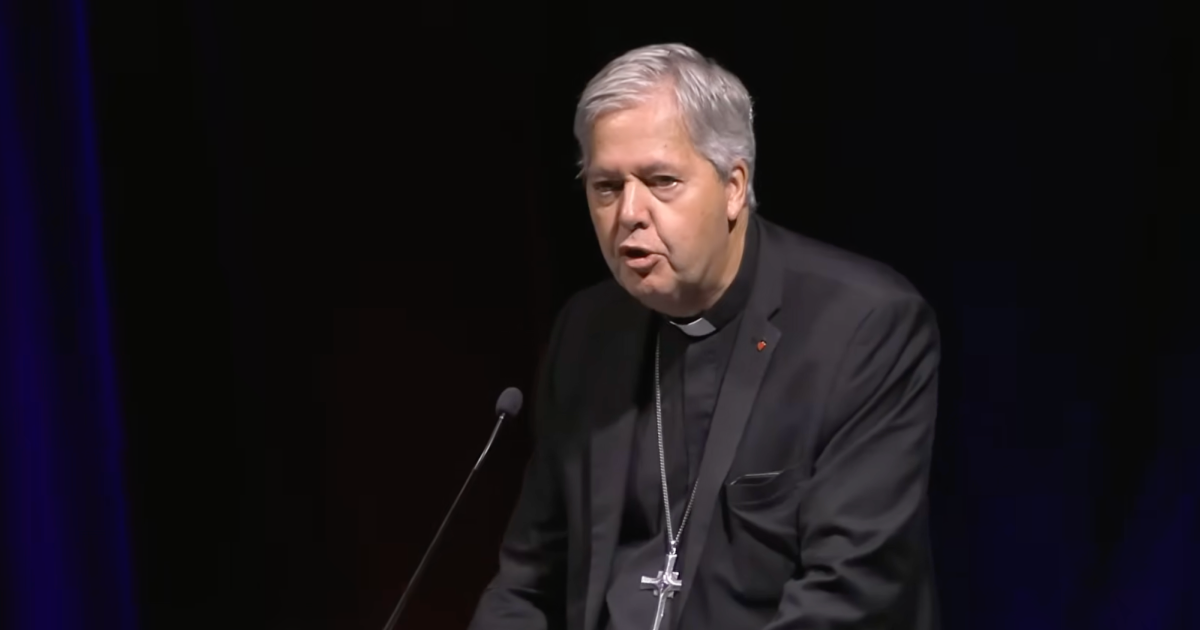
Rev Dr Patrick Pullicino is a retired neurologist and Maltese Catholic priest ordained for the Archdiocese of Southwark in south-east England. He has recently obtained a PhD from St Mary's Twickenham on Ezekiel entitled: The Science of Ezekiel's Chariot of YHWH Vision as a Synthesis of Reason and Spirit.