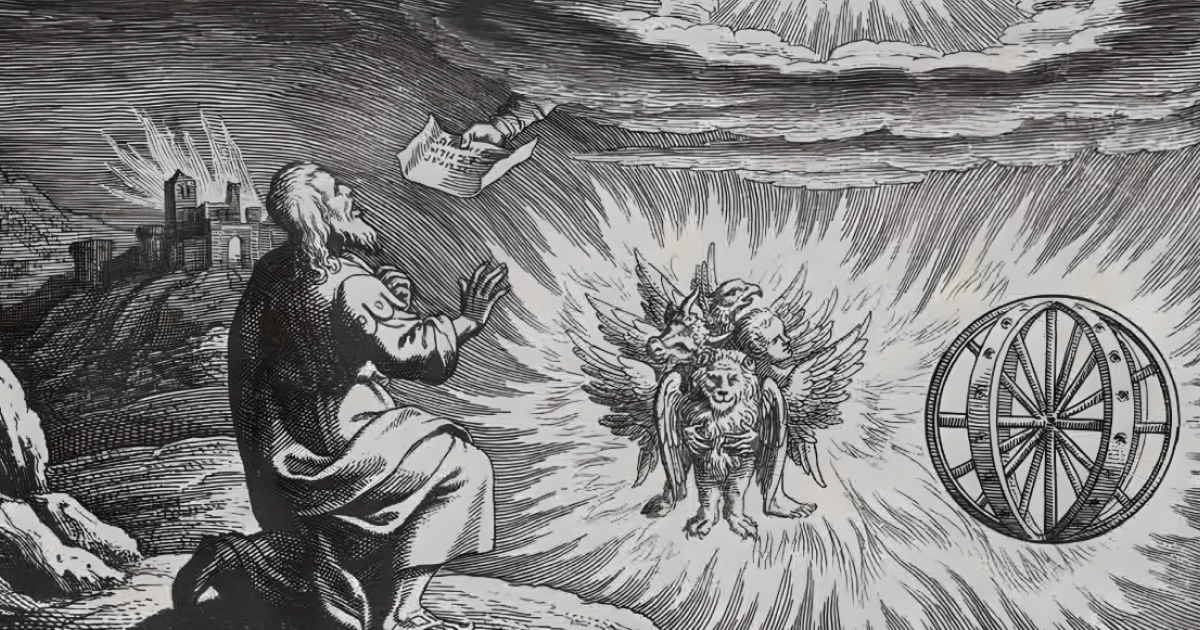


The whole book of Ezekiel is structured in an increasingly complex hierarchy of symbolism, progressing from metaphor to metaphoric narratives, sign actions and finally the most detailed symbolism in his visions. Among these, the Chariot Vision could be considered the most complex and mystical in the whole Bible.
Why does symbolism pervade Ezekiel? The Old Testament scholar J. Goldingay asks: “How does God, who is infinite beyond human experience and comprehension, explain Himself to people in ways they can understand?” Symbolism is one answer. The philosopher Ernst Cassirer argued that humans are more accurately described as symbolic animals than rational ones. The brain preferentially uses symbolic reasoning because it enables an intuitive appreciation of reality that links cognition and emotion: a symbol encapsulates the reality it represents. It also allows our minds to reason with incomplete or imprecise information.
The celebrated 12th-century Jewish thinker Moses Maimonides described Ezekiel’s Chariot Vision as “divine science”, by which he meant that it presents the divine in a rational way. Three levels in the chariot give organisation to its structure: the likeness of a man at the top, the angel-like creatures in the middle and the wheels at the bottom. These are clearly separated into three levels in the text of Ezekiel.
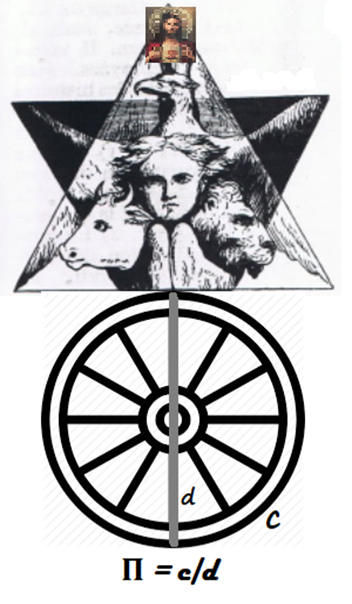
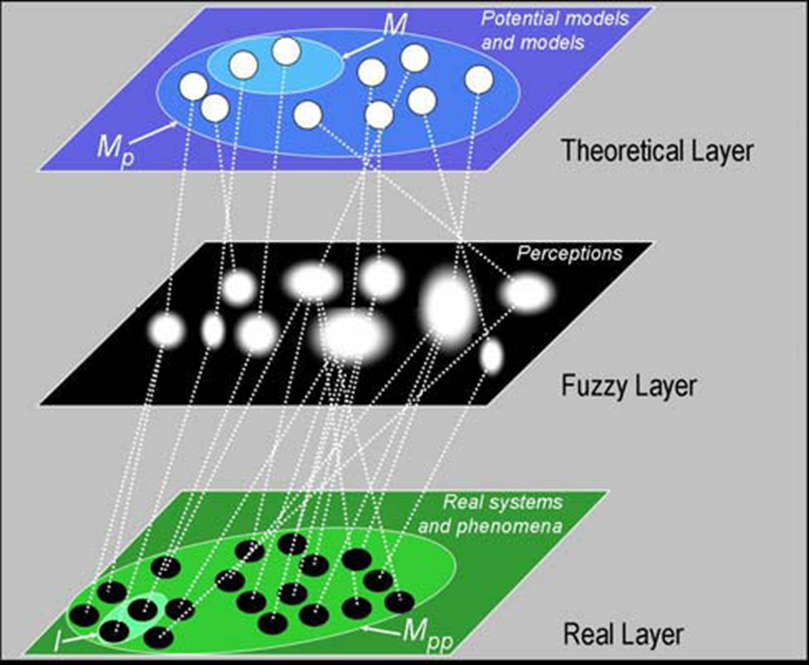
Of the three levels, the wheels – being a human construct and measurable – are concrete. The most spiritual level is the figure of a man at the top, whom Ezekiel called the glory of the God of Israel. The creatures in the middle level possess both human and angelic characteristics, with human bodies and hands but two sets of wings. They are not angels but appear to move between earthly and spiritual domains. The middle level is therefore transitional and, of the three levels, the richest in symbolism.
The layers of the Chariot Vision resemble a scientific experiment that moves from a spiritual or “abstract” deity figure at the top to measurable, concrete wheels at the bottom in two steps. However, the complex middle layer is immeasurable and does not fit a traditional experimental structure. Natural phenomena such as clouds or lightning are similarly complex and cannot be directly measured or analysed within a conventional experimental framework.
Recently Seising has proposed a modification of the traditional two-level scientific experimental structure to allow a third, complex middle level using fuzzy mathematics. The three levels of this “fuzzy epistemology” appear to correspond closely to Ezekiel’s chariot structure, whose levels are connected through the chariot’s movements: the spirit which moves the structure at the top, lightning flashing from the middle at each movement, and the wheels which turn.
This analysis suggests not only a reason-based connection between the levels but also that the chariot contains a three-step revelatory process: from the spiritual or abstract, through an immeasurable symbolic level, to a concrete measurable level.
Interestingly, many of Ezekiel’s visions fit into this three-level system, and it may represent a broader pattern of structured revelation elsewhere in the Bible. In Seising’s epistemology, the concrete “condensate” is contained in more complex form within the middle and upper levels. The system is also science-based, because the complex middle level can be analysed mathematically using fuzzy sets and systems.
Fuzzy mathematics was developed by Lotfi Zadeh, a mathematician at Berkeley, to analyse incomplete or imprecise information. He recognised that the human brain does not function like a computer but relies heavily on symbolic reasoning. Our minds can identify something even when only part of it is visible, or derive a more precise meaning from an unclear statement. For example, when we are told someone is “middle-aged”, the brain reaches a closer estimate of their numerical age by drawing on other associated information. Zadeh also observed that it is a pervasive feature of nature for things to be “fuzzy”.
From Ezekiel it appears that divine revelation can be presented as a three-step process. Psalm 144:6 says: “Flash your lightnings; rout the foe, shoot your arrows and put them to flight.” God’s message may first appear as a flash of lightning, which can seem threatening but remains uncertain in meaning. Arrows, however, are concrete objects that bring a precise message with them. In the three-layer fuzzy epistemology structure, the concrete object is what most clearly communicates the message. It is therefore possible to work backwards from the concrete object to help decipher the uncertain message of the middle level.
Several practical observations follow. First, since the brain uses symbols and symbols engage both cognition and emotion, the decision-making system of Ezekiel’s creatures discussed in the first article of this series is likely involved in interpreting symbols. Second, symbols can be interpreted by beginning with a related concrete object. Third, prophets possess a particular gift for deciphering symbols in order to present concrete warnings or predictions. They can also express concrete future events in symbolic form.
Taken together, this framework suggests that Ezekiel’s visions are not simply mysterious imagery but a structured form of revelation. The symbolic middle layer does not obscure meaning but acts as a bridge between the divine and the human. Through symbols, lightning-like flashes of meaning and finally concrete signs, the message moves from the spiritual realm into forms that human beings can recognise and understand. In this way Ezekiel’s Chariot Vision offers not only a theological insight into the nature of revelation, but also a reminder that the language of Scripture often communicates deepest truths through symbol rather than direct explanation.
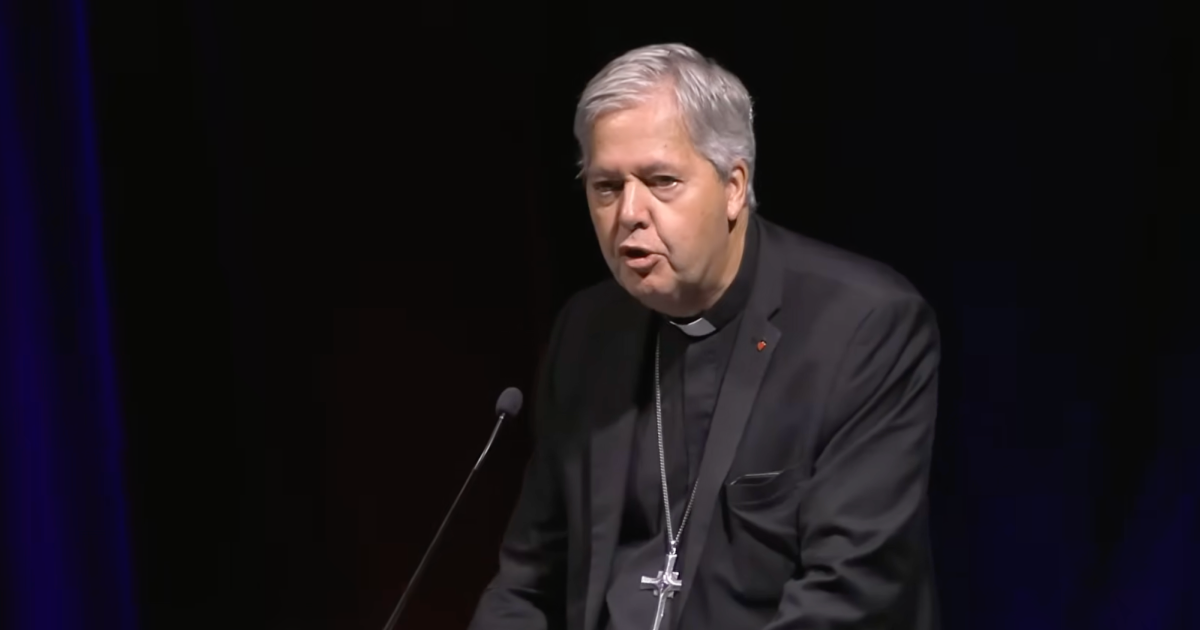
Rev Dr Patrick Pullicino is a retired neurologist and Maltese Catholic priest ordained for the Archdiocese of Southwark in south-east England. He has recently obtained a PhD from St Mary's Twickenham on Ezekiel entitled: The Science of Ezekiel's Chariot of YHWH Vision as a Synthesis of Reason and Spirit.