


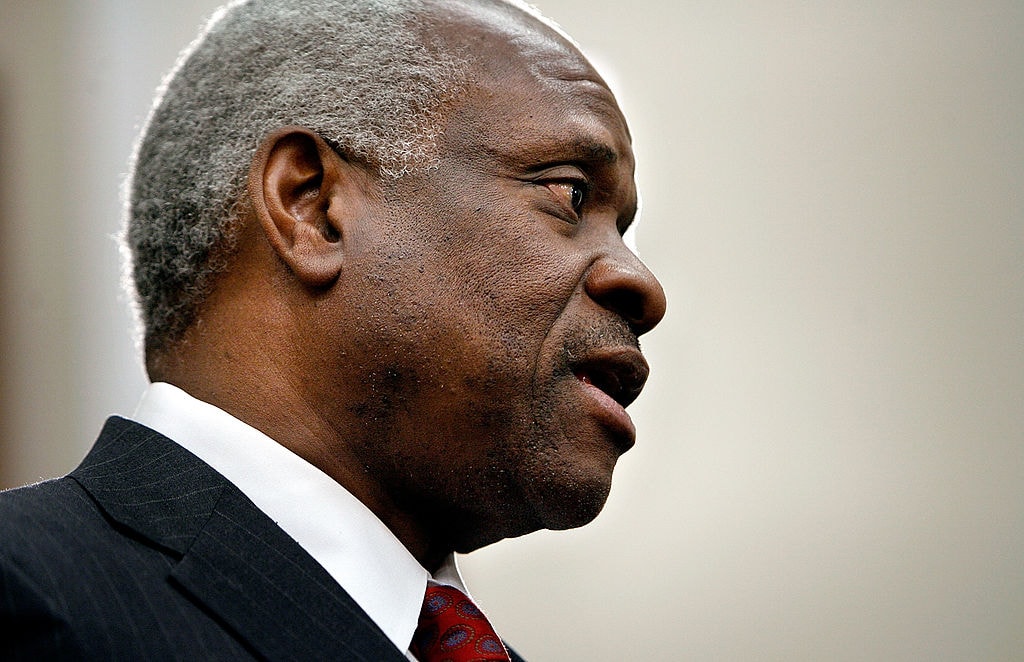
Justice Clarence Thomas has written the first Supreme Court opinion in history which documents at length the eugenicist origins of abortion in America. What does this matter, and what does it mean for the future? There are simpler and more complex answers to those questions.The simple reason is that while the Court upheld a part of the Indiana law that requires respectful burial or cremation of human remains, it turned down an appeal to reinstate another part of the law that would ban abortions sought for reasons of sex-selection or disability. Thomas was rightly dismissive of Planned Parenthood’s disregard for fetal remains, writing in his Concurring Opinion: “I would have thought it could go without saying that nothing in the Constitution or any decision of this Court prevents a State from requiring abortion facilities to provide for the respectful treatment of human remains.” But Justice Thomas was determined to interpret the Court’s decision to turn down the appeal which would have banned sex-selective abortions.
12:00 AM
Finally, a Supreme Court justice recognises the eugenicist origins of abortion
justice clarence thomas has written the first supreme court opinion in history which documents at length the eugenicist origins of abortion ...
C C Pecknold

3 min read



Already a subscriber? Sign in
5freearticles every month
Continue reading with a free account. No card needed.
- Five free articles every thirty days, on any device you sign in on
- The Catholic Herald newsletter, every morning
- Subscribe whenever you like for everything: every article and the magazine



subscribe to the catholic herald today
Our best content is exclusively available to our subscribers. Subscribe today and gain instant access to expert analysis, in-depth articles, and thought-provoking insights—anytime, anywhere. Don’t miss out on the conversations that matter most.
Subscribe



