


March 19, 2026

Finding God in the age of the algorithm

Delphine Chui
More
Related
Min read
share

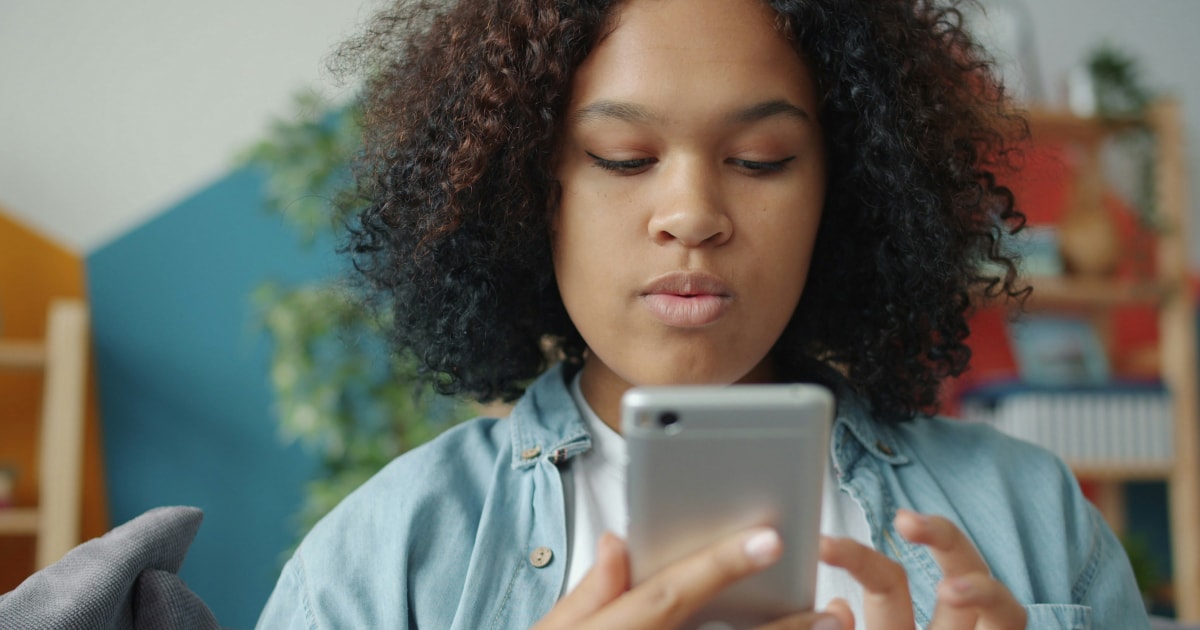
A growing number of young adults are encountering Christianity not in parish halls or through inherited tradition, but through Instagram reels, TikTok clips, YouTube testimonies, Catholic influencers and podcast algorithms. While the medium may feel modern, the Church’s instinct to meet people where they are is anything but.

The Catholic tradition has long recognised the potential of media as a tool for evangelisation. Pope Paul VI warned that the Church would be ‘guilty before the Lord’ if she failed to use the communications tools available to proclaim the Gospel; Pope John Paul II later described communication as the ‘first Areopagus of the modern age’, a new public square capable of uniting ‘humanity and turning it into what is known as a “global village”’; and Pope Benedict XVI reflected that new technologies allow people to meet ‘beyond the confines of space’, thereby making God ‘concretely present in today’s world’. He urged priests and evangelists to stand at the ‘crossroads of the new digital highways’, where so many now search for purpose, identity and meaning.
Pope Francis echoed this vision, observing that digital life is now ‘indistinguishable from the sphere of everyday life’. In such a landscape, the Church’s mission belongs not only to clergy but to the whole People of God, where lay Catholics (including professionals in media and technology) can play a vital role in amplifying the Gospel within the digital public square.

Storytelling has always sustained our faith: from Scripture, to the parables spoken by Christ, testimonies and stories of the saints passed down through families and communities, and anecdotes sharing personal witness across our social media feeds. The unchanging mission is to proclaim the Gospel in the places where hearts are open to listening.

While Paul’s blinding-light conversion on the road to Damascus may be the most famous, I have spoken to young adults who claim their social media conversions were as sudden, personal and disruptive. My own journey was not sparked by social media, but it was certainly fuelled by it. Through my screen, I began to see women who looked like me, shared similar interests, spoke like me and lived lives not unlike my own – yet with hearts deeply rooted in God. Watching them share their stories and their daily lives made me realise that this kind of life with God was not distant or reserved for someone else, but possible for me too. While they were not responsible for my personal conversion, their witness helped me stay the course.

Our age’s road to Damascus may well run through the ‘For You’ page on X/Twitter. For many, it begins with a curiosity about the Catholic ‘aesthetic’ – an appreciation for sacred architecture, monastic life or the beauty of the liturgy – that slowly opens a door. Far from being trivial or superficial, sharing the beauty of our faith publicly can be deeply meaningful, utilising an algorithm designed to maximise engagement, demand attention, monetise vanity and reward outrage as a courier of God’s grace.

This is encouraging. There has been a noticeable growth in church attendance in England and Wales since the Covid-19 pandemic, and Bible sales in both the United States and the United Kingdom climbed sharply last year.

Still, we must remember that social media does not merely distribute Christianity – it also refracts it, favouring charming personalities, compressed narratives and emotional immediacy. Conversion on these platforms is often presented in the form most suitable to digital life: before-and-after or trauma-and-healing. The pitfalls are obvious. When faith is reduced to content and branding, and spiritual authority assigned to personalities rather than clergy, the lines can easily be blurred between personal encounter and genuine theological education.

That is why online conversions can be both hopeful and fragile. Hopeful, because many are hungry for more than what secular life has to offer; fragile, because social media may awaken desire, but it cannot complete conversion.

We should recognise both the opportunity and the limitation here. An Instagram reel may persuade someone that confession is real, but it cannot absolve us of our sins. A YouTube apologist may explain the Eucharist brilliantly, but he cannot consecrate. A podcast may crack open our awareness of our interior lives, but it cannot replace a parish, priest or prayer.

Let this algorithmic age be a humbling and optimistic reminder that God writes straight with crooked lines. Ultimately, the faith is not merely an idea to be downloaded, but a life to be lived bodily, sacramentally and in communion with others. The Church, and we, must therefore resist the temptation to confuse reach with depth and screentime with embodiment.

The Church’s task now is to ensure that when people find Catholicism through social media, there is something real waiting on the other side of their screen for them: beautiful liturgy, orthodox preaching and genuine community.

A growing number of young adults are encountering Christianity not in parish halls or through inherited tradition, but through Instagram reels, TikTok clips, YouTube testimonies, Catholic influencers and podcast algorithms. While the medium may feel modern, the Church’s instinct to meet people where they are is anything but.

The Catholic tradition has long recognised the potential of media as a tool for evangelisation. Pope Paul VI warned that the Church would be ‘guilty before the Lord’ if she failed to use the communications tools available to proclaim the Gospel; Pope John Paul II later described communication as the ‘first Areopagus of the modern age’, a new public square capable of uniting ‘humanity and turning it into what is known as a “global village”’; and Pope Benedict XVI reflected that new technologies allow people to meet ‘beyond the confines of space’, thereby making God ‘concretely present in today’s world’. He urged priests and evangelists to stand at the ‘crossroads of the new digital highways’, where so many now search for purpose, identity and meaning.
Pope Francis echoed this vision, observing that digital life is now ‘indistinguishable from the sphere of everyday life’. In such a landscape, the Church’s mission belongs not only to clergy but to the whole People of God, where lay Catholics (including professionals in media and technology) can play a vital role in amplifying the Gospel within the digital public square.

Storytelling has always sustained our faith: from Scripture, to the parables spoken by Christ, testimonies and stories of the saints passed down through families and communities, and anecdotes sharing personal witness across our social media feeds. The unchanging mission is to proclaim the Gospel in the places where hearts are open to listening.

While Paul’s blinding-light conversion on the road to Damascus may be the most famous, I have spoken to young adults who claim their social media conversions were as sudden, personal and disruptive. My own journey was not sparked by social media, but it was certainly fuelled by it. Through my screen, I began to see women who looked like me, shared similar interests, spoke like me and lived lives not unlike my own – yet with hearts deeply rooted in God. Watching them share their stories and their daily lives made me realise that this kind of life with God was not distant or reserved for someone else, but possible for me too. While they were not responsible for my personal conversion, their witness helped me stay the course.

Our age’s road to Damascus may well run through the ‘For You’ page on X/Twitter. For many, it begins with a curiosity about the Catholic ‘aesthetic’ – an appreciation for sacred architecture, monastic life or the beauty of the liturgy – that slowly opens a door. Far from being trivial or superficial, sharing the beauty of our faith publicly can be deeply meaningful, utilising an algorithm designed to maximise engagement, demand attention, monetise vanity and reward outrage as a courier of God’s grace.

This is encouraging. There has been a noticeable growth in church attendance in England and Wales since the Covid-19 pandemic, and Bible sales in both the United States and the United Kingdom climbed sharply last year.

Still, we must remember that social media does not merely distribute Christianity – it also refracts it, favouring charming personalities, compressed narratives and emotional immediacy. Conversion on these platforms is often presented in the form most suitable to digital life: before-and-after or trauma-and-healing. The pitfalls are obvious. When faith is reduced to content and branding, and spiritual authority assigned to personalities rather than clergy, the lines can easily be blurred between personal encounter and genuine theological education.

That is why online conversions can be both hopeful and fragile. Hopeful, because many are hungry for more than what secular life has to offer; fragile, because social media may awaken desire, but it cannot complete conversion.

We should recognise both the opportunity and the limitation here. An Instagram reel may persuade someone that confession is real, but it cannot absolve us of our sins. A YouTube apologist may explain the Eucharist brilliantly, but he cannot consecrate. A podcast may crack open our awareness of our interior lives, but it cannot replace a parish, priest or prayer.

Let this algorithmic age be a humbling and optimistic reminder that God writes straight with crooked lines. Ultimately, the faith is not merely an idea to be downloaded, but a life to be lived bodily, sacramentally and in communion with others. The Church, and we, must therefore resist the temptation to confuse reach with depth and screentime with embodiment.

The Church’s task now is to ensure that when people find Catholicism through social media, there is something real waiting on the other side of their screen for them: beautiful liturgy, orthodox preaching and genuine community.

subscribe to
the catholic herald

Continue reading your article with a subscription.
Read 5 articles with our free plan.
Subscribe

subscribe to the catholic herald today

Our best content is exclusively available to our subscribers. Subscribe today and gain instant access to expert analysis, in-depth articles, and thought-provoking insights—anytime, anywhere. Don’t miss out on the conversations that matter most.
Subscribe