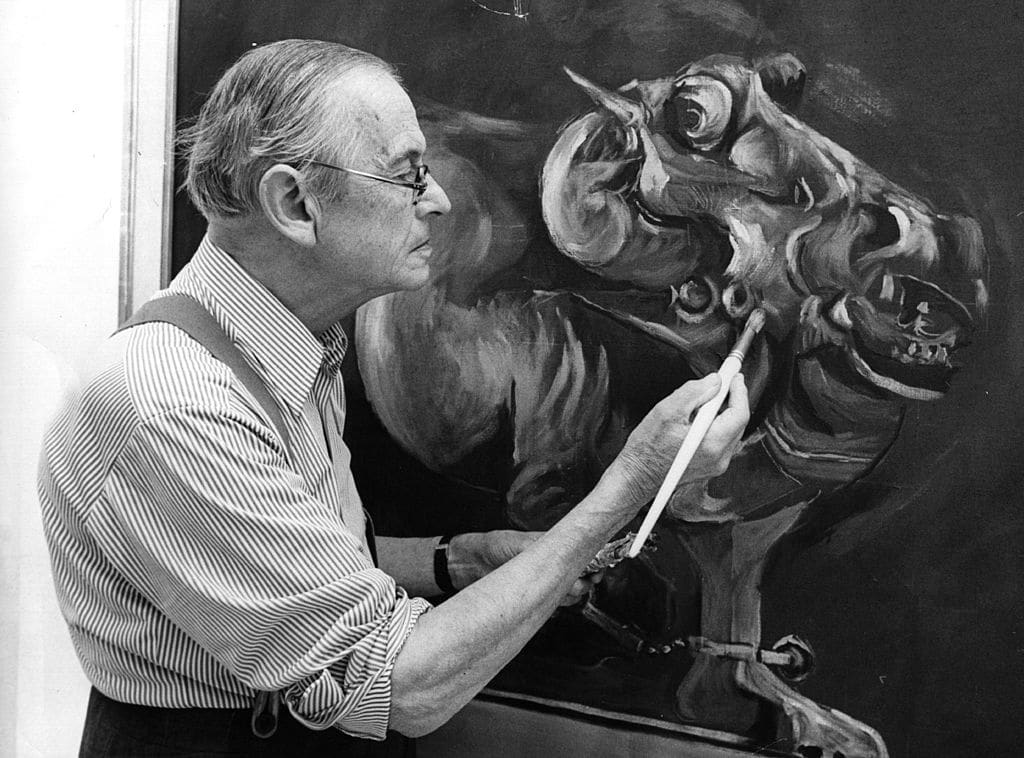



When Graham Sutherland (1903-1980) was asked by his fellow painter John Caxton whether his “paintings were made of two facets, flesh and bones?”, Sutherland replied in perhaps the only way he could as the 20th century’s most innovative Catholic artist: “No, flesh and spirit.”
Next year marks the 100th anniversary of the showcasing of Sutherland’s first works as an artist, setting out in 1923 as a fledgling engraver of English pastoral scenes set in a long-lost Catholic Eden that almost certainly never was. Yet it was the economic depression in the 1930s, and the ensuing collapse of the print market, which obliged Sutherland to convert his proto-Catholic sensibility to the painting of stark and sinister presences – a dramatic transformation with a modern twist, accompanied by Sutherland’s conversion to Catholicism in 1926, which led the esteemed art historian Kenneth Clark to dub Sutherland “the outstanding English painter of his generation”.