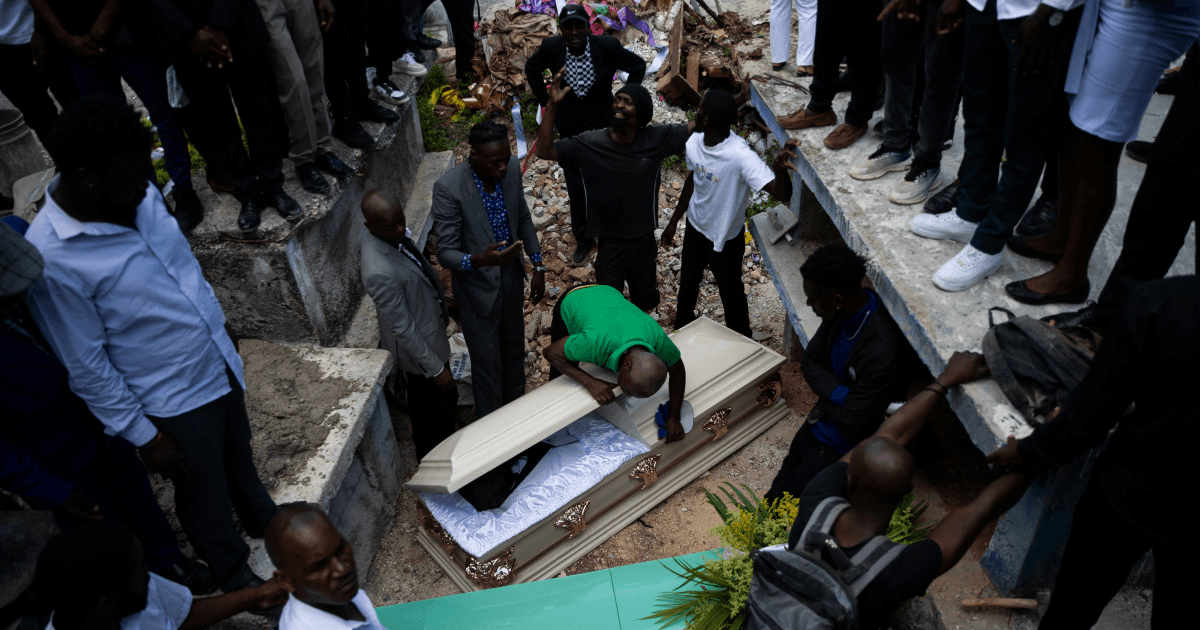
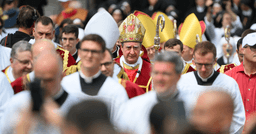
Pope Leo XIV has appealed for the release of hostages who had been taken by an armed gang in Haiti “without delay”. The massacre on the night of August 23 and 24 which preceded the kidnappings killed 47 people and wounded 22.
Among the victims in Kenscoff, on the outskirts of the capital Port-au-Prince, were a number of children. People who sought refuge in a church were also killed.
Following his recitation of the Angelus on Sunday, Pope Leo noted the “tragic reports” of the “horrific massacres” that had been carried out near the capital.
The Holy Father said: “I express my spiritual closeness to the victims and their families, and call for the immediate release of all hostages. I make a heartfelt appeal to all those in positions of authority to take concrete steps in order to ensure the safety of the population and put an end to all forms of violence.”
It has been reported that 13 women and children who had been taken hostage had been released.
Speaking to Vatican News, Maddalena Boschetti, a fidei donum missionary in Haiti since 2002, said the country is not only not improving, but is “at war” it is ravaged by armed gangs. “There are open fronts, there are rear areas, and there is an entire population that is suffering and trying to adapt to an increasingly complicated daily life,” she said.
Boschetti said Pope Leo’s words were “a comfort for all of us, not only for the missionaries, but also for ordinary people and the faithful”. Everyday tasks, such as travelling to work and getting food, have become increasingly difficult. The populace is faced with increasing prices, which is exacerbating the humanitarian situation.
She said that the massacre “lifted the veil for a moment” on the drastic situation in Haiti, which is seeing a “steady trickle of deaths, continuous violence, killings, kidnappings, and sexual violence.”
According to the United Nations Integrated Office in Haiti (BINUH), from April to June, 2026, at least 1,408 people were killed and 656 others injured.
The Special Representative of the Secretary-General in Haiti and Head of BINUH, Carlos Ruiz Massieu, said: “These figures show that the population continues to bear an unacceptable toll from violence. Their protection must remain at the heart of all efforts to restore security, particularly for children, women and other people exposed to heightened risks.”
In parts of the country, gangs are expanding their territorial control through indiscriminate attacks on localities and targeting members of self-defence groups. Locals, inside their homes or in the streets, and farmers have also been targeted. Gang attacks accounted for 55 per cent of all people killed or injured during the quarter.
At least 81 people were kidnapped across the country, a rise from 57 in the previous quarter, while at least 796 people were victims of gang-related rape, including 772 women and 23 girls, with 87 per cent subjected to gang rape.
Boschetti said that it was “extremely dangerous and unsafe to travel”, noting that she has avoided going to the capital for the past two years. “There are no public security forces,” she said.
“People want change, but at the same time they are not encouraged; they have no confidence,” Boschetti said. In the absence of state presence, she noted that the parish priest is “always a point of reference for goodness, someone people turn to for help.”
“The fact that we are present is our strength,” she said. “Violence cannot discourage a missionary. It is precisely where there is the greatest need that our presence is most necessary.”