
February 12, 2026

Heretic of the week: Donatus

Charles Coulombe
More
Related
Min read
share

Donatus (d 355) was Bishop of Casa Nigrae in what is now Algeria in the early years of the 4th century, when the persecution of Christians under Diocletian was at its height. During that horrible time, many Catholics saved their lives by renouncing the faith, burning incense to the gods, or turning over Church property and even the names of fellow believers to the officials. To the steadfast, these became known as traditores (traitors).

When at last Constantine brought peace to the Church in 311, the question of what to do about repentant clergy who wanted to return to the Church became paramount. The North African Church was particularly divided.
This came to a head that very year when the Archbishop of Carthage died. As Primate of North Africa, his position was important. The electors were divided into two parties: the followers of the Archdeacon Caecilianus believed that the traditores could be reconciled simply by performing penance. The more rigorist party held that those who had lapsed had forfeited everything and needed to be re-baptised (and if clerics, re-ordained), otherwise their sacramental ministrations would be invalid. Donatus belonged to the latter party.

Caecilianus was elected, and both Pope Miltiades and the emperor backed his side’s point of view – once ordained, always ordained. Two years later, the Pope condemned Donatus for re-baptising clerics. He and his followers went into schism. Popular among the local inhabitants, its ranks were stiffened by the Circumcellions – irregular soldiers who made war against both Catholics and the Roman administration.

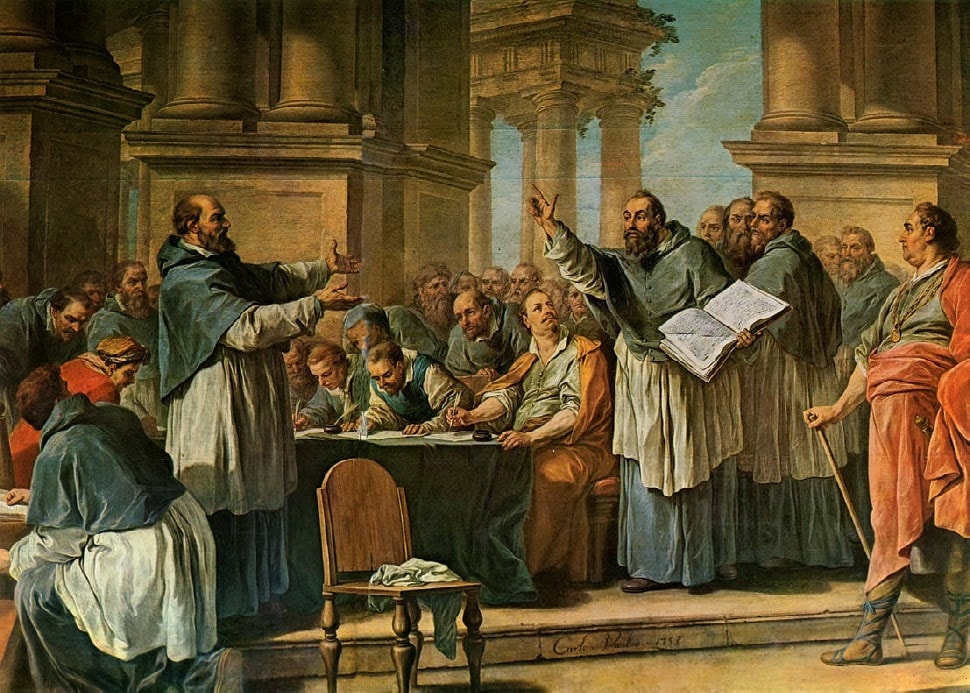
Donatus made a final appeal at a council held at Arles in France, was condemned, and sent into exile. Meanwhile, a quasi-civil war raged, and was still being fought when
St Augustine became Bishop of Hippo. His experiences with the Donatists changed his view from simply trying to convert heretics to advocating compulsion.

Donatus (d 355) was Bishop of Casa Nigrae in what is now Algeria in the early years of the 4th century, when the persecution of Christians under Diocletian was at its height. During that horrible time, many Catholics saved their lives by renouncing the faith, burning incense to the gods, or turning over Church property and even the names of fellow believers to the officials. To the steadfast, these became known as traditores (traitors).

When at last Constantine brought peace to the Church in 311, the question of what to do about repentant clergy who wanted to return to the Church became paramount. The North African Church was particularly divided.
This came to a head that very year when the Archbishop of Carthage died. As Primate of North Africa, his position was important. The electors were divided into two parties: the followers of the Archdeacon Caecilianus believed that the traditores could be reconciled simply by performing penance. The more rigorist party held that those who had lapsed had forfeited everything and needed to be re-baptised (and if clerics, re-ordained), otherwise their sacramental ministrations would be invalid. Donatus belonged to the latter party.

Caecilianus was elected, and both Pope Miltiades and the emperor backed his side’s point of view – once ordained, always ordained. Two years later, the Pope condemned Donatus for re-baptising clerics. He and his followers went into schism. Popular among the local inhabitants, its ranks were stiffened by the Circumcellions – irregular soldiers who made war against both Catholics and the Roman administration.

Donatus made a final appeal at a council held at Arles in France, was condemned, and sent into exile. Meanwhile, a quasi-civil war raged, and was still being fought when
St Augustine became Bishop of Hippo. His experiences with the Donatists changed his view from simply trying to convert heretics to advocating compulsion.

subscribe to
the catholic herald

Continue reading your article with a subscription.
Read 5 articles with our free plan.
Subscribe

subscribe to the catholic herald today

Our best content is exclusively available to our subscribers. Subscribe today and gain instant access to expert analysis, in-depth articles, and thought-provoking insights—anytime, anywhere. Don’t miss out on the conversations that matter most.
Subscribe