

February 12, 2026

Heretic of the week: Peter Deunov

Charles Coulombe
More
Related
Min read
share

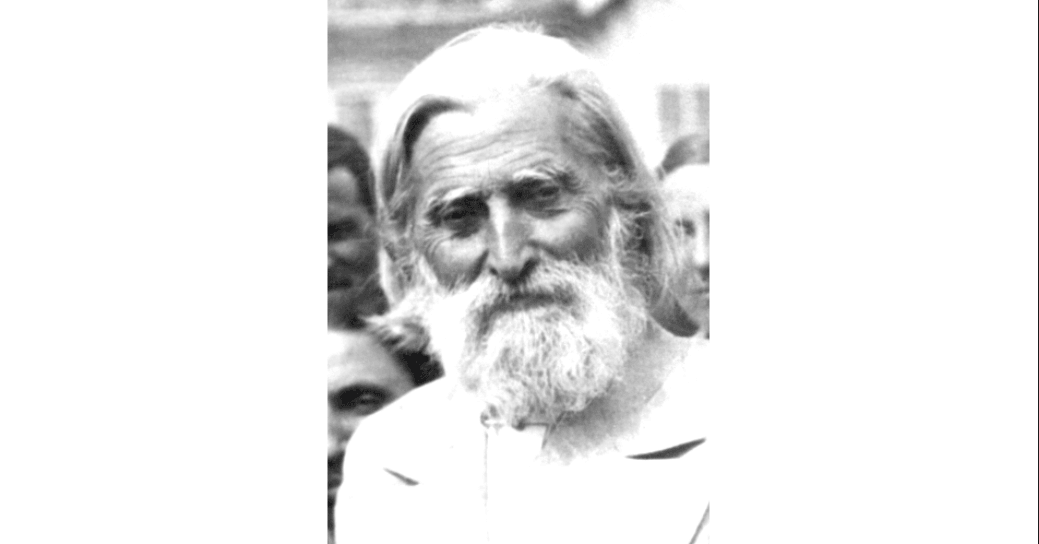
Peter Deunov (1864-1944) was born in the village of Nikolaevka to the first Bulgarian Orthodox priest ever to replace Old Church Slavonic with Bulgarian in the Divine Liturgy.

Attending an American Methodist school in Varna, he left Orthodoxy for that faith, emigrating to the United States. He graduated from Drew University in New Jersey and attended Boston University medical school for a year, returning to his native country in 1896. There, he explored various religions, then contemporary science, and esoterica.
He gathered three disciples (a former Catholic, Orthodox Christians and Protestant respectively), and in 1900 they formed a community which Deunov eventually dubbed the Universal White Brotherhood. Fourteen years later, Deunov began giving public lectures and developing his six spiritual practices: meditation; music and singing; eating in silence; respiration; “spiritual gymnastics”; and Paneurhythmy (a sort of dance). Underpinning the techniques were Deunov’s teachings on love, wisdom, truth, righteousness and virtue, understood as attributes of the “historical, cosmic, and mystical Christ”. He described his Brotherhood as an organism comprising “highly evolved” human souls and the nine hierarchies of supersensory beings (angels, archangels, etc). Deunov claimed that Christ was its supreme leader.

The Orthodox Church condemned the Brotherhood for its beliefs that Christ was considered merely an occult teacher, not the Son of God; that God loses his personality and transforms into an impersonal pantheistic self; its disbelief in the Trinity; its belief in reincarnation; and such occult practices as astrology.

In 1953 one of Deunov’s disciples brought the Brotherhood to France, where it has gained a certain notoriety. Despite the Bulgarian Orthodox Church’s condemnation of its teachings and persecution under the communists, recent polls reflect Deunov’s fame among his countrymen.

Peter Deunov (1864-1944) was born in the village of Nikolaevka to the first Bulgarian Orthodox priest ever to replace Old Church Slavonic with Bulgarian in the Divine Liturgy.

Attending an American Methodist school in Varna, he left Orthodoxy for that faith, emigrating to the United States. He graduated from Drew University in New Jersey and attended Boston University medical school for a year, returning to his native country in 1896. There, he explored various religions, then contemporary science, and esoterica.
He gathered three disciples (a former Catholic, Orthodox Christians and Protestant respectively), and in 1900 they formed a community which Deunov eventually dubbed the Universal White Brotherhood. Fourteen years later, Deunov began giving public lectures and developing his six spiritual practices: meditation; music and singing; eating in silence; respiration; “spiritual gymnastics”; and Paneurhythmy (a sort of dance). Underpinning the techniques were Deunov’s teachings on love, wisdom, truth, righteousness and virtue, understood as attributes of the “historical, cosmic, and mystical Christ”. He described his Brotherhood as an organism comprising “highly evolved” human souls and the nine hierarchies of supersensory beings (angels, archangels, etc). Deunov claimed that Christ was its supreme leader.

The Orthodox Church condemned the Brotherhood for its beliefs that Christ was considered merely an occult teacher, not the Son of God; that God loses his personality and transforms into an impersonal pantheistic self; its disbelief in the Trinity; its belief in reincarnation; and such occult practices as astrology.

In 1953 one of Deunov’s disciples brought the Brotherhood to France, where it has gained a certain notoriety. Despite the Bulgarian Orthodox Church’s condemnation of its teachings and persecution under the communists, recent polls reflect Deunov’s fame among his countrymen.

subscribe to
the catholic herald

Continue reading your article with a subscription.
Read 5 articles with our free plan.
Subscribe

subscribe to the catholic herald today

Our best content is exclusively available to our subscribers. Subscribe today and gain instant access to expert analysis, in-depth articles, and thought-provoking insights—anytime, anywhere. Don’t miss out on the conversations that matter most.
Subscribe