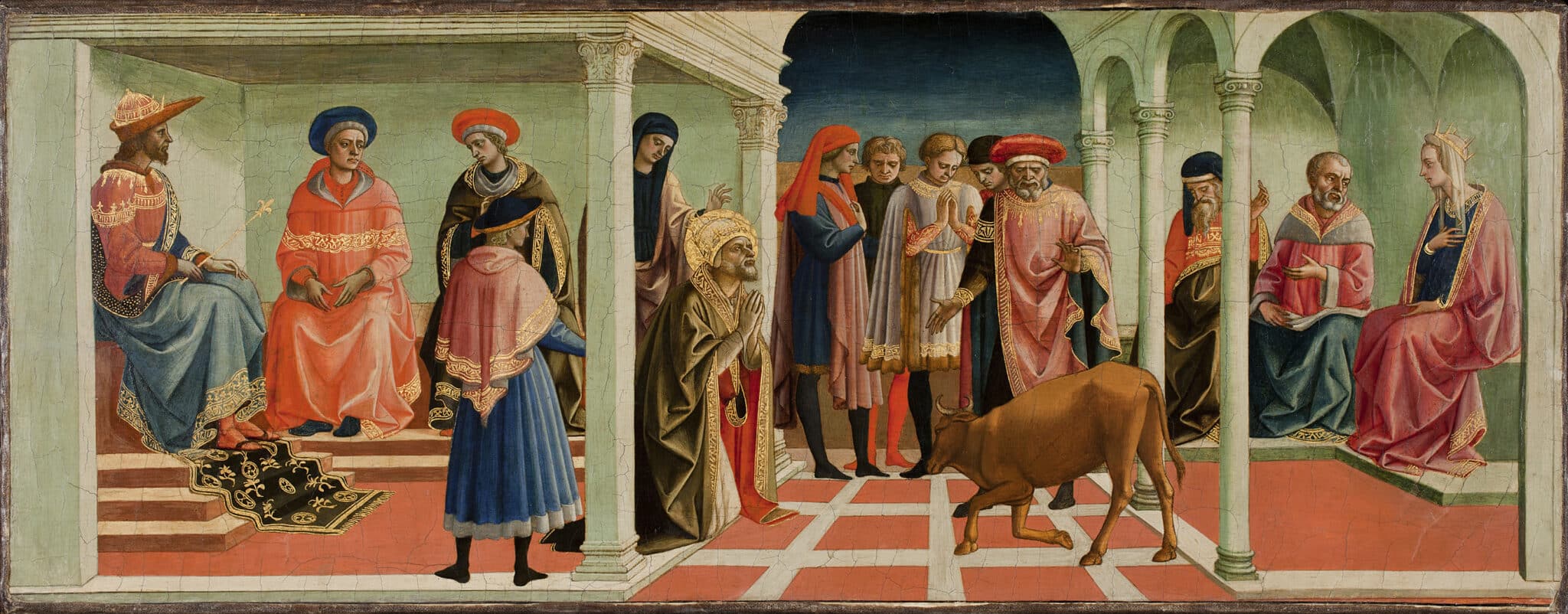



How many people had heard of Francesco di Stefano before London’s National Gallery decided to stage a mini-exhibition of his work? Better known as Pesellino (all things being relative) he flourished in Florence in the middle of the fifteenth century, where he was the darling of the ruling Medici and known to the more artistically-minded members of the papal household – including Pope Nicholas V. Since then he has, however, languished in obscurity.
Pesellino took his name from his grandfather, the artist known as Pesello, whom we know was active in late-fourteenth- and early-fifteenth-century Florence as what the curators describe as “a specialist in banners and festive ephemera”, and who taught his grandson the rudiments of painting. Pesello, they note, means “a pea”, and so his grandson became “the little pea”. While this is true, it also means something else: let the reader understand.