July 1, 2026

“Hitch wants to come home”: Alfred Hitchcock’s final return to faith

Tony Lee Moral
More
Related
Min read
share

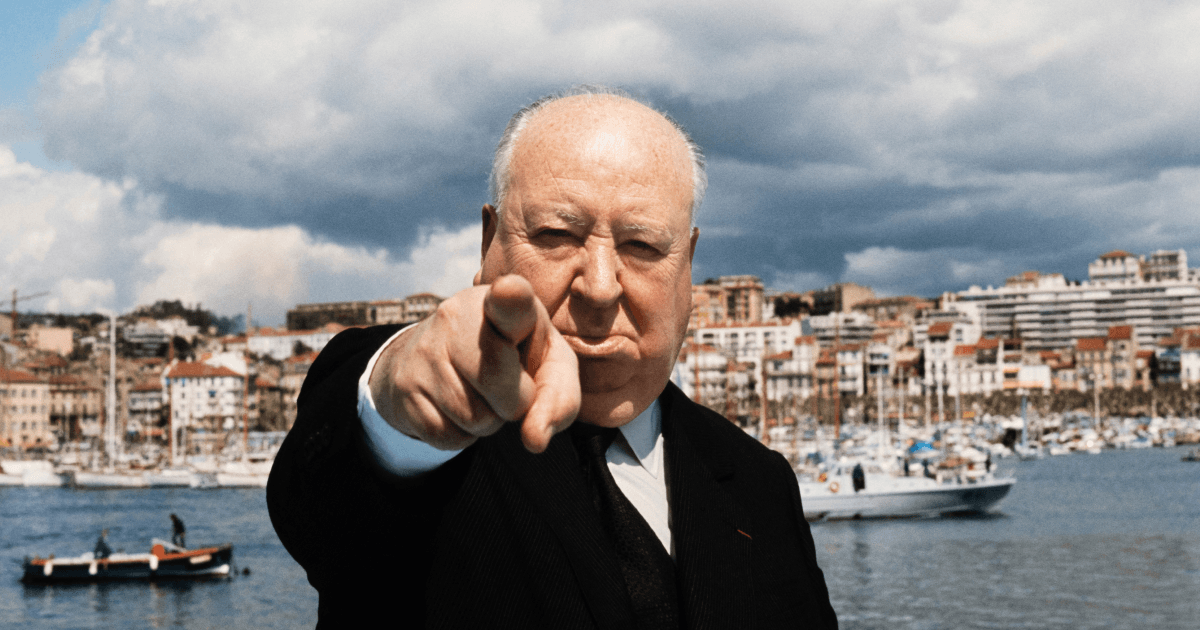
Few film-makers have been analysed as extensively as Alfred Hitchcock. Films such as I Confess, Under Capricorn, The Wrong Man and Marnie deal with questions of sin, forgiveness, conscience and grace. While I Confess remains Hitchcock’s most explicitly Catholic film, religious themes are present in the innocent suffering and prayer of The Wrong Man and in the guilt and redemption of Vertigo and Marnie. These films reflected concerns shaped by his upbringing and remained visible throughout his career.

Hitchcock was born in east London in 1899 and brought up as a Catholic by his parents, William and Emma Hitchcock, who attended the Catholic parish of St Thomas of Canterbury in Leytonstone. Yet one aspect of Hitchcock’s life remains surprisingly contested: his Catholic faith.

For many years, a prevailing narrative held that Hitchcock had abandoned the faith of his youth, becoming largely detached from the Church during his decades in Hollywood. Biographer Donald Spoto wrote in The Dark Side of Genius that in his last hours Hitchcock shunned the last rites, but nothing could be further from the truth. This view has appeared in biographies and critical studies and has often been accepted without much challenge. Yet the testimony of those who knew Hitchcock personally paints a more nuanced picture.

While researching my book A Century of Hitchcock, which commemorates 100 years since the release of his first film, I interviewed Fr Mark Henninger SJ, whose recollections provide a rare glimpse into the director’s spiritual life. Fr Henninger did not know Hitchcock throughout his life but became acquainted with him through Fr Tom Sullivan SJ of Loyola Marymount University in Los Angeles. In the final months of Hitchcock’s life, Sullivan invited Henninger to accompany him when celebrating Mass with the director at his Bel Air home.

Fr Henninger’s recollections offer a rare glimpse into Hitchcock’s final years and spiritual life. On one occasion, he concelebrated Mass with Sullivan in Hitchcock’s home. Present were Hitchcock, his wife Alma and the two Jesuit priests. It was one of only a handful of encounters, yet it left a lasting impression.

Henninger had previously discussed his experience in a 2012 Wall Street Journal article, and he received a remarkable response from readers. Among the many letters and emails was one from Hitchcock’s granddaughter. What she revealed complicated the commonly accepted story. Rather than describing a man who had severed ties with Catholicism, it suggested a faith that remained woven into family life, even during periods when he was less publicly observant. According to the granddaughter, she had always regarded her grandfather as a devout Catholic, even though he was not a regular churchgoer at any stage of his life. Her mother, Patricia Hitchcock O’Connell, attended Mass every Sunday and had been educated at Marymount High School, an all-girls Roman Catholic school run by the Religious of the Sacred Heart of Mary in Los Angeles.

More revealingly, when Hitchcock’s grandchildren stayed with their grandparents, Hitchcock insisted they attend Mass each week. One particular anecdote stood out. On one occasion, there was no one available to drive the children to church. Although Hitchcock himself did not drive, he nevertheless bundled everyone into a car, got behind the wheel and drove them to Mass himself. The granddaughter recalled the experience as somewhat scary, but the story reveals something important. Whatever the complexities of Hitchcock’s personal practice, Catholicism remained part of family life.

Reflecting on this correspondence years later, Henninger concluded that his earlier article may have unintentionally oversimplified matters. “It was not as if Hitchcock was simply away from the Church for years and then suddenly came back at the end,” he explained. “It’s not that black and white.” Instead of a dramatic conversion or rediscovery of faith, Henninger came to believe that Hitchcock’s final years represented a deepening appreciation of beliefs that had never entirely disappeared.

Further evidence arrived in another unexpected email. In 2012, Fr Nicholas Ingham OP wrote to Henninger after reading his Wall Street Journal article. Ingham had met both Alma Hitchcock and the couple’s daughter Patricia. He confirmed that Patricia had told him Hitchcock regularly took his grandchildren to Mass at the Church of the Good Shepherd in Beverly Hills.

Ingham also challenged the notion that Hitchcock was hostile towards priests or Catholicism. He recalled that Fr Joseph O’Donnell SJ, former dean of Loyola Law School in Los Angeles, had enjoyed a long friendship with Hitchcock, frequently visiting him on film sets. “I remember reading in Spoto that Hitchcock had a phobia about priests,” Ingham wrote. “All the evidence that I have contradicts this.”

These recollections suggest that the common portrayal of a film-maker who abandoned his faith entirely may be too simplistic. His continuity of faith is perhaps not surprising when viewed alongside Hitchcock’s films, with their themes of guilt, confession and forgiveness. Catholicism was a moral framework that continued to inform his storytelling.

Henninger’s reflections were also shaped by his years working as a hospital chaplain. Before teaching theology, he spent five years ministering to the sick and dying at Loyola University Hospital near Chicago. There, he witnessed something repeatedly. As death approached, many people who had drifted from active religious practice found themselves returning to the deeper beliefs that had shaped them earlier in life. The sacraments of Reconciliation and Anointing often became profoundly meaningful. Family, forgiveness and faith came into sharper focus.

In this respect, Hitchcock’s final years did not strike Henninger as unusual. “They should have spent more time with family and less time at work,” he observed of many patients. “Faith and family often come to the fore.”

It was against this background that Sullivan first invited him to visit Hitchcock. Henninger still remembers Sullivan’s words: “Hitch wants to come home.” Whether those words originated with Hitchcock himself or were Sullivan’s interpretation is impossible to know. Yet they capture something important about the director’s final chapter.

For all the myths that surround Alfred Hitchcock, perhaps the most enduring lesson is that human lives rarely fit neat narratives. The reality is often more complicated than either critics or admirers would prefer. What Fr Mark Henninger’s recollections suggest is a lifelong Catholic whose connection to the Church may have ebbed and flowed, but never disappeared entirely.

During the centenary of Hitchcock’s directorial debut, those personal memories remind us that behind the public image and cultural debates stood a man whose final journey was, in many ways, a deeply familiar one. A man, as Fr Sullivan put it, who simply wanted to come home.

Alfred Hitchcock died at home on April 29, 1980, at the age of 80. In accordance with his wishes, a Catholic funeral service was held at the Church of the Good Shepherd. The altar of the Spanish-style church was adorned with white orchids. It was a bright, sun-swept morning, and among the 400 mourners packed inside the church were stars from his films, including Janet Leigh from Psycho, Karl Malden from I Confess, Louis Jourdan, Norman Lloyd, and Hitchcock’s daughter Patricia with her husband and three daughters. In addition, 200 people stood outside the church to pay their respects. Two weeks after his funeral, Hitchcock’s ashes were scattered over the Pacific. He always said his idea of happiness was a clear horizon and, in death, he had achieved the serenity and calm that he sought.

Tony Lee Moral is the author of A Century of Hitchcock: The Man, The Myths, The Legacy, published by the University Press of Kentucky.

Continue reading with a free account

Create a free account to read up to five articles each month
Create free account

You have # free articles remaining this month.

Subscribe to get unlimited access.
Sign up

subscribe to the catholic herald today

Our best content is exclusively available to our subscribers. Subscribe today and gain instant access to expert analysis, in-depth articles, and thought-provoking insights—anytime, anywhere. Don’t miss out on the conversations that matter most.
Subscribe