February 4, 2026
February 4, 2026

Hospitality as a way of life

Min read
share

Between the feasting of Christmastide and the fasting of Lent lies ordinary life without a clear script. During the holidays, hospitality is expected and expressed in full calendars and busy homes. Once the decorations are packed away and the last guests have gone, a familiar quiet settles in. There is relief in this, since hospitality is work. Yet the sudden retreat into private life also reveals something else: how thin our social fabric has become, and how rarely we practise hospitality as a natural and sustained way of life.

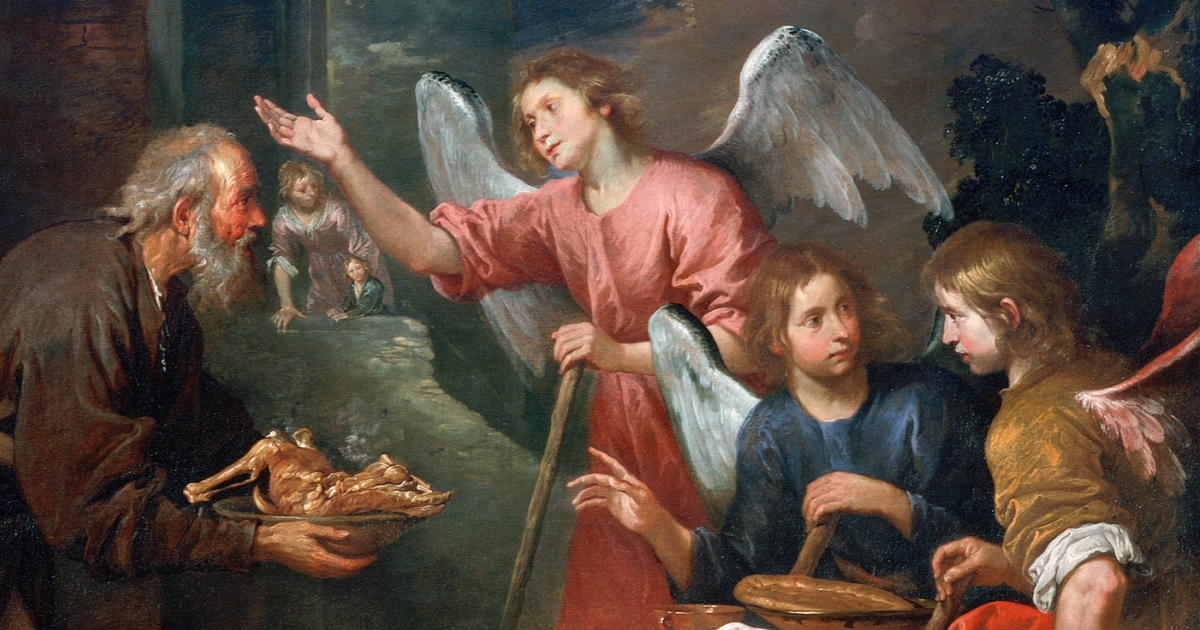
There is an important distinction here. Entertaining tends to be finite and festive. Hospitality should be an ongoing and ordinary way of life. The Catholic tradition has always understood hospitality in this deeper sense. Sacred Scripture speaks of it as non-negotiable. “Do not neglect to show hospitality to strangers,” the Letter to the Hebrews warns, “for thereby some have entertained angels unawares.”

This spiritually charged sense of hospitality in the home would have been instantly recognisable to the ancient world. In The Odyssey, Odysseus’ long journey home is shaped at every turn by how he is received as a stranger. Those who welcome him with generosity are blessed; those who abuse or refuse hospitality descend into chaos. In Homer’s masterpiece, as in Sacred Scripture, the stranger arrives bearing significance, and the home and its inhabitants reveal their moral character in how they respond.

This matters especially now. We are saturated with talk of belonging, identity and the need for safety, yet starved of the very structures that once provided these things. Loneliness is widespread and well documented across much of the world. In the absence of strong domestic and communal bonds, fundamental human needs are easily displaced into politics or ideology. Movements fuelled by shared hatreds thrive in such a climate. But what politics cannot provide, and what ideology cannot combat, is the slow, personal work of being known and loved.

A friend once told me he spent years immersed in academic social deconstruction. What appealed to him in graduate school as a way to interpret his chaotic childhood and growing cynicism eventually hollowed out his sense of meaning in life, until he found himself, by his own account, suicidal and staring into an abyss.

It was around that moment that he accepted an invitation to dinner at the home of a young Christian family he barely knew. There was nothing remarkable about the evening by any conventional measure. The meal was simple, humbly prepared, without performance or fanfare. Children spilled food. Laughter broke out here and there unexpectedly. And yet that ordinary evening altered the direction of his life.

Until then, he had come to believe that family, fatherhood and faith were little more than tired and tedious constraints. But what he encountered that night was a way of life imbued with levity and meaning, and devoid of the thick tensions and dysfunction he had only known. The witness of that ordinary evening did what years of cynical critique could not: it presented him with a tangible taste of a buried and unidentified longing. The family had him over again and again, and that simple sustained welcome eventually brought him to the Church, to a good and holy Catholic marriage, and to the hope for an abundance of children.

Cultivating a lifestyle of hospitality reshapes culture. A standing weekly meal, a predictable open evening, a home known as a place where others are welcome – these practices create stability in an unstable world.

Hospitality can be inconvenient and feel awkward. It takes initiative and effort and often a lack of vanity. But when homes close in on themselves, institutions, algorithms and movements step in to tell people who they are, why they are and where they belong, and that belonging tends to be conditional and adversarial.

With the holidays behind us and Lent ahead, we are invited to resolve to form new habits, and perhaps one of them can be a habit of hospitality. One possibility is to consider hosting or coordinating a Soup and Stations gathering on Fridays throughout Lent. The formula is simple: make a big pot of soup and pray the Stations of the Cross together. It can be large or small, but be sure to strive to include people who live alone or are new to the area.

We won’t heal a culture defined by ideology and division through louder arguments or clever messaging. But we can dignify the humanity of others and communicate to them their deeper identity by giving them our attention and welcoming them into the intimacy of our homes. Such sustained efforts shape us as much as our guests and remind us all who we are and to whom we ultimately belong.

Noelle Mering is a fellow at the Ethics and Public Policy Center and the author of the books Awake, Not Woke, Theology of Home, and a forthcoming book, No Contact, on the politics of estrangement. She is a wife and mother of six in California.

Between the feasting of Christmastide and the fasting of Lent lies ordinary life without a clear script. During the holidays, hospitality is expected and expressed in full calendars and busy homes. Once the decorations are packed away and the last guests have gone, a familiar quiet settles in. There is relief in this, since hospitality is work. Yet the sudden retreat into private life also reveals something else: how thin our social fabric has become, and how rarely we practise hospitality as a natural and sustained way of life.

There is an important distinction here. Entertaining tends to be finite and festive. Hospitality should be an ongoing and ordinary way of life. The Catholic tradition has always understood hospitality in this deeper sense. Sacred Scripture speaks of it as non-negotiable. “Do not neglect to show hospitality to strangers,” the Letter to the Hebrews warns, “for thereby some have entertained angels unawares.”

This spiritually charged sense of hospitality in the home would have been instantly recognisable to the ancient world. In The Odyssey, Odysseus’ long journey home is shaped at every turn by how he is received as a stranger. Those who welcome him with generosity are blessed; those who abuse or refuse hospitality descend into chaos. In Homer’s masterpiece, as in Sacred Scripture, the stranger arrives bearing significance, and the home and its inhabitants reveal their moral character in how they respond.

This matters especially now. We are saturated with talk of belonging, identity and the need for safety, yet starved of the very structures that once provided these things. Loneliness is widespread and well documented across much of the world. In the absence of strong domestic and communal bonds, fundamental human needs are easily displaced into politics or ideology. Movements fuelled by shared hatreds thrive in such a climate. But what politics cannot provide, and what ideology cannot combat, is the slow, personal work of being known and loved.

A friend once told me he spent years immersed in academic social deconstruction. What appealed to him in graduate school as a way to interpret his chaotic childhood and growing cynicism eventually hollowed out his sense of meaning in life, until he found himself, by his own account, suicidal and staring into an abyss.

It was around that moment that he accepted an invitation to dinner at the home of a young Christian family he barely knew. There was nothing remarkable about the evening by any conventional measure. The meal was simple, humbly prepared, without performance or fanfare. Children spilled food. Laughter broke out here and there unexpectedly. And yet that ordinary evening altered the direction of his life.

Until then, he had come to believe that family, fatherhood and faith were little more than tired and tedious constraints. But what he encountered that night was a way of life imbued with levity and meaning, and devoid of the thick tensions and dysfunction he had only known. The witness of that ordinary evening did what years of cynical critique could not: it presented him with a tangible taste of a buried and unidentified longing. The family had him over again and again, and that simple sustained welcome eventually brought him to the Church, to a good and holy Catholic marriage, and to the hope for an abundance of children.

Cultivating a lifestyle of hospitality reshapes culture. A standing weekly meal, a predictable open evening, a home known as a place where others are welcome – these practices create stability in an unstable world.

Hospitality can be inconvenient and feel awkward. It takes initiative and effort and often a lack of vanity. But when homes close in on themselves, institutions, algorithms and movements step in to tell people who they are, why they are and where they belong, and that belonging tends to be conditional and adversarial.

With the holidays behind us and Lent ahead, we are invited to resolve to form new habits, and perhaps one of them can be a habit of hospitality. One possibility is to consider hosting or coordinating a Soup and Stations gathering on Fridays throughout Lent. The formula is simple: make a big pot of soup and pray the Stations of the Cross together. It can be large or small, but be sure to strive to include people who live alone or are new to the area.

We won’t heal a culture defined by ideology and division through louder arguments or clever messaging. But we can dignify the humanity of others and communicate to them their deeper identity by giving them our attention and welcoming them into the intimacy of our homes. Such sustained efforts shape us as much as our guests and remind us all who we are and to whom we ultimately belong.

Noelle Mering is a fellow at the Ethics and Public Policy Center and the author of the books Awake, Not Woke, Theology of Home, and a forthcoming book, No Contact, on the politics of estrangement. She is a wife and mother of six in California.

subscribe to
the catholic herald

Continue reading your article with a subscription.
Read 5 articles with our free plan.
Subscribe
share

subscribe to the catholic herald today

Our best content is exclusively available to our subscribers. Subscribe today and gain instant access to expert analysis, in-depth articles, and thought-provoking insights—anytime, anywhere. Don’t miss out on the conversations that matter most.
Subscribe