



For a generation that has known nothing other than a culture that champions limitless self-expression, risk avoidance, pleasure, and choice, it is striking that so many young people are now beginning to embrace a lifestyle of boundaries, discipline, and voluntary discomfort.
According to a recent survey, a significant portion of Gen Z’s New Year’s resolutions now include daily meditation (23 per cent), gratitude journalling (17 per cent), intermittent fasting (21 per cent), cold water therapy (18 per cent), breathwork (14 per cent), deleting dating apps (10 per cent), and celibacy (8 per cent). Each of these practices is characterised by self-restraint, a virtue that has largely not been inculcated in us children of the twenty-first century.
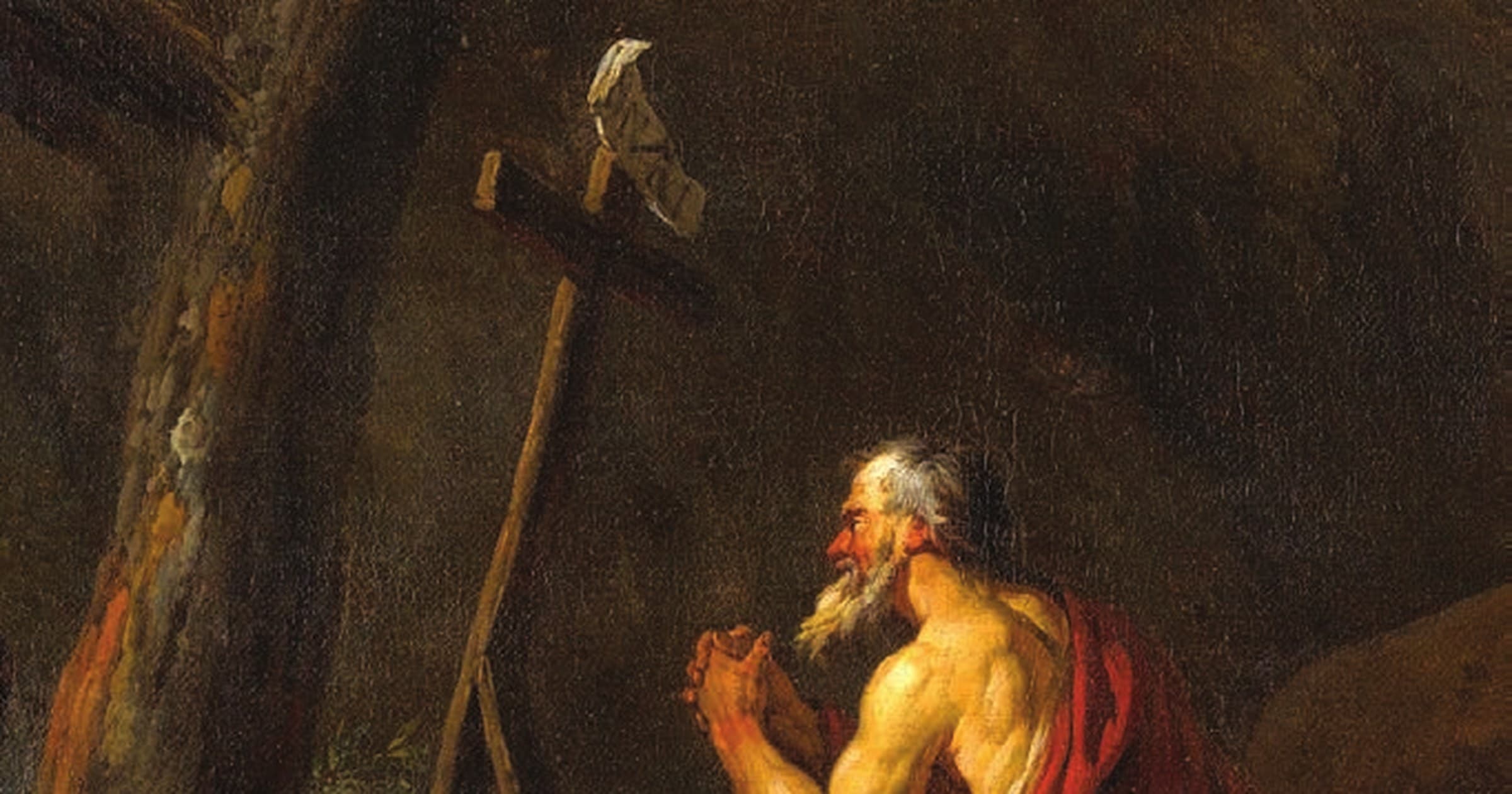
On the contrary, England’s liberal culture has encouraged us to indulge in sin. This country has long been one of the world’s premier hotbeds of liberalism and, since the end of the Second World War, particularly since the 1960s, this tendency has intensified dramatically. Today, every aspect of our culture is characterised by limitless tolerance and, as a result, we are inundated with vice. It is everywhere. Our entertainment and advertising encourage decadence and mock restraint. Our economy rewards both indolence and greed whilst punishing prudence. Our schools and universities indoctrinate children and young adults into believing that the summum bonum of one’s life is unlimited individual autonomy, up to and including mutilating the body in the name of liberating the self.
Modern England is a nation of relativists, a culture whose highest principle is “don’t judge me”. And if you do dare judge, if you dare suggest that there is something disordered in placing the pursuit of “happiness” above all other goods, if you dare to impose a boundary, you will be regarded by many with suspicion, if not outright contempt.
Thus, these self-denying resolutions are a welcome development. They signal a shift towards virtue in the soul of Gen Z, an appetite for something more meaningful than the degeneracy propagated by the mainstream. Yet, on a long enough timeline, they alone will not save us.
I know this because, during the Covid-19 pandemic, I embraced many of these habits myself. I was at university during lockdown, living alone with very little to do. As such, I did the only sensible thing a young man in such a situation could do. I shaved my head, lifted weights, and ate nothing but meat. I meditated, repeating mantras from Marcus Aurelius’ Meditations to myself. I took cold showers. I fasted. I foreswore pornography and self-abuse. I took long walks and read philosophy. I was far from virtuous, but I was blessed with a nascent sense that it was my duty, as a man, to strive for something higher.
Much of this was a reaction to an increasing feeling of disgust and alienation at the culture propagated in England’s universities and beyond, a culture that I had myself indulged in. Before I went to university, I believed that life there would be a non-stop party: booze, girls, no responsibilities, in other words, freedom. It was only after pursuing such a lifestyle that I quickly came to realise it did not bring satisfaction, but emptiness. Thus, I turned, and indeed was forced by the pandemic to turn, elsewhere for a sense of purpose.
Self-discipline lifted me out of the malaise of licentiousness for a time, but eventually it too ran dry as a source of meaning. At the far end of this way of life was not spiritual enlightenment, but an emptiness not unlike that which follows a life of hedonism. They are two sides of the same coin. They exist on the same continuum because both ultimately serve the same fallible master: the self. Neither gives the individual’s life any context. Man is still ultimately his own god, his own measure of what is right and wrong, and so he remains lost.
At this time, I encountered the ideas of Nietzsche, Evola, and other reactionary thinkers, whose writings offered a language of will, hierarchy, and transcendence that initially seemed to give metaphysical depth to what was otherwise a purely bodily discipline. I began slipping towards a nihilistic conception of meaning grounded in power and self-overcoming, a vision that rejected bourgeois comfort and liberal mediocrity, but which was still ultimately godless. Not long after, by the grace of God, I had my first glimpse of Jesus Christ at a Latin Mass I attended with some Catholic friends. Eighteen months later, I now understand what it was I was truly pursuing in my lifestyle of self-denial: not mere “self-improvement”, but a relationship with my Father.
In those years, I was unconsciously living out some approximation of a Catholic life, but without the context that the faith provides. My habits were typological. Just as the Old Testament contains shadows of what was to be fulfilled in Christ, so my lowly attempts at discipline and self-denial prefigured the form of the Christian life, but not its substance. Where once I lit a scented candle, practised breathwork, and meditated, today I burn incense and pray the Rosary. The form is similar. What has changed is the object of worship.
What I have experienced in my own life is now being played out at scale in the choices of young people across the country as we move into this new year. The turn towards gratitude, reflection, fasting, abstinence, and bodily discipline is not accidental, nor is it meaningless. These are not arbitrary “wellness hacks”, but the ancient grammar of Catholic life, re-emerging organically in a culture that has forgotten and derided the Faith itself. Gen Z is, in effect, recovering the form of asceticism before recovering its meaning. Where the culture failed to give us any real moral education, we are learning in our own lives that human existence must be ordered towards sacrifice, that comfort, indulgence, and self-expression cannot be our highest goods, and that self-mastery is a prerequisite for true freedom, as against the false freedom peddled by the liberal mainstream.
Yet these habits cannot sustain and nourish the soul on their own. Without God, this way of life remains unstable, forever in danger of collapsing back into either pride or despair. In the end, the disciplines now being rediscovered by the young will only find their true meaning when they are situated in their proper place and ordered towards their proper object: not the worship of the self, but the worship of God.