

February 20, 2026

How Netflix is reshaping children’s moral imagination

Daisy-Mae Inglese
More
Related
Min read
share

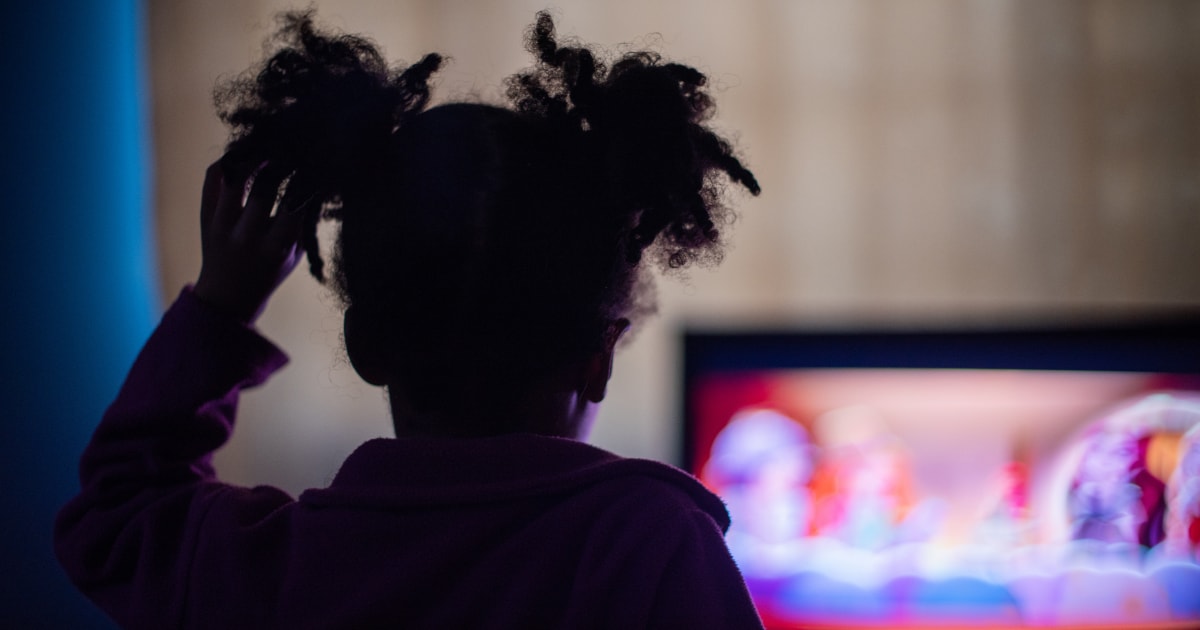
Among my friends who are new parents, the conversation around screen time is fairly familiar: “If I have to do it, I’ll make sure it’s low-stimulation.” Avoid too many flashing images and bright colours to keep toddlers calm and not overstimulated. Where the conversation rarely goes is around the substance of the content and whether they are happy with what is being consumed. There is an assumption that if something is made for children, especially if it is labelled as age-appropriate, then the stories and themes must be harmless – that they will be what we remember growing up. But whether or not screen time is a necessary tool in the home to get through the day, it does not merely occupy children, but forms them. When you believe the home is the primary place of formation, rather than a management project, it becomes impossible not to ask what is shaping children during those few hours in front of a screen.

The early Church Fathers spoke about the family as not a mere functional unit but a domestic church, a place where faith, virtue and moral imagination are first cultivated. St John Chrysostom described the baptised Christian family as a “little church”, insisting that parenthood is not just biological but the root in which offspring are formed into disciples. A parent, he argued, is not someone who simply brings a child into the world, but someone who expends energy and love in raising that child rightly. “Not child-making, but child-rearing, is the mark of a parent.”

If this is true, and the Catholic tradition continues to insist that it is, then what enters the home through screens is not morally neutral. It participates directly in the work of formation that belongs first to parents.

There is a widespread assumption that if content is labelled “children’s media”, particularly when it carries a British U rating or American G rating, it must be broadly appropriate. Parents reasonably trust that platforms producing children’s content are offering stories shaped around innocence, imagination and moral clarity.

Recent evidence, however, suggests that this trust is misplaced. A study published by Concerned Women for America at the end of last year found that over 41 per cent of G-rated (U) children’s television shows on Netflix contain LGBT-themed or sexualised content. The study categorised this content as “explicit” (clearly identified LGBT characters), “implied” (queer-coded or secondary characters) and “meta” (such as same-sex parents or identity-focused narratives).

Crucially, these themes are rarely signposted clearly for parents. They are embedded within storylines and presented as unquestionable norms, offering families little opportunity to decide when or how such conversations should take place with their children about the complexities of the world and the progression of modern relationships.

Children are neither passive viewers nor capable of critically filtering the messages they absorb. This is not alarmism but a basic developmental reality. Media studies show that repeated exposure shapes a child’s understanding of the world, a process described by George Gerbner’s cultivation theory, which explains how consistent moral and social narratives are gradually internalised as “normal”. For children, whose moral imaginations are still forming, repetition is deeply formative. More recent research on mediatisation reinforces this concern, emphasising that children do not encounter media in isolation but within interwoven contexts of family life, education and peer relationships, all of which are now saturated by screens. In other words, formation is happening, whether parents intend it or not.

What makes the current moment particularly concerning is that this is not an incidental trend. Over the last decade, children’s media has undergone a clear moral reframing. With only 7–10 per cent of the global population identifying as LGBT+, the presence of LGBT+ themes in over 40 per cent of children’s programming represents a striking over-representation. The narratives are not always explicit. More often, they are woven quietly into storylines: children with two parents of the same sex presented as normative, characters questioning their gender as a central plot, or identity exploration introduced as a moral good in itself.

For parents striving to live out the vocation of the domestic church, this presents a real challenge. Parents are chronically busy, often through no choice of their own. Screen time can feel unavoidable. Yet, even when parents are intentional about forming their children in faith and virtue, the media environment often works against them, competing with them for moral education.

This is why the issue cannot be dismissed as a matter of “representation” alone. Formation precedes freedom. When children are immersed in a single moral narrative from their earliest years, they are not being given neutral ground from which to live with freedom; they are being shaped before choice is even possible. If we care about genuine freedom, we must care about defending the formation that happens in our little churches.

St John Chrysostom understood this clearly. To raise a child “correctly”, in his words, is to guard what forms their loves, their imagination and their understanding of the good. The domestic church cannot outsource this task to corporations whose values are neither neutral nor accountable to families.

The solution is not panic, but responsibility. Parents must feel empowered to scrutinise content, withdraw financial support from platforms such as Netflix that undermine their values, and demand greater transparency. More broadly, we must recover the confidence to place the traditional family, ordered towards stable love, sacrifice and flourishing, back at the centre of cultural aspiration.

What enters the home forms the soul of the home. To care well for the domestic church is to attend carefully to the influences that surround our children, so that they are not overwhelmed before they are ready. This is not about shielding them from the world, but about giving them the freedom to encounter it with confidence and discernment.

Among my friends who are new parents, the conversation around screen time is fairly familiar: “If I have to do it, I’ll make sure it’s low-stimulation.” Avoid too many flashing images and bright colours to keep toddlers calm and not overstimulated. Where the conversation rarely goes is around the substance of the content and whether they are happy with what is being consumed. There is an assumption that if something is made for children, especially if it is labelled as age-appropriate, then the stories and themes must be harmless – that they will be what we remember growing up. But whether or not screen time is a necessary tool in the home to get through the day, it does not merely occupy children, but forms them. When you believe the home is the primary place of formation, rather than a management project, it becomes impossible not to ask what is shaping children during those few hours in front of a screen.

The early Church Fathers spoke about the family as not a mere functional unit but a domestic church, a place where faith, virtue and moral imagination are first cultivated. St John Chrysostom described the baptised Christian family as a “little church”, insisting that parenthood is not just biological but the root in which offspring are formed into disciples. A parent, he argued, is not someone who simply brings a child into the world, but someone who expends energy and love in raising that child rightly. “Not child-making, but child-rearing, is the mark of a parent.”

If this is true, and the Catholic tradition continues to insist that it is, then what enters the home through screens is not morally neutral. It participates directly in the work of formation that belongs first to parents.

There is a widespread assumption that if content is labelled “children’s media”, particularly when it carries a British U rating or American G rating, it must be broadly appropriate. Parents reasonably trust that platforms producing children’s content are offering stories shaped around innocence, imagination and moral clarity.

Recent evidence, however, suggests that this trust is misplaced. A study published by Concerned Women for America at the end of last year found that over 41 per cent of G-rated (U) children’s television shows on Netflix contain LGBT-themed or sexualised content. The study categorised this content as “explicit” (clearly identified LGBT characters), “implied” (queer-coded or secondary characters) and “meta” (such as same-sex parents or identity-focused narratives).

Crucially, these themes are rarely signposted clearly for parents. They are embedded within storylines and presented as unquestionable norms, offering families little opportunity to decide when or how such conversations should take place with their children about the complexities of the world and the progression of modern relationships.

Children are neither passive viewers nor capable of critically filtering the messages they absorb. This is not alarmism but a basic developmental reality. Media studies show that repeated exposure shapes a child’s understanding of the world, a process described by George Gerbner’s cultivation theory, which explains how consistent moral and social narratives are gradually internalised as “normal”. For children, whose moral imaginations are still forming, repetition is deeply formative. More recent research on mediatisation reinforces this concern, emphasising that children do not encounter media in isolation but within interwoven contexts of family life, education and peer relationships, all of which are now saturated by screens. In other words, formation is happening, whether parents intend it or not.

What makes the current moment particularly concerning is that this is not an incidental trend. Over the last decade, children’s media has undergone a clear moral reframing. With only 7–10 per cent of the global population identifying as LGBT+, the presence of LGBT+ themes in over 40 per cent of children’s programming represents a striking over-representation. The narratives are not always explicit. More often, they are woven quietly into storylines: children with two parents of the same sex presented as normative, characters questioning their gender as a central plot, or identity exploration introduced as a moral good in itself.

For parents striving to live out the vocation of the domestic church, this presents a real challenge. Parents are chronically busy, often through no choice of their own. Screen time can feel unavoidable. Yet, even when parents are intentional about forming their children in faith and virtue, the media environment often works against them, competing with them for moral education.

This is why the issue cannot be dismissed as a matter of “representation” alone. Formation precedes freedom. When children are immersed in a single moral narrative from their earliest years, they are not being given neutral ground from which to live with freedom; they are being shaped before choice is even possible. If we care about genuine freedom, we must care about defending the formation that happens in our little churches.

St John Chrysostom understood this clearly. To raise a child “correctly”, in his words, is to guard what forms their loves, their imagination and their understanding of the good. The domestic church cannot outsource this task to corporations whose values are neither neutral nor accountable to families.

The solution is not panic, but responsibility. Parents must feel empowered to scrutinise content, withdraw financial support from platforms such as Netflix that undermine their values, and demand greater transparency. More broadly, we must recover the confidence to place the traditional family, ordered towards stable love, sacrifice and flourishing, back at the centre of cultural aspiration.

What enters the home forms the soul of the home. To care well for the domestic church is to attend carefully to the influences that surround our children, so that they are not overwhelmed before they are ready. This is not about shielding them from the world, but about giving them the freedom to encounter it with confidence and discernment.

subscribe to
the catholic herald

Continue reading your article with a subscription.
Read 5 articles with our free plan.
Subscribe

subscribe to the catholic herald today

Our best content is exclusively available to our subscribers. Subscribe today and gain instant access to expert analysis, in-depth articles, and thought-provoking insights—anytime, anywhere. Don’t miss out on the conversations that matter most.
Subscribe