

April 23, 2026

How St George became England’s patron saint

Andrew Cusack
More
Related
Min read
share

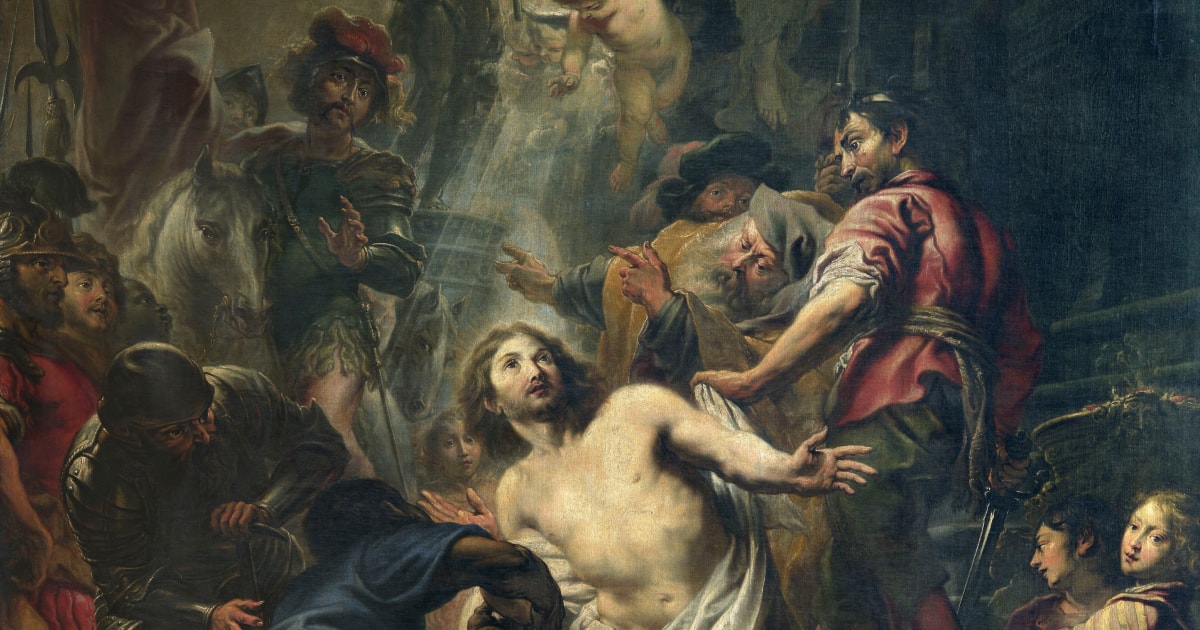
It is curious that St George ended up being the patron saint of the English and their land. As deeply online liberals are fond of reminding each time his feast comes around, the dragon-slaying saint was – shock! horror! – not English. For Catholics, who are meant to take a certain cosmopolitanism in our stride, this has never presented a problem. A parish priest of Westminster is fond, at the end of Mass, of wishing a happy St Patrick’s Day to all his Irish and Nigerian congregants – the saint of the shamrock having been adopted by that West African land as their patron as well. The United States of America has the Blessed Virgin of the Immaculate Conception as their patroness – and while there are many great, strong and virtuous Jewish women in America, the Blessed Virgin was not herself American.

This Cappadocian soldier-saint seems to have been firmly adopted by the English around the mid-14th century and there were certainly more than 150 churches dedicated to him across England at that time. The fact that these churches are fairly spread out across the country – rather than clustered regionally – would seem to indicate the realm-wide reach of the saint. The Most Noble Order of the Garter – under the patronage of the saint – was founded by King Edward III in the 1340s. On the cusp of the Henrician Reformation, the Fraternity or Guild of St George was founded in 1537 as a pious gathering of men-at-arms ready to put themselves in service of the defence of the realm. It survives today as the Honourable Artillery Company – the oldest regiment in the British Army and arguably the second oldest in the world. (An offspring militia unit of a similar name was founded in Boston in 1638 and also continues today.)

All the same, the Catholic Church in England had already incorporated St George’s feast into the country’s liturgical calendar at the Synod of Oxford, convened by Archbishop Stephen Langton at Osney Abbey in 1222, so while he may not be English, he is hardly a newcomer to these lands. Paradoxically, it was probably to the advantage of devotion to St George that there was no central shrine to him in England where his relics could be venerated. This lack of a geographic focal point also meant the patron saint could remain above the rivalries of counties, towns, regions and lords that divided England. When Edward III founded the Order of the Garter and built the collegiate chapel dedicated to him at Windsor, he was not inventing a cult but making use of an existing one and manipulating it to solidify his reign.

The lack of relics and shrine may also have helped St George survive the ruination of the Protestant Reformation. Without these, there was no great act of desecration required, as with St Thomas at Canterbury, and devotion to St George as England’s protector continued to be seen as safely English and therefore – as the centuries went on – safely Protestant.

It was not until the 19th century that a great temple was finally erected and dedicated to the national saint – and that came about in a somewhat unexpected way. St George always had a foothold in the ancient borough of Southwark across the Thames from the City of London. The second most important church here – after Southwark Priory of St Mary Overie (now the Anglican cathedral) – was dedicated to St George, and among the many proud taverns, pubs and hostelries that lined Borough High Street during the Middle Ages and since, the George is today the oldest survivor. The open land – some of it marsh – that lay or sank to the south-west of St George’s Church gradually adopted the name of St George’s Fields. It was in this open space in 1780 that the (possibly deranged) Lord Gordon incited the crowds gathered for a meeting of his Protestant Association to protest a mild measure of Catholic relief that had been passed by the Parliament of the time. The mobs – possibly not all inspired by theological disputes – went on a violent rampage against papists and foreigners that lasted several days and did great damage to many of London’s embassy chapels where Mass was offered for the English faithful as well as the diplomatic household.

Just a few years later, an unobtrusive Catholic chapel was established on the London Road in St George’s Fields, Southwark, which became an important focal point for Catholics on the south side of the Thames. Over time, the prominence of this little mission chapel grew – and it obtained the protection of the Belgian embassy after that kingdom was founded in 1830. This was a period not just of the movement of regional and rural Catholics to London, in addition to the increasing numbers of Irish arriving in the capital: it was a time when the Anglican Church was facing intellectual convulsions brought about by the Tractarians, and the “secession” of some of their number – among them Doctor of the Church St John Henry Newman – to the English Church in communion with Rome.

Since Catholic Emancipation had been achieved, and presaging the eventual restoration of the hierarchy in England, the Vicar Apostolic of the London District decided to finally erect a great, free Catholic church in the geographic centre of London. A site in St George’s Fields close to the London Road chapel was purchased and the great architect Augustus Welby Northmore Pugin was put to work designing it. His hope was to create a magnum opus even greater than the Palace of Westminster that he had worked on with his fellow architect Charles Barry. The budgets of the Catholic faithful did not stretch as high as Pugin’s hopes, alas, and the design went through several revisions and stages, eventually being built in a form that, while beautiful, left the architect somewhat dissatisfied.

The Catholic church of St George at Southwark was dedicated with great solemnity in 1848, with many bishops and clergy attending, as well as contingents from the great Catholic families of England and a large representation of the ordinary working Catholics of London. Pope Pius IX issued the bull Universalis Ecclesiae two years later, recreating the ordinary Catholic diocesan structure in England that had been missing since the Reformation. As many had expected, the great temple to St George was elevated to the status of a cathedral. Somewhat disappointingly to many, it was decided to split the English capital into two new Catholic dioceses: Westminster, north of the river, and Southwark, south of the river. Almost immediately, a certain genial if somewhat snobbish rivalry developed, where it was thought Westminster would obviously become the more important see, and it was considered foolish that London’s great Catholic church was situated in the less prominent diocese. It would be many decades further before the magnificent cathedral of Westminster was erected.

Pugin’s work was never fully completed, with the tower considered a mild extravagance that could be left to later generations to sort out. The lack of a clerestory with illuminating windows meant the cathedral church had a somewhat dark and sombre interior, despite the beautiful decoration that Pugin ensured accompanied it. Eighty-five years ago this month, during the Blitz, St George’s Cathedral suffered a direct hit from a German firebomb. Despite the best efforts of volunteers and clergy to fight the flames, the great preponderance of the building was largely lost.

It might have been expected that this would have been the end of the story, but for the great determination and witness provided by Archbishop Peter Amigo, the Catholic ordinary of Southwark. A Gibraltarian by birth and upbringing, Amigo remains one of the great unsung heroes of the English Church. He reigned over the see of Southwark with a confidence that was tempered by deep kindness and understanding. His zeal for souls and love for the poor were greatly attested to during his lifetime. Archbishop Amigo was determined that St George’s must rise again – as soon as the war was over, he set to work.

Some money had been granted by the War Damage Commission, but not nearly enough to achieve the task at hand. Amigo engaged the Anglican architect Romilly Craze to create a feasible but beautiful plan for an English cathedral. Correcting some of the incidental “errors” of Pugin’s work – such as the lack of clerestory – Craze also incorporated as much of the pre-existing cathedral as could feasibly be saved into his new design. Amigo worked tirelessly to put the project on a sound footing. Money came from the Catholics of London, both rich and poor, as well as from the southern counties included in the diocese. Many donations came from Ireland, where the Archbishop’s kindness towards Terence MacSwiney – the Lord Mayor of Cork, who died on hunger strike in Brixton Prison – was well remembered. Even the Royal Family – King George VI and Queen Elizabeth and the then Princess Elizabeth and Prince Philip, the Duke of Edinburgh – reached into their pockets and made substantial donations to the rebuilding.

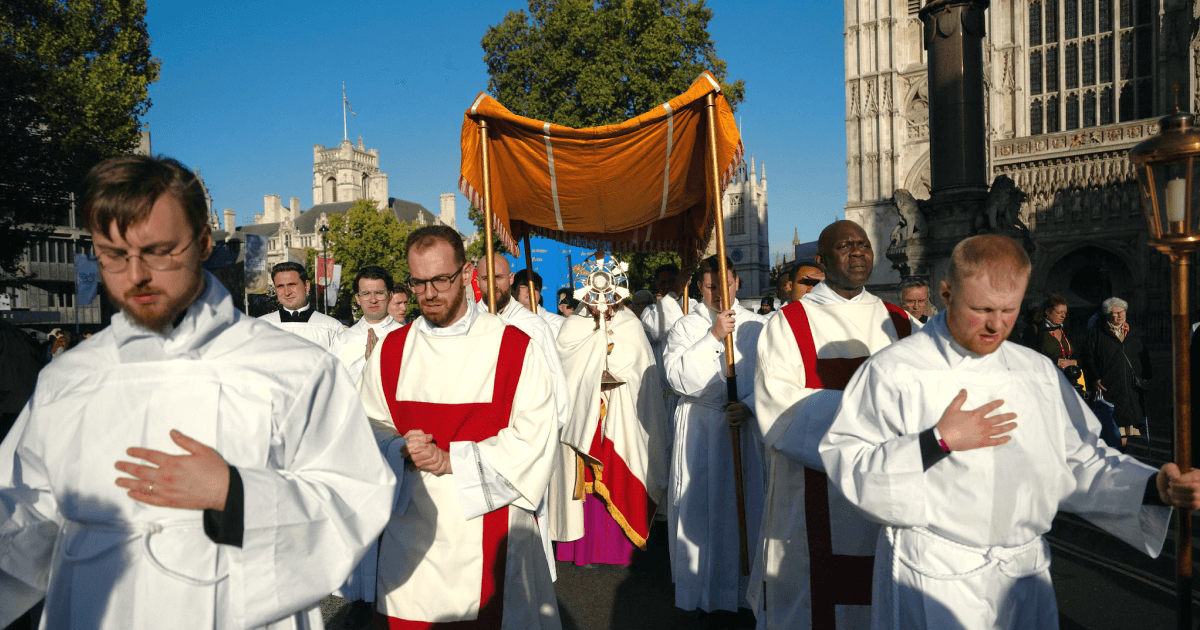
The great cathedral church at Southwark we know today is in many ways a testament to the determination of Archbishop Amigo but – like Moses – he did not live to see it completed. Amigo died in 1949, and it was 1958 before the renewed St George’s was rededicated by his successor, Bishop Cyril Cowderoy. It has witnessed many scenes since then – including the visit of Pope St John Paul II in 1982 and the celebrations of its 175th anniversary in 2023. Under Archbishop John Wilson and the dean, Canon Michael Branch, it continues to flourish, with a particularly excellent musical contribution under the direction of Jonathan Schranz. This evening, Southwark Catholics will gather for a solemn Mass to pay respects to the saint who looks over our cathedral and our country and to implore his continued blessing.

Continue reading with a free account

Create a free account to read up to five articles each month
Create free account

You have # free articles remaining this month.

Subscribe to get unlimited access.
Sign up

subscribe to the catholic herald today

Our best content is exclusively available to our subscribers. Subscribe today and gain instant access to expert analysis, in-depth articles, and thought-provoking insights—anytime, anywhere. Don’t miss out on the conversations that matter most.
Subscribe