April 21, 2026

Migration is being used to weaken Europe’s Christian identity

Thomas Colsy
More
Related
Min read
share

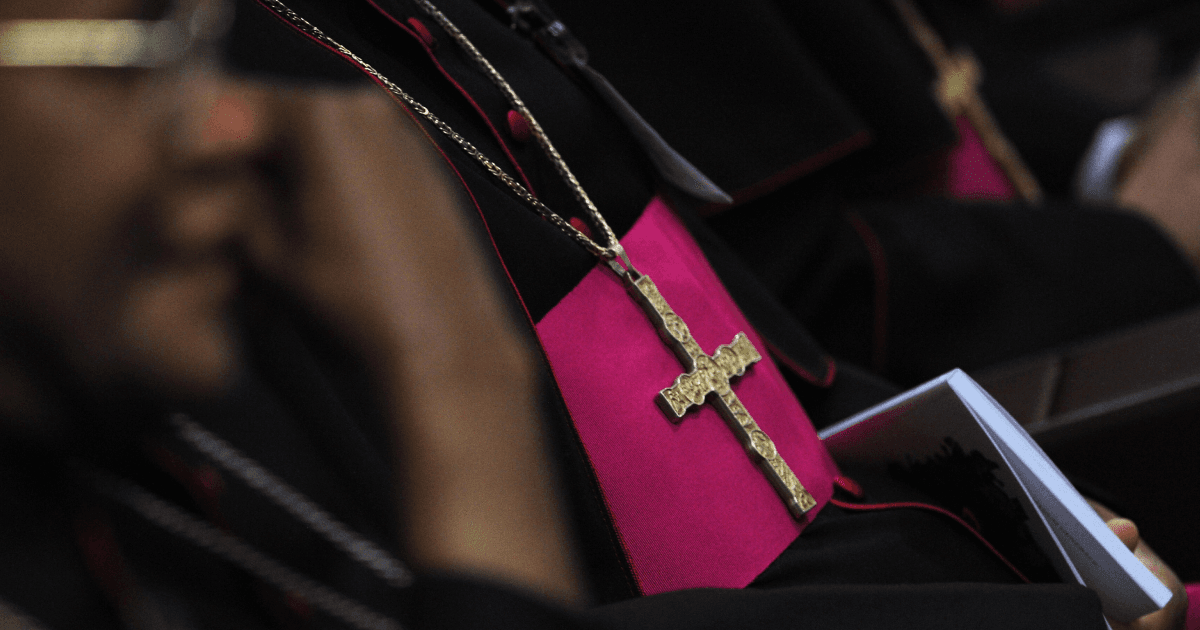
A senior Catholic bishop in an April interview has warned that mass migration into Europe is being used as a political instrument to weaken the continent’s Christian identity, describing the trend as an “orchestrated” effort that risks reshaping the cultural and religious foundations of European society. He furthermore stated it was important that a “movement” be “launched to save Europe”.

The comments were made by Bishop Athanasius Schneider, a prominent senior cleric who has met with Pope Leo XIV and is known for his sympathy to Catholic traditionalism alongside his forthright interventions on doctrinal and cultural questions, during an interview with the German weekly Junge Freiheit. His remarks come as migration, integration and religious identity remain central issues in political debate across the continent.
“Anyone who takes a critical look at society today recognises the effort to deny and suppress the influence of Christianity so that other influences can be spread,” the bishop said, arguing that Europe’s cultural inheritance is inseparable from its Christian roots.

“I criticise this because it is clearly an orchestrated political action,” he said. “A political action aimed at suppressing Western identity, especially the Christian identity of Europe, primarily through Muslim immigrants. It is therefore a mistake to believe that migration simply happens, as a natural reaction to wars or poverty. It is also a tool for subverting Europe and marginalising Christianity here. This strategy fits into the plan to dissolve European identity in order to create a new woke culture and a predominantly Asian-Muslim mixed population.”

“All European values ultimately derive from Christianity, even those we consider secular today,” Bishop Schneider stated.

Expanding on this theme, Schneider described the moral framework traditionally associated with Europe as grounded in what he termed “true human freedom, reason, humanity, family, natural law, and so on”, adding that these principles form the basis of the civilisation that developed over centuries on the continent. He warned that contemporary ideological movements – often grouped under the label of secular or progressive thought – have increasingly challenged those foundations.

When asked what he thought those values were, Schneider replied: “[T]ake Western education: it was the monasteries that preserved, processed, and made accessible to the West the treasure trove of ancient knowledge. They were Europe’s repositories of knowledge for a long time, until the universities emerged, which, however, were also introduced by the Church, dating back to the Church Fathers of antiquity.”

“The same applies,” he explained, “for example, to the hospital, which Christianity itself invented, driven by the spirit of the Gospel and love for the poorest. Consider the Basileion in the 4th century, founded by the Church Father Basil the Great in Asia Minor, where large numbers of sick and needy people were cared for. And even in the subsequent Middle Ages, nursing care was the responsibility of the Church; the state played no part. Where does the term ‘nurse’ itself come from? From the fact that it was originally nuns who cared for the sick.”

Schneider also mentioned the Faith’s influence on the Western legal tradition: “Or consider our procedural law, which in part dates back to the infamous Inquisition, with its modern idea that a proper trial requires both evidence and a defence. These are just a few examples of how profoundly Christianity has shaped our European culture.”

In some of his strongest language, the bishop suggested that large-scale migration is not simply the product of humanitarian crises or economic hardship. “It would be a mistake to think that migration simply happens on its own, as if it were merely a natural reaction to wars or poverty,” he said. “It is also an instrument for subverting Europe.” He went on to characterise the phenomenon as “obviously an orchestrated political campaign”.

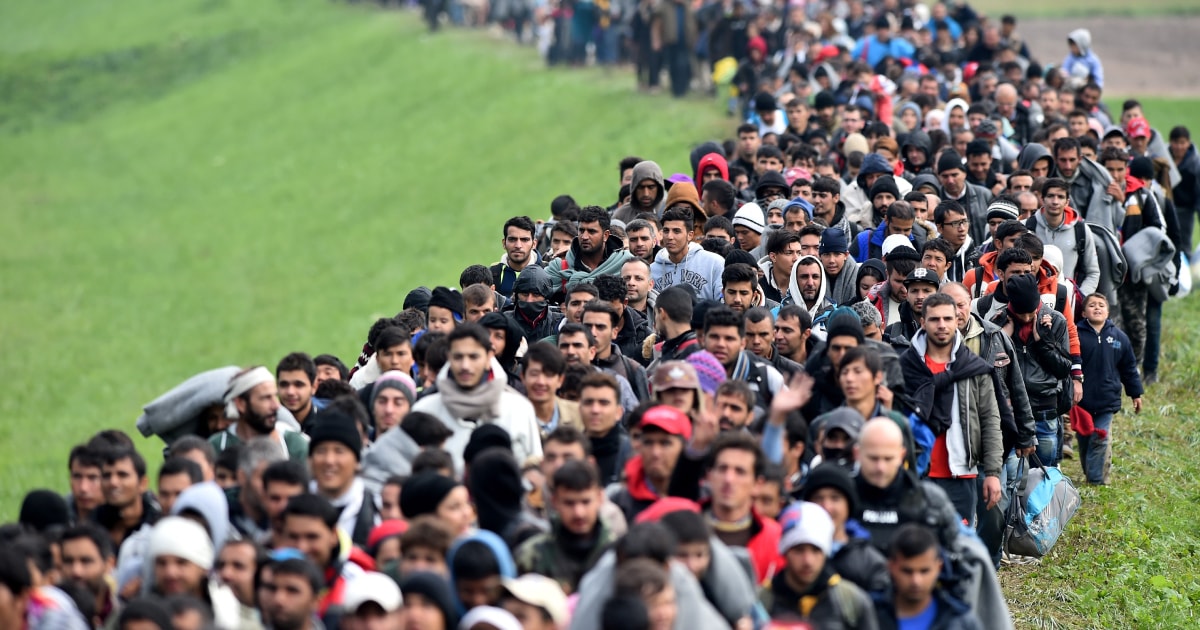
Such remarks reflect anxieties expressed by sections of the European public and political class since the European migrant crisis, when unprecedented numbers of migrants and asylum seekers entered the continent, placing pressure on national welfare systems and fuelling debates over border control, demographic change, replacement and cultural integration. Public opinion surveys continue to show migration as one of the most politically salient issues in European elections.

Bishop Schneider also pointed to what he described as visible signs of cultural change in European cities, including public accommodation of Islamic religious practices. “Under the guise of integration, Islamic religious practices are being introduced into schools and public life,” he said, citing examples such as halal food provision, public meals marking the end of the Ramadan fast and festive lighting during the Islamic holy month. He argued that these developments should prompt renewed reflection on the preservation of Europe’s Christian heritage.

At the same time, the bishop acknowledged that threats to Christian culture come predominantly from left-wing ideologues, but suggested the source of such cultural attack did not come uniquely from one faction on the political spectrum. Schneider explained how an attack on the family exposes a fundamental aim and conviction of these opponents.

“There is no traditional marriage, but only ‘the’ marriage, the natural marriage,” he insisted, arguing that marriage is the foundation of our civilisation – theologically and historically. “Because marriage is something that nature gives us, not tradition. Marriage is a fact, a fact of common sense. It is created by God, and it is the best and most beautiful union that a man and a woman who complement and love each other can enter into.”

“And on this foundation rests our entire society; on it we have built our civilisation and our European culture with its humanity. Therefore, we must defend marriage by upholding its unique character and helping young people rediscover its value and beauty,” Schneider added.

“Marriage gives birth to our children, who are our future – and at the same time the most vulnerable victims of the destruction of marriage. For we see a generation growing up that has no foundation and is thus helplessly exposed to woke ideology. That’s the leftist method: first, you create a vacuum of meaning, which you then exploit to seduce people. They don’t realise how they lose their naturalness, their freedom, and their humanity, and often their joy in life as well.”

Also laying the blame on corrosive aspects of technological modernity, he continued: “[W]e must defend our European values against attacks from all sides. Another major danger is the coldness of administration and technology: in mass society, people are in danger of being treated as mere objects or commodities. This is shockingly evident, for example, in modern hospitals and nursing homes. Often, the warmth, the true human warmth that Christianity brought, is missing there.”

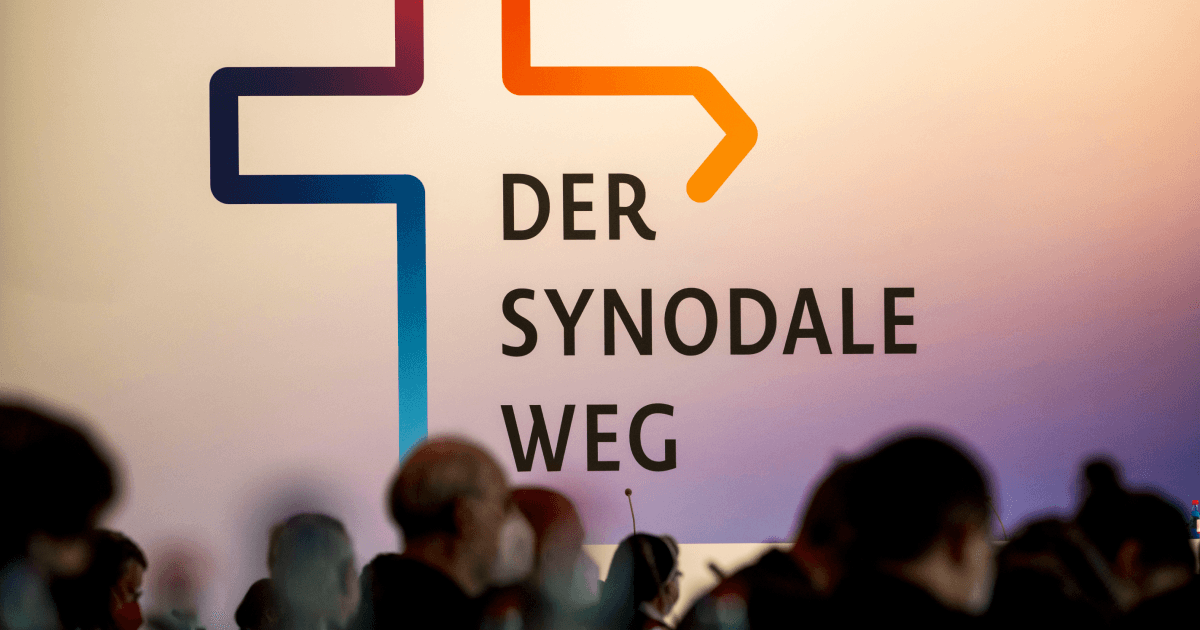
When asked about whether certain corners of the Church and senior clerics might be inimical to a movement that would stop this, the bishop did not think them authentically Catholic and castigated them: “Absolutely right, but unfortunately the Church in Germany in particular has already been completely aligned with the spirit of the times, the mainstream and the ideology of the governing parties – thereby betraying what is truly Christian and Catholic.”

Schneider added: “The German Church has been brought into line; it has betrayed Christianity and Catholicism.”

“It is sad,” he continued, “but unfortunately the Church in Germany has become a cowardly – I emphasise: a cowardly! – collaborator of left-wing ideology. And I am certain that this will go down in history as a great disgrace, and one day, filled with shame, people will read the names of the bishops who, as cowardly collaborators, led all of this.”

Instead, he called for strengthening the moral and spiritual life of Christian communities as the most effective response to social change.

His intervention comes amid continuing discussion within both civil and ecclesial institutions about the future of Europe’s demographic and cultural trajectory. The European Union has repeatedly emphasised the need for coordinated migration policy, while Catholic leaders have sought to balance calls for humanitarian assistance with concerns about social cohesion and religious identity.

Concluding his remarks, Bishop Schneider urged Catholics to respond not with fear but with renewed conviction in their faith and traditions. “This makes it all the more important,” he said, “that a movement be launched to save Europe.”

Continue reading with a free account

Create a free account to read up to five articles each month
Create free account

You have # free articles remaining this month.

Subscribe to get unlimited access.
Sign up

subscribe to the catholic herald today

Our best content is exclusively available to our subscribers. Subscribe today and gain instant access to expert analysis, in-depth articles, and thought-provoking insights—anytime, anywhere. Don’t miss out on the conversations that matter most.
Subscribe