June 5, 2026

We should welcome America’s ‘medieval’ future

Jacqueline O'Hara
More
Related
Min read
share

The New York Times recently published a comment article by Katya Ungerman titled “We Are Sliding Back Into the Middle Ages”. The piece explored the increasingly widespread belief that “life feels, to many, increasingly charged with unseen forces”.

Characterising this trend with the secular slur “medieval” negatively implies that belief in the supernatural contradicts progress or reason. Ungerman also offensively equates belief in religion with the occult, extraterrestrial life and conspiratorial paranoia.

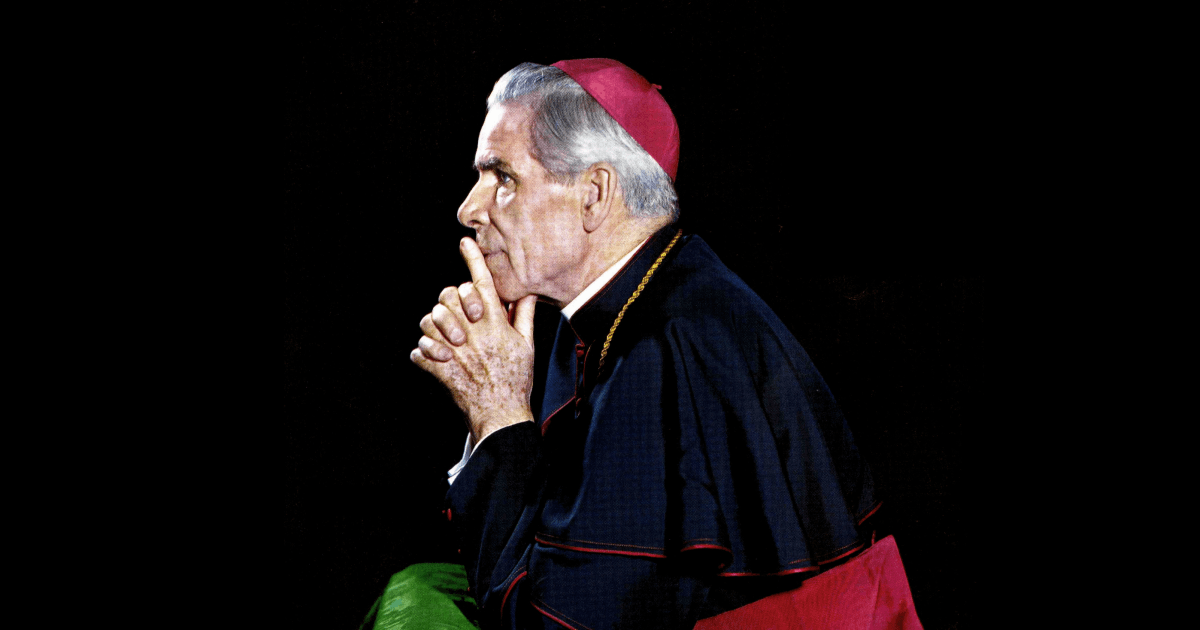
On the contrary, America’s religious revival and interest in the supernatural is a positive sign that people recognise what modern society has forgotten: that God and the Devil exist, that they actively intervene in the world around us, and that this belief is informed by reason rather than an abandonment of it.

Ungerman’s use of the word “medieval” in this context indicates that she shares the prevailing secular belief that the medieval ages were “dark” and regressive because of their intense, specifically Catholic, religiosity.

Ironically, the Middle Ages are an excellent example of how the Catholic faith combined with reason inspired the founding of hospitals, universities and schools. Medieval Catholic monks painstakingly preserved historical and religious records, literature and the arts – only for this contribution to be maligned by the same historians who benefit from these records today. Medieval Catholic theologians and philosophers such as St Thomas Aquinas made contributions to their fields that persist today. Those who attack the medieval era – in which faith in God inspired human progress – expose their underlying animus towards religion itself.

Ungerman implies increased belief in the supernatural is regressive while also equating belief in religion with conspiratorial belief, UFOs, astrology and more – as if the 2,000-year-old Catholic Church is the fruit of emotionalism rather than the most powerful culmination of both faith and reason in human history.

Indeed, mere emotionalism is not responsible for the “historic” numbers of converts that the Catholic Church welcomed at parishes nationwide this year. Young Catholics in cities such as Washington, DC and New York are organising “pizza to pews” events for community and Mass. Young men especially are attending religious services more regularly. Catholic belief in the Real Presence – the belief that the Eucharist is truly the Body, Blood, Soul and Divinity of Jesus Christ – is steadily climbing.

The Eucharist is precisely one of those “unseen” things that is captivating Americans. Ironically, this belief is increasing not because of mere emotionalism but because human reason cannot deny the tangible evidence before its eyes: the dozens of incidents of consecrated Eucharistic hosts bleeding, or possessing DNA dating back to the time of Christ.

Similarly, neither human reason nor technology can explain the Catholic miracles at Lourdes and Fatima. Thousands of eyewitnesses testified that the sun literally danced after Our Lady promised three little children that she would give the world a miracle. That miracle, as well as the miraculous healing fountain at Lourdes, was given to mankind specifically so that human reason could corroborate what we believe in faith.

The Catholic Church also boasts several saints whose bodies inexplicably never decomposed, in addition to a veil bearing Jesus’s face that many believe belonged to Veronica. The Catholic Church also has repeatedly affirmed that the Shroud of Turin is truly the burial cloth in which Jesus was wrapped after His death. Secular investigations into the Shroud have even prompted conversions among those who cannot explain how an image of Jesus’s body was perfectly imprinted on the gossamer threads – something scientists say would require a nuclear-level force, possibly from the Resurrection. The “unseen” God has left Catholics tangible evidence of His existence.

Ungerman’s article implies that Americans’ return to the supernatural signals a return to the dark ages. In reality, it is a collapse of the secular experiment that promised meaning without God – and instead delivered loneliness, confusion and despair. For decades, secular elites tried to replace the innate human desire for God with false promises of liberation, progress and happiness. This “progress” required the elimination of faith from public life and resulted in widespread hostility and persecution of Catholics, Christians and their “regressive” beliefs. The relentless message of these activists was clear: traditional Catholicism belongs in the “medieval” past.

Yet rather than disappearing, the Catholic Church is drawing historic numbers of converts. Rather than rejecting faith as irrational traces of the dark ages, many converts are embracing it precisely because reason tells them it is the truth they have been searching for.

The growing interest in Christianity, and especially Catholicism, shows that many people are rediscovering the truth their ancestors knew well: that good and evil are real, that God loves us and actively intervenes in our lives, and that faith and reason are inseparable virtues.

Continue reading with a free account

Create a free account to read up to five articles each month
Create free account

You have # free articles remaining this month.

Subscribe to get unlimited access.
Sign up

subscribe to the catholic herald today

Our best content is exclusively available to our subscribers. Subscribe today and gain instant access to expert analysis, in-depth articles, and thought-provoking insights—anytime, anywhere. Don’t miss out on the conversations that matter most.
Subscribe