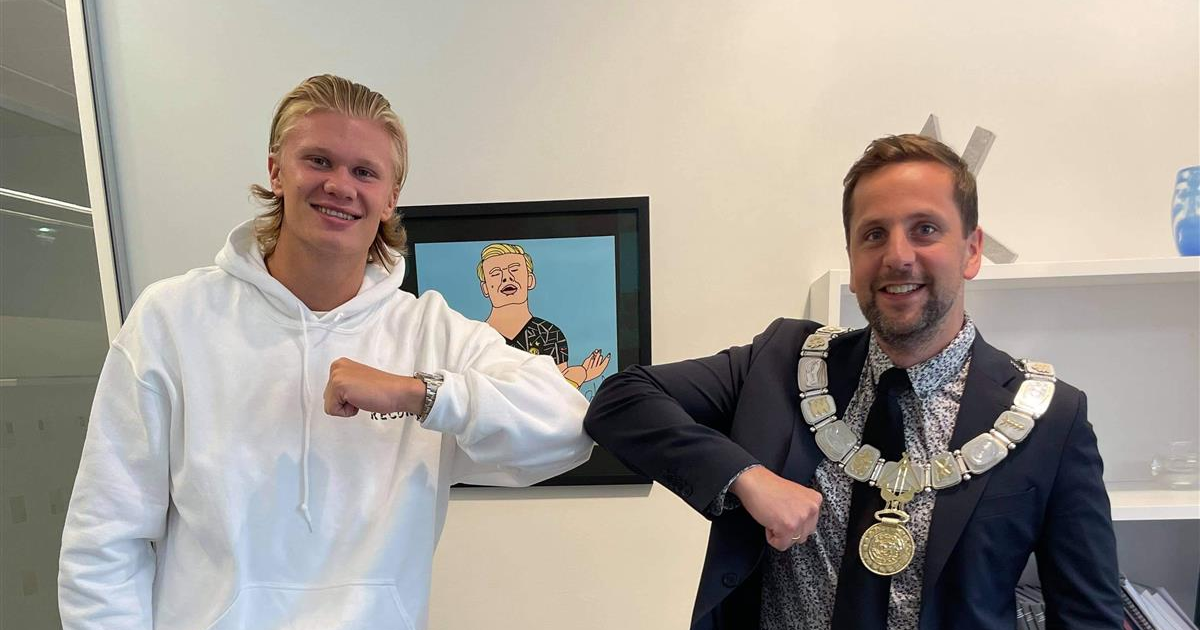



In the wake of the World Cup, Erling Haaland has become more than a footballer. At just 25, he is a Gen Z cultural phenomenon: a viral star, fashion muse and social media heartthrob whose influence stretches far beyond the pitch. Yet unlike many modern celebrities, Haaland projects an image that feels refreshingly unmanufactured. His self-deprecating humour, apparent lack of interest in taking fame too seriously and preference for a stable, private family life stand in contrast to the spectacle that often accompanies global stardom. He has remained in a long-term relationship with his childhood sweetheart, Isabel Haugseng Johansen, with whom he has a young son, while keeping his family life largely out of the spotlight.
His recent appearance at Dolce & Gabbana’s Alta Sartoria show in Sicily – the menswear equivalent of haute couture – cemented his status as a style icon, but behind the fashion campaigns, sponsorships and footballing success lies another story: one rooted not in celebrity, but in tradition.
During this year’s World Cup, Haaland was seen wearing what appeared to be a rosary-style cross necklace, a small but striking symbol in an era when public expressions of Christian faith have become increasingly uncommon among cultural figures. At the same time, Norway’s national team wore a kit that celebrated the country’s Christian heritage, incorporating symbols inspired by one of its oldest churches.
The point is not simply about a necklace or a football shirt, but about the memory of our historical and religious foundations. Norway’s World Cup kit featured the Nordic Cross, a symbol historically connected with the Christianisation of Scandinavia during the Middle Ages. More subtly, the design incorporated patterns inspired by the intricate wood carvings of the Urnes Stave Church, one of Norway’s oldest surviving churches and a UNESCO World Heritage Site.
Built in the 12th century, Urnes Stave Church blends Viking artistic traditions with Christian symbolism, marking a defining moment in Norwegian history. Its intricate carvings reflect the nation’s transition from Norse paganism to Christianity and stand as a lasting reminder that Norway’s national story cannot be separated from the faith that shaped its culture, architecture and values.
In a world where brands often chase novelty, modernity or the highest-paying advertiser, Norway chose to acknowledge its heritage. Haaland’s own relationship with Norway’s Christian past appears to reflect a similar appreciation.
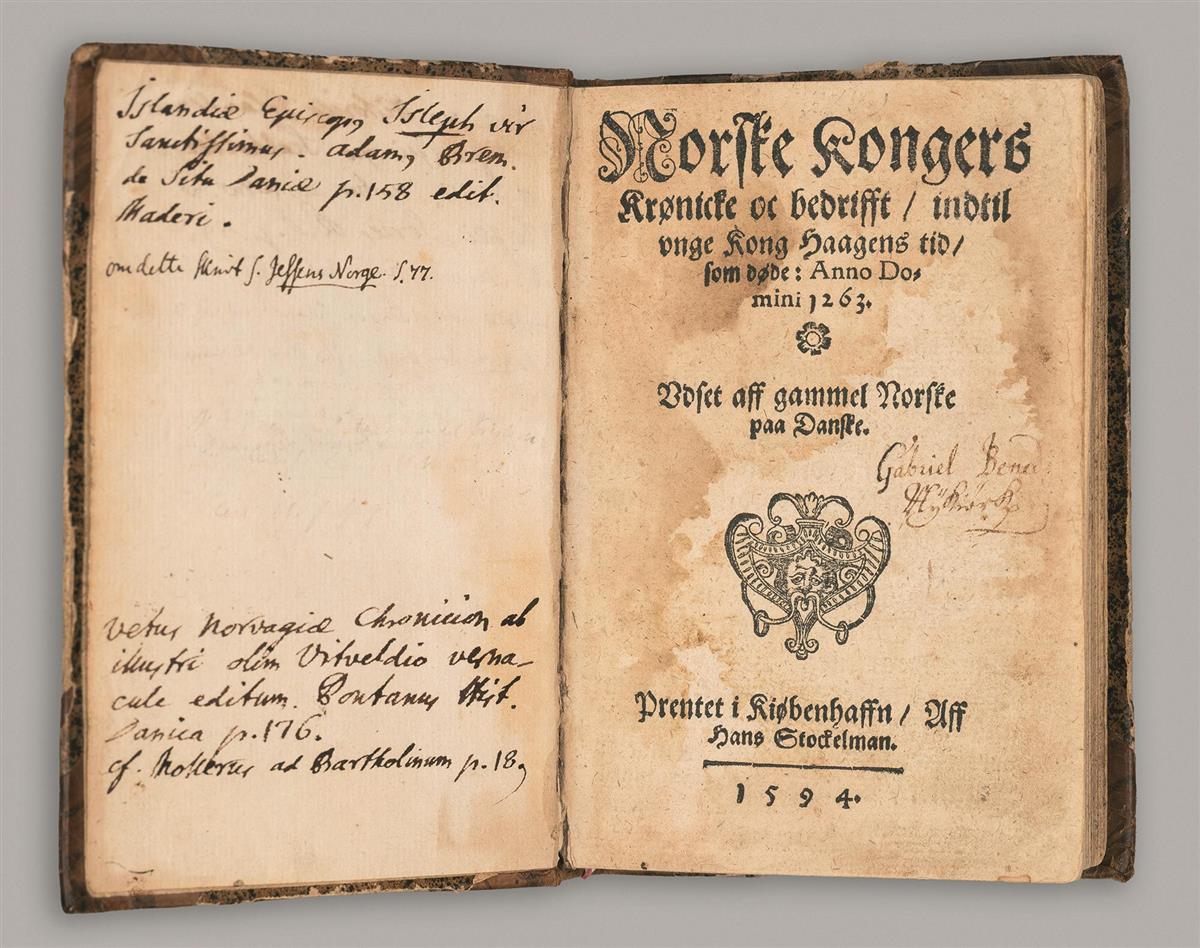
The footballer reportedly spent more than £134,000 acquiring a rare medieval manuscript documenting Norway’s Christianisation and the lives of its early Christian kings. Rather than keeping it as a private collector’s item, he donated the manuscript to a public library in Bryne, the town in the Time municipality where he grew up.
What makes Haaland such an interesting cultural figure is the contrast he embodies. He is not a nostalgic figure detached from modern life, but a global celebrity at the centre of contemporary culture: social media, international branding and mass sports entertainment. Yet alongside that modern influence, he is also engaging with the traditions, stories and beliefs that helped shape his homeland.
This reflects a wider trend among younger generations. For years, popular culture has often presented tradition, religion and inherited identity as things to move beyond and progress from. But increasingly, many young people appear drawn towards things that offer a sense of permanence in an age of constant change.
It is perhaps no surprise that, in rediscovering this history, many people also find themselves drawn towards the faith that shaped it. Tradition, after all, is not necessarily the opposite of modernity; it can provide a foundation from which people make sense of the present.
What makes this moment so striking is that it did not arrive as a “hot take”. There was no grand announcement, no political statement and no attempt to create controversy. Instead, faith and heritage appeared naturally through simple symbols: a cross, a manuscript and a historic design woven into a football shirt.
For Catholics, there is a humbling reminder here: witness is not always dramatic. We are not called to retreat from modern life or separate ourselves from popular culture, but to engage with the world while faithfully preserving what is beautiful, true and meaningful. Sometimes the quietest expressions of heritage can become the most powerful invitations for others to look deeper.
Erling Haaland may be known first as a footballer. But his interest in Norway’s Christian heritage reveals something deeper about the cultural moment we are living through. In an age of rapid change, many people – especially younger generations – are searching for something enduring. They are looking beyond the endless stream of digital content towards questions of identity, purpose and belonging.
(Images: Municipality of Time)