


July 24, 2026

Nolan's ‘Odyssey’ gets Homer right

David Hahn
More
Related
Min read
share
“Sing to me of the man, Muse, the man of twists and turns, driven time and again off course once he had sacked the hallowed heights of Troy.”

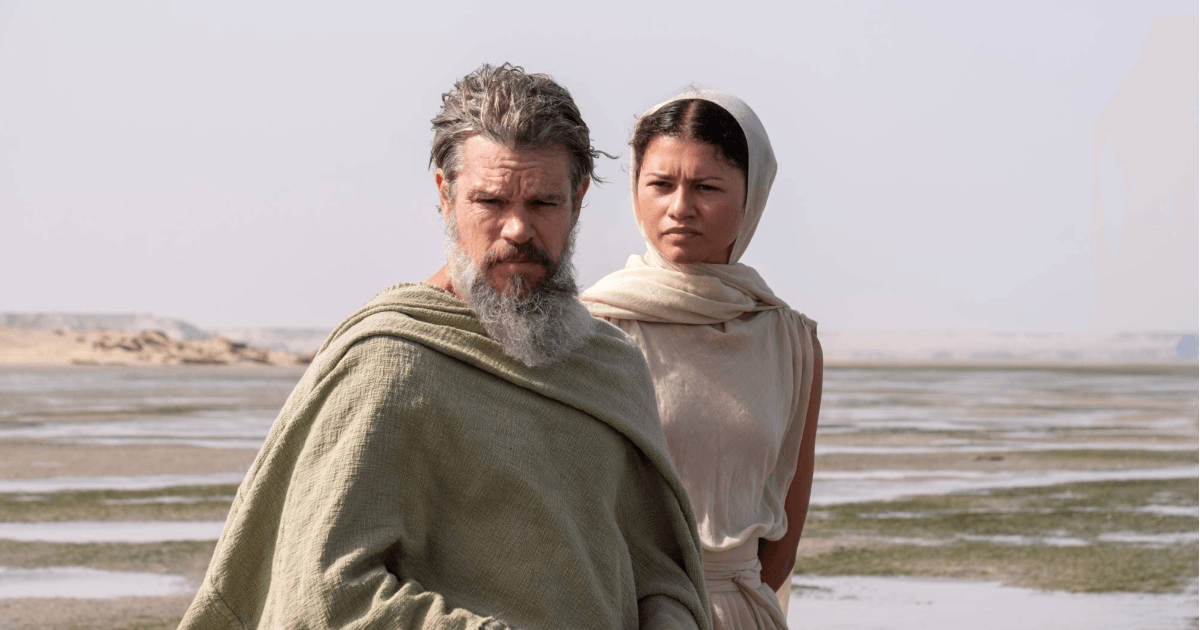
These opening lines from Robert Fagles’s Odyssey may apply almost as much to Christopher Nolan as to their titular hero. Reluctantly, on Tuesday night I joined my brothers-in-law to see this recent blockbuster, fully expecting to be disappointed by another postmodern deconstruction of a much-beloved story. That is not what I found. Instead, I found one of the most thoughtful and faithful retellings a lover of Homer could reasonably have hoped for. Perhaps that is also its one major flaw.

During the two years I had the privilege of teaching epic literature at a classical high school, few works excited or engrossed my students as much as the Odyssey. After completing the unforgiving, almost monotonous violence of the Iliad – with its capricious gods, spiteful heroes and tragic opponents – the Odyssey came as a breath of fresh air. It retained the grandeur of epic while introducing wit, cunning, domesticity and, above all, hope. Much the same can be said of Christopher Nolan’s adaptation. Among the myriad retellings of classical stories, it has become something of a rule in Hollywood that fidelity to the source material must be avoided. Nolan, it seems, never received the memo.

There is as much here to delight the cinephile as the bibliophile. Sadly, there is perhaps just as much to frustrate them both. At just under three hours, the film drags through long stretches. Nolan’s fidelity to Homer’s famously episodic narrative delighted me as a reader, but it definitely makes for weaker cinema. There is always something traded when a story changes medium; something is lost in adaptation. The very qualities that preserve Homer’s vision sometimes prevent the film from finding the momentum demanded by its own medium.

The gods are all but absent from this retelling – a major departure from the epic poem, but one that I found entirely sensible. Divinity is depicted poorly on film; it is better grasped through poetry. The Greek gods present a unique challenge to any director, inhabiting both the sublime and the sordid. They are as much reflections of earth as visions of heaven, at once comic, terrifying, noble and petty. This ambiguity is one of Homer’s greatest artistic achievements and one of his greatest interpretive challenges. Rather than attempting the impossible, Nolan wisely leaves much of their mystery intact. Their providence is felt more in the shape of events, the roll of thunder, than in visible intervention, preserving something of the reverent distance that poetry alone seems capable of sustaining.

Nolan’s greatest achievement in this film was to introduce novelty – a famously unpopular move for audiences of beloved stories – and to do so profoundly. This was not a postmodern deconstruction, but rather a thoughtful criticism of weaponising custom.

Nolan places the collapse of civilisation at the centre of his Odyssey. Home, kingship, marriage, sacrifice, hospitality and piety are not presented merely as inherited customs but as the very conditions that make human flourishing possible.

The Trojan Horse was not merely a stroke of military genius; it was an act of cultural inversion. What was received as a sacred offering became an instrument of death. One is tempted to call Odysseus the first postmodernist – not because he rejected truth itself, but because he destabilised the meaning of a sacred symbol, turning a gift into a weapon. Postmodernism often delights in exposing hidden power beneath inherited meanings; Odysseus achieves victory by weaponising precisely those meanings. Nolan situates Odysseus’s deception – indeed, deception about religion – as the principal cause of society’s collapse.

If the law of God no longer binds man, man inevitably debases himself. Not only does society collapse, but man descends beneath the level of the animal. Bent solely upon the fulfilment of his own will, he becomes as monstrous and as man-eating as the Cyclops. The Odyssey is therefore not merely the story of a man finding his way home. It is the story of a civilisation attempting to recover order after pride has shattered it.

Yet home (nostos) in Homer has never meant merely returning to a place. Ithaca is not simply an island but a symbol of rightly ordered life. Odysseus longs not merely for his palace but for his wife, his son, his kingdom, his household gods and the peace that comes from each thing occupying its proper place. His homecoming is therefore more than geographical; it is moral and spiritual.

Christopher Nolan has done this story remarkable justice, employing Homer’s wayward hero to offer a timely moral lesson for our own deconstructed age. I will not pretend that the film is without faults, but those faults seem almost inseparable from the virtues that produce them. The same fidelity that occasionally slows the narrative also preserves the richness of Homer’s vision.

Like the Trojan Horse itself, this film is clothed in progressive trappings while containing grounded conservative values. Beneath the spectacle lies a profoundly traditional story: the goodness of marriage and family, loyalty to one’s home and culture, the danger of pride and the necessity of submitting oneself to the divine order rather than one’s own will. While I will not be trading my copy of Fagles’s Odyssey for Nolan’s adaptation, it accomplished something few adaptations ever do. When the credits rolled, I found myself wanting not another sequel but another reading of Homer. Few compliments could be higher.

Continue reading with a free account

Create a free account to read up to five articles each month
Create free account

You have # free articles remaining this month.

Subscribe to get unlimited access.
Sign up

subscribe to the catholic herald today

Our best content is exclusively available to our subscribers. Subscribe today and gain instant access to expert analysis, in-depth articles, and thought-provoking insights—anytime, anywhere. Don’t miss out on the conversations that matter most.
Subscribe