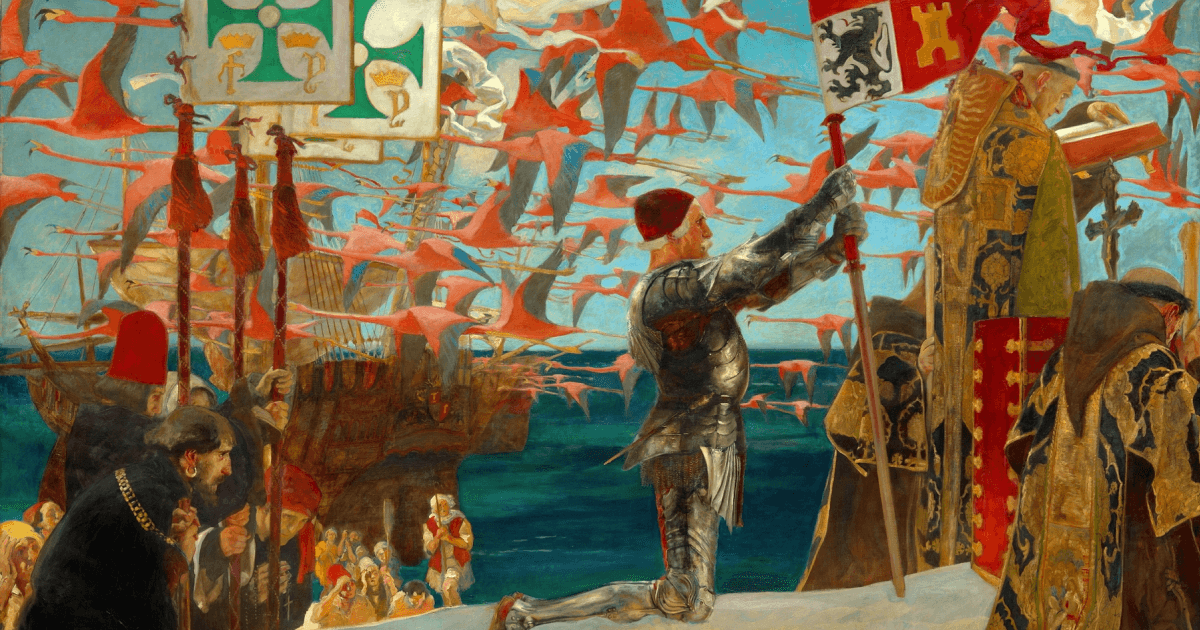






Columbus Day has taken on many meanings over the past century. In the United States, it is often seen as a day to celebrate the contribution Italian-Americans have made to the country. In Spain, it is the national day, celebrating the voyage undertaken under Ferdinand and Isabella. In more recent politicised iterations, it has been used to attack Columbus by highlighting the very real losses suffered by the native peoples of the Americas.
All of these purposes bring something to the table to varying degrees, but October 12 is a day to recognise and honour Christopher Columbus as one of the most consequential men in human history. He was far from the first human to reach the Americas, as the centuries of indigenous habitation show, nor was he even the first European – archaeological evidence has proved the Vikings reached at least as far as Newfoundland. Columbus’s voyage permanently joined two worlds that, for all practical purposes, had developed almost completely apart from one another for millennia.