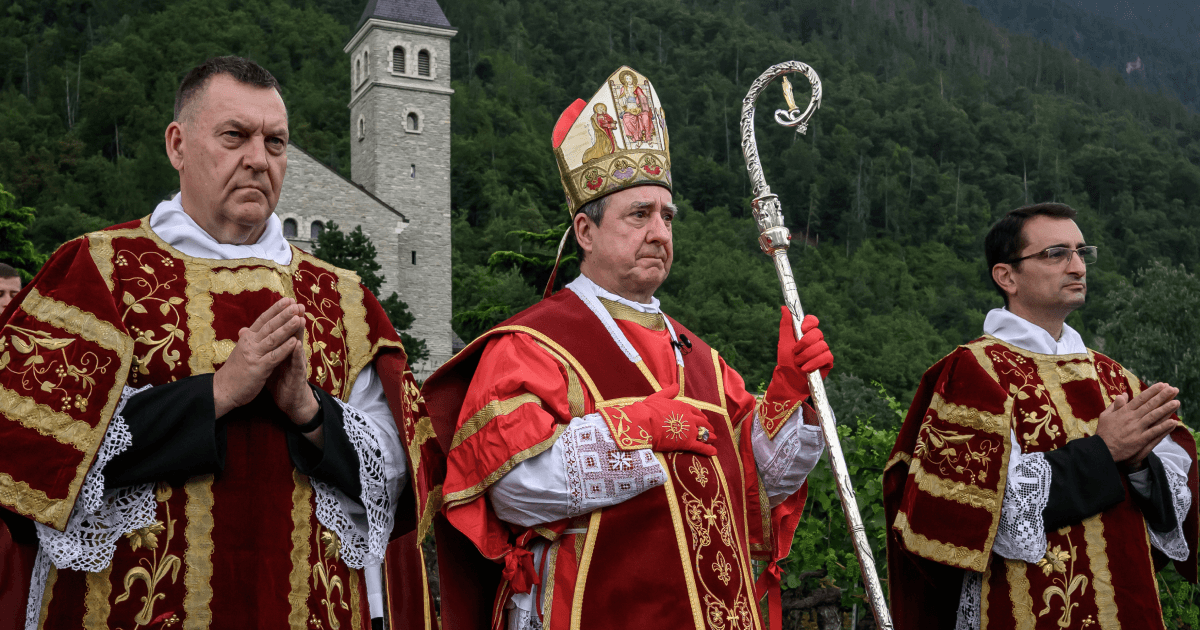
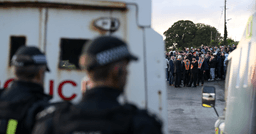
On July 1, 2026, the Society of St Pius X (SSPX) consecrated four priests without Vatican approval at Écône, Switzerland, in a large outdoor ceremony that drew an estimated 16,000 people together in attendance.
The Vatican had previously warned that if the SSPX were to proceed in consecrating bishops without Rome’s approval, those involved would incur automatic excommunications. The day before the consecrations, Pope Leo XIV appealed to the Society to refrain from proceeding.
On July 2, the day after the consecrations, the Dicastery for the Doctrine of the Faith (DDF) declared the four newly consecrated bishops as well as the two consecrating bishops to have incurred automatic excommunication.
The document published by the DDF decreeing the excommunications, signed by Prefect of the Dicastery for the Doctrine of the Faith, Cardinal Víctor Manuel Fernández, as well as the accompanying explanatory note, has wide-reaching implications for both the priests and the laity of the society.
On the issue of the laity, it made reference to the 1996 explanatory note On the excommunication by schism incurred by the adherents of Bishop Marcel Lefebvre's movement. It stated that in the case of the other members of the faithful, it is “obvious that an occasional participation in liturgical acts or activities” without “adopting the attitude of doctrinal and disciplinary disunity of that movement, is not sufficient for one to speak of formal adherence to the movement.”
“Above all, the intention of the person must be taken into account, and the translation of this interior disposition into acts. The various situations must therefore be judged on a case-by-case basis, in the competent forums of the external and internal forums.”
This means that having attended or received sacraments at SSPX chapels would not necessarily make one schismatic, but rather their disposition.
However, as Bishop Terry LaValley of Ogdensburg, New York, noted in his pastoral letter, the declaration of the SSPX as being in a state of schism makes it illicit and forbidden for Catholics to “participate in and receive the Sacraments from bishops and priests associated with the Society of St Pius X, including Baptism, Confirmation, the Holy Eucharist, Penance, Marriage, and Holy Orders.”
“The only exception provided for in Canon Law is the Sacrament of Penance when there is a danger of death,” he said, citing Canons 976 and 1752.
This means that Catholics wishing to remain in communion with Rome who have planned baptisms, confirmations and weddings should not proceed with a priest or bishop of the SSPX.
Lay people who have “attended the Priestly Fraternity of Saint Pius X only for liturgical or spiritual reasons” and “lay people who, while aware of the tensions with the Holy See, do not reject the Magisterium or the authority of the Roman Pontiff” are not to be considered imputable, and do not need to seek reconciliation with Rome.
As such, it stated that the imposition of the penalty of excommunication “cannot be presumed automatic, but must be assessed case by case” as imputability requires full awareness and deliberate consent.
For those who have committed to still attend SSPX churches, there are sacramental issues to consider.
Baptisms which take place after the excommunication will be considered valid, but not licit. This means that the person is Baptised, however the sacrament has not been performed according to the Church’s prescribed rules.
Regarding Confession, as Bishop LaValley noted above, the only exception to allow for validity would be when there is a danger of death. Outside of that circumstance, the sacrament of Reconciliation within the SSPX is invalid.
If the baptised person seeks to re-enter communion with Rome, they would generally not be rebaptised, as Baptism when done validly leaves an indelible mark upon the soul.
SSPX marriages post-excommunication are now also invalid according to the Church.
Furthermore, those committed to the Society in a state of conscious schism are not permitted to receive Communion at a Catholic Mass, including Traditional Latin Masses.
It is not yet clear how the excommunications have affected the SSPX materially. Generally speaking, the Society has been financially independent from the broader Catholic Church, relying on donations or owned assets, meaning they are not in danger of losing chapels or priests from the excommunication on material grounds.
It is also not apparent how schism has affected - and will continue to affect - the number of priests and laity leaving the Society. The consecrations were announced by the SSPX on February 2 this year, and it may be that most who have remained within the Society despite the plan will remain within it afterwards also.
For parishioners of the Society who have concerns about the schism, the Dicastery released a procedure for reconciliation. It depends upon the degree of subjective responsibility of the lay faithful “who have formally adhered to, or who attend, the Priestly Fraternity of Saint Pius X and who ask to enter into full communion with the Catholic Church.”
The procedure has been sent to bishops around the world, meaning that if you have questions about the process you should contact your local diocese.
The Dicastery has also set forth a procedure for priests of the Society to re-entering communion, part of which requires accepting the Church’s magisterium and the validity of the Novus Ordo Mass.
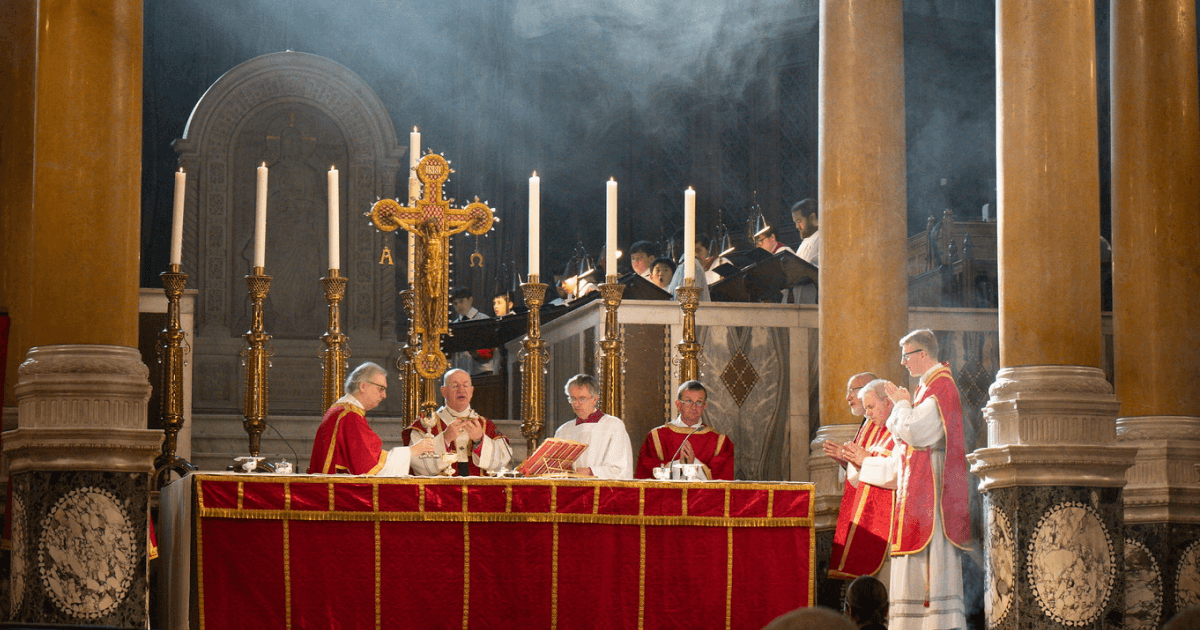
In the aftermath of the excommunications, many faithful Catholics are left wondering – and worrying – which direction the Church hierarchy will take regarding the Traditional Latin Mass.
Bishop Fredrik Hansen of Oslo has said he is willing to expand provisions for the old rite within his diocese as a way to provide for Catholics with a devotion to it. Undoubtedly, some bishops who previously had suspicions of the 1962 will feel they were confirmed.
The Traditional Latin Mass has seen a surge in popularity, with devotion to it especially strong amongst the young, and so whichever direction the Church swims, its consequences will likely ripple for years to come.