April 7, 2026

Is Belgian bishop right to push plan to ordain married men as priests?

Niwa Limbu
More
Related
Min read
share

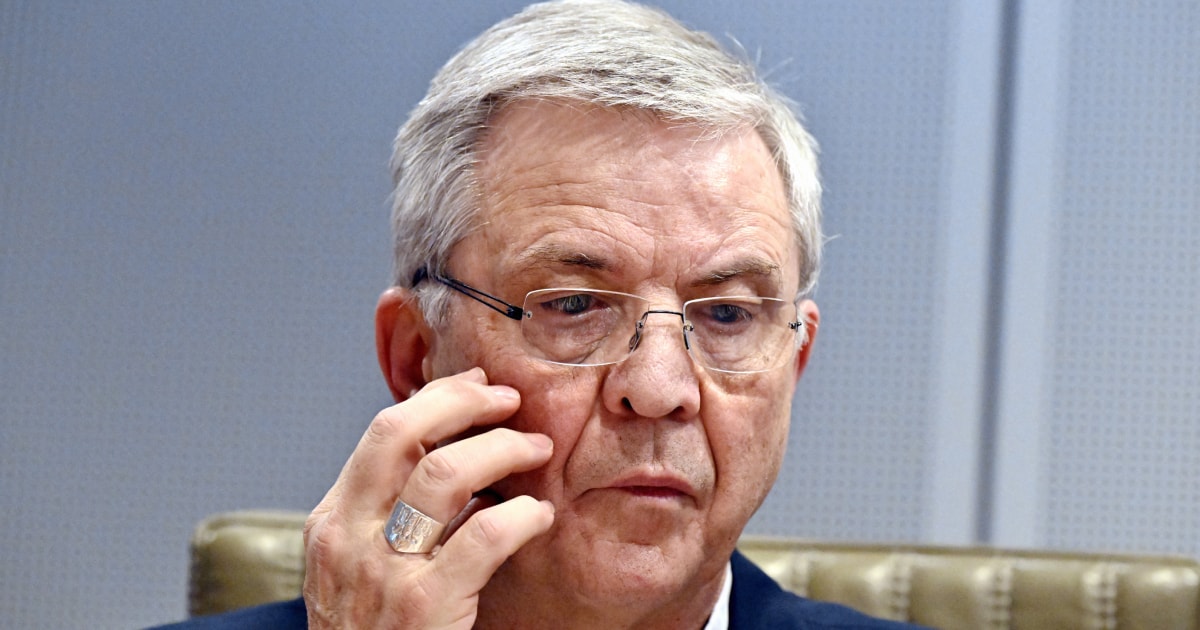
Bishop Johan Bonny of Antwerp has defended his intention to ordain married men as priests in the Latin rite, saying that support for such a move is widespread among bishops in Western Europe and known within the Roman Curia.

In an interview published on April 2 by Katholisch, the Belgian bishop said: “I know many bishops, and almost all of them – mostly from Western Europe – tell me that they also want to ordain married men.” He added: “I have not yet heard a Catholic bishop tell me, ‘Even if the Pope gives me the possibility, I will not ordain married men.’ They know this in Rome as well.”
Bishop Bonny, who worked in the Vatican for 11 years, said he was familiar with the range of views in the Curia and suggested that there was understanding for the situation in Western Europe. “In Rome, they understand the situation here, and I know bishops and cardinals who support this solution, at least in Western Europe,” he said.

He rejected suggestions that the announcement had been made for effect, stating plainly: “When I say that we need married priests today, it is no longer a theoretical or theological question, but a practical one.”

The bishop pointed to what he described as a severe shortage of clergy in his diocese, saying that the remaining priests were increasingly unable to carry out ordinary pastoral work. “We have such a severe shortage of priests that our few remaining priests are just sitting in meetings, dealing with administration, and then only celebrating Mass on Sundays,” he said. “There is no time for pastoral care, accompanying people, or being part of the community.”

He set the situation against a steep long-term decline in numbers. “Until the 1960s, a diocese like Antwerp had almost 1,500 active priests and several hundred more retired ones. Now I have fewer than 100 – and half of them come from abroad,” he said, adding that entire areas of the diocese now had no priest under the age of 75.

Explaining the timetable he has set, the bishop said the matter could not be delayed further. “When a child is hungry, you cannot say, ‘We will think about it and maybe find a solution next week.’ No, the child is hungry, and you have to feed them now,” he said. “We have been waiting for more priests for 30 or 40 years.”

He linked the proposal to the implementation phase of the Synod on Synodality, saying that it required concrete action at diocesan level. “Now it is no longer about thinking or studying, but about acting,” he said, adding: “Doing nothing is no longer an option.”

At the same time, he acknowledged that any change would ultimately depend on papal authority. “We are one Church, there is a Pope, and he is the one who ultimately says yes or no,” he said, declining to say how he would respond if permission were refused. “That is a question I cannot answer right now. We will see in 2028.”

He maintained, however, that the proposal did not touch on the substance of priesthood itself. “The essential thing is the sacrament of priestly ordination. Whether the person is married or not is irrelevant,” he said, noting that married clergy already exist in other parts of the Catholic Church. “If we had a canon law with two options, the matter would already be resolved.”

While the focus of the interview remained on the ordination of married men, the bishop was also asked about wider questions raised in his pastoral letter, including the role of women in the Church. He stressed that the two issues were distinct and said he did not wish to provoke controversy. “The question of ‘viri probati’ is not provocative. It is a great necessity,” he said.

Addressing the question of women’s ordination to the diaconate, he acknowledged that no solution had yet been found in Rome. “I understand that Rome does not yet have an answer to the women’s question. But what is the answer then? The alternative to ordination cannot be nothing,” he said.

The bishop first set out his proposal in an 11-page pastoral letter published on March 20, in which he announced his intention to ordain married men in his diocese by 2028. The document formed part of his response to the recent Synod on Synodality and its application at diocesan level.

In the letter, he wrote: “The question is no longer whether the Church can ordain married men as priests, but when it will do so, and who will do it.” He described the move as a practical necessity in the face of a steep and prolonged decline in priestly vocations. “It is an illusion to think that a serious synodal-missionary process in the West still has a chance without also ordaining married men as priests,” he said, adding that the number of unmarried men presenting for ordination had “fallen to just above zero”.

While acknowledging the contribution of clergy from abroad, Bishop Bonny said reliance on them could not provide a lasting solution. They “come to help us, not to replace us”, he said, warning that it would be unjust to depend indefinitely on priests from other parts of the world to sustain the Church in Europe.

He said he intended to proceed with preparations at diocesan level, stating: “I will make every effort to ordain married men as priests for our diocese by 2028.” Potential candidates would be identified and approached directly, and would receive theological and pastoral formation comparable to that given to seminarians. The process, he added, would be conducted “transparent but discreet, away from the media spotlight”.

The bishop also pointed to what he described as an inconsistency in existing practice. Married clergy are already present within the Catholic Church in certain circumstances, including priests of the Eastern Catholic Churches and married ministers who have entered into full communion from other Christian traditions. “No one can explain any longer why the ordination of married men is possible for Eastern Catholic seminarians or for Catholic converts, but not for native Catholic vocations,” he wrote, noting that such priests already serve in a number of dioceses.

The letter also linked questions concerning the structure and life of the clergy to the wider impact of the abuse crisis. Bishop Bonny wrote that “clerical subcultures and lifestyles have had their day” and said that trust in the Church had been severely damaged in recent decades.

Bishop Johan Bonny’s renewed insistence that the ordination of married men in the Latin Church is no longer a question of “whether” but “when” raises questions in light of the Church’s own articulated understanding of priesthood. The Belgian bishop’s arguments are framed in largely practical terms, with reference to the sharp decline in clergy numbers. While this decline in vocations across Western Europe is well documented, successive synods have acknowledged the strain, and the consistent response of the Magisterium has not been to treat celibacy as a dispensable measure.

Even the Second Vatican Council’s decree Presbyterorum Ordinis taught that celibacy is “a gift” and “a sign and stimulus of pastoral charity”, explicitly approving and confirming its place in the Latin Church while recognising the different disciplines of the East. The existence of married clergy in the Eastern Catholic Churches is presented as evidence that distinct traditions can coexist within a unified ecclesial framework.

This line was developed more sharply in the decades that followed. Sacerdotalis Caelibatus acknowledged that “serious questions” had arisen about whether the link between priesthood and celibacy should be loosened, but it answered them by reaffirming the discipline and its spiritual meaning.

The teaching of Pastores Dabo Vobis, Pope Saint John Paul II’s apostolic exhortation published on 25 March 1992, is even more explicit on the topic of married clergy in the Latin Church. It states that the Synod of Bishops wished to leave “no doubt” about “the Church’s firm will to maintain the law requiring perpetual and freely chosen celibacy for candidates to priesthood in the Latin rite”. The reason given is not administrative convenience, but that celibacy is bound to sacred ordination in a way that configures the priest to Christ as Head and Spouse of the Church.

This understanding was reiterated by Sacramentum Caritatis, a 2007 apostolic exhortation by Pope Benedict XVI, which rejected any purely functional reading of celibacy and described it as “a special way of conforming oneself to Christ’s own way of life”, adding that it “remains obligatory in the Latin tradition”.

Thus Bishop Bonny’s assertion that “whether the person is married or not is irrelevant” sits uneasily within Church teaching. The Magisterium has consistently argued the opposite: that celibacy is not an incidental discipline, but one that expresses, in a particular and fitting way, the priest’s total self-gift in imitation of Christ. Bishop Bonny risks presenting the priesthood in primarily functional terms.

Bishop Johan Bonny of Antwerp has defended his intention to ordain married men as priests in the Latin rite, saying that support for such a move is widespread among bishops in Western Europe and known within the Roman Curia.

In an interview published on April 2 by Katholisch, the Belgian bishop said: “I know many bishops, and almost all of them – mostly from Western Europe – tell me that they also want to ordain married men.” He added: “I have not yet heard a Catholic bishop tell me, ‘Even if the Pope gives me the possibility, I will not ordain married men.’ They know this in Rome as well.”
Bishop Bonny, who worked in the Vatican for 11 years, said he was familiar with the range of views in the Curia and suggested that there was understanding for the situation in Western Europe. “In Rome, they understand the situation here, and I know bishops and cardinals who support this solution, at least in Western Europe,” he said.

He rejected suggestions that the announcement had been made for effect, stating plainly: “When I say that we need married priests today, it is no longer a theoretical or theological question, but a practical one.”

The bishop pointed to what he described as a severe shortage of clergy in his diocese, saying that the remaining priests were increasingly unable to carry out ordinary pastoral work. “We have such a severe shortage of priests that our few remaining priests are just sitting in meetings, dealing with administration, and then only celebrating Mass on Sundays,” he said. “There is no time for pastoral care, accompanying people, or being part of the community.”

He set the situation against a steep long-term decline in numbers. “Until the 1960s, a diocese like Antwerp had almost 1,500 active priests and several hundred more retired ones. Now I have fewer than 100 – and half of them come from abroad,” he said, adding that entire areas of the diocese now had no priest under the age of 75.

Explaining the timetable he has set, the bishop said the matter could not be delayed further. “When a child is hungry, you cannot say, ‘We will think about it and maybe find a solution next week.’ No, the child is hungry, and you have to feed them now,” he said. “We have been waiting for more priests for 30 or 40 years.”

He linked the proposal to the implementation phase of the Synod on Synodality, saying that it required concrete action at diocesan level. “Now it is no longer about thinking or studying, but about acting,” he said, adding: “Doing nothing is no longer an option.”

At the same time, he acknowledged that any change would ultimately depend on papal authority. “We are one Church, there is a Pope, and he is the one who ultimately says yes or no,” he said, declining to say how he would respond if permission were refused. “That is a question I cannot answer right now. We will see in 2028.”

He maintained, however, that the proposal did not touch on the substance of priesthood itself. “The essential thing is the sacrament of priestly ordination. Whether the person is married or not is irrelevant,” he said, noting that married clergy already exist in other parts of the Catholic Church. “If we had a canon law with two options, the matter would already be resolved.”

While the focus of the interview remained on the ordination of married men, the bishop was also asked about wider questions raised in his pastoral letter, including the role of women in the Church. He stressed that the two issues were distinct and said he did not wish to provoke controversy. “The question of ‘viri probati’ is not provocative. It is a great necessity,” he said.

Addressing the question of women’s ordination to the diaconate, he acknowledged that no solution had yet been found in Rome. “I understand that Rome does not yet have an answer to the women’s question. But what is the answer then? The alternative to ordination cannot be nothing,” he said.

The bishop first set out his proposal in an 11-page pastoral letter published on March 20, in which he announced his intention to ordain married men in his diocese by 2028. The document formed part of his response to the recent Synod on Synodality and its application at diocesan level.

In the letter, he wrote: “The question is no longer whether the Church can ordain married men as priests, but when it will do so, and who will do it.” He described the move as a practical necessity in the face of a steep and prolonged decline in priestly vocations. “It is an illusion to think that a serious synodal-missionary process in the West still has a chance without also ordaining married men as priests,” he said, adding that the number of unmarried men presenting for ordination had “fallen to just above zero”.

While acknowledging the contribution of clergy from abroad, Bishop Bonny said reliance on them could not provide a lasting solution. They “come to help us, not to replace us”, he said, warning that it would be unjust to depend indefinitely on priests from other parts of the world to sustain the Church in Europe.

He said he intended to proceed with preparations at diocesan level, stating: “I will make every effort to ordain married men as priests for our diocese by 2028.” Potential candidates would be identified and approached directly, and would receive theological and pastoral formation comparable to that given to seminarians. The process, he added, would be conducted “transparent but discreet, away from the media spotlight”.

The bishop also pointed to what he described as an inconsistency in existing practice. Married clergy are already present within the Catholic Church in certain circumstances, including priests of the Eastern Catholic Churches and married ministers who have entered into full communion from other Christian traditions. “No one can explain any longer why the ordination of married men is possible for Eastern Catholic seminarians or for Catholic converts, but not for native Catholic vocations,” he wrote, noting that such priests already serve in a number of dioceses.

The letter also linked questions concerning the structure and life of the clergy to the wider impact of the abuse crisis. Bishop Bonny wrote that “clerical subcultures and lifestyles have had their day” and said that trust in the Church had been severely damaged in recent decades.

Bishop Johan Bonny’s renewed insistence that the ordination of married men in the Latin Church is no longer a question of “whether” but “when” raises questions in light of the Church’s own articulated understanding of priesthood. The Belgian bishop’s arguments are framed in largely practical terms, with reference to the sharp decline in clergy numbers. While this decline in vocations across Western Europe is well documented, successive synods have acknowledged the strain, and the consistent response of the Magisterium has not been to treat celibacy as a dispensable measure.

Even the Second Vatican Council’s decree Presbyterorum Ordinis taught that celibacy is “a gift” and “a sign and stimulus of pastoral charity”, explicitly approving and confirming its place in the Latin Church while recognising the different disciplines of the East. The existence of married clergy in the Eastern Catholic Churches is presented as evidence that distinct traditions can coexist within a unified ecclesial framework.

This line was developed more sharply in the decades that followed. Sacerdotalis Caelibatus acknowledged that “serious questions” had arisen about whether the link between priesthood and celibacy should be loosened, but it answered them by reaffirming the discipline and its spiritual meaning.

The teaching of Pastores Dabo Vobis, Pope Saint John Paul II’s apostolic exhortation published on 25 March 1992, is even more explicit on the topic of married clergy in the Latin Church. It states that the Synod of Bishops wished to leave “no doubt” about “the Church’s firm will to maintain the law requiring perpetual and freely chosen celibacy for candidates to priesthood in the Latin rite”. The reason given is not administrative convenience, but that celibacy is bound to sacred ordination in a way that configures the priest to Christ as Head and Spouse of the Church.

This understanding was reiterated by Sacramentum Caritatis, a 2007 apostolic exhortation by Pope Benedict XVI, which rejected any purely functional reading of celibacy and described it as “a special way of conforming oneself to Christ’s own way of life”, adding that it “remains obligatory in the Latin tradition”.

Thus Bishop Bonny’s assertion that “whether the person is married or not is irrelevant” sits uneasily within Church teaching. The Magisterium has consistently argued the opposite: that celibacy is not an incidental discipline, but one that expresses, in a particular and fitting way, the priest’s total self-gift in imitation of Christ. Bishop Bonny risks presenting the priesthood in primarily functional terms.

subscribe to
the catholic herald

Continue reading your article with a subscription.
Read 5 articles with our free plan.
Subscribe

subscribe to the catholic herald today

Our best content is exclusively available to our subscribers. Subscribe today and gain instant access to expert analysis, in-depth articles, and thought-provoking insights—anytime, anywhere. Don’t miss out on the conversations that matter most.
Subscribe