


July 1, 2026

Learning the habit of daily prayer

David Hahn
More
Related
Min read
share

We all want to live a good life and, as Catholics, an essential part of that is becoming friends of God. The Christian does this through prayer. As the Catechism tells us:

“Meditation engages thought, imagination, emotion, and desire. This mobilisation of faculties is necessary in order to deepen our convictions of faith, prompt the conversion of our heart, and strengthen our will to follow Christ.” (CCC 2708)

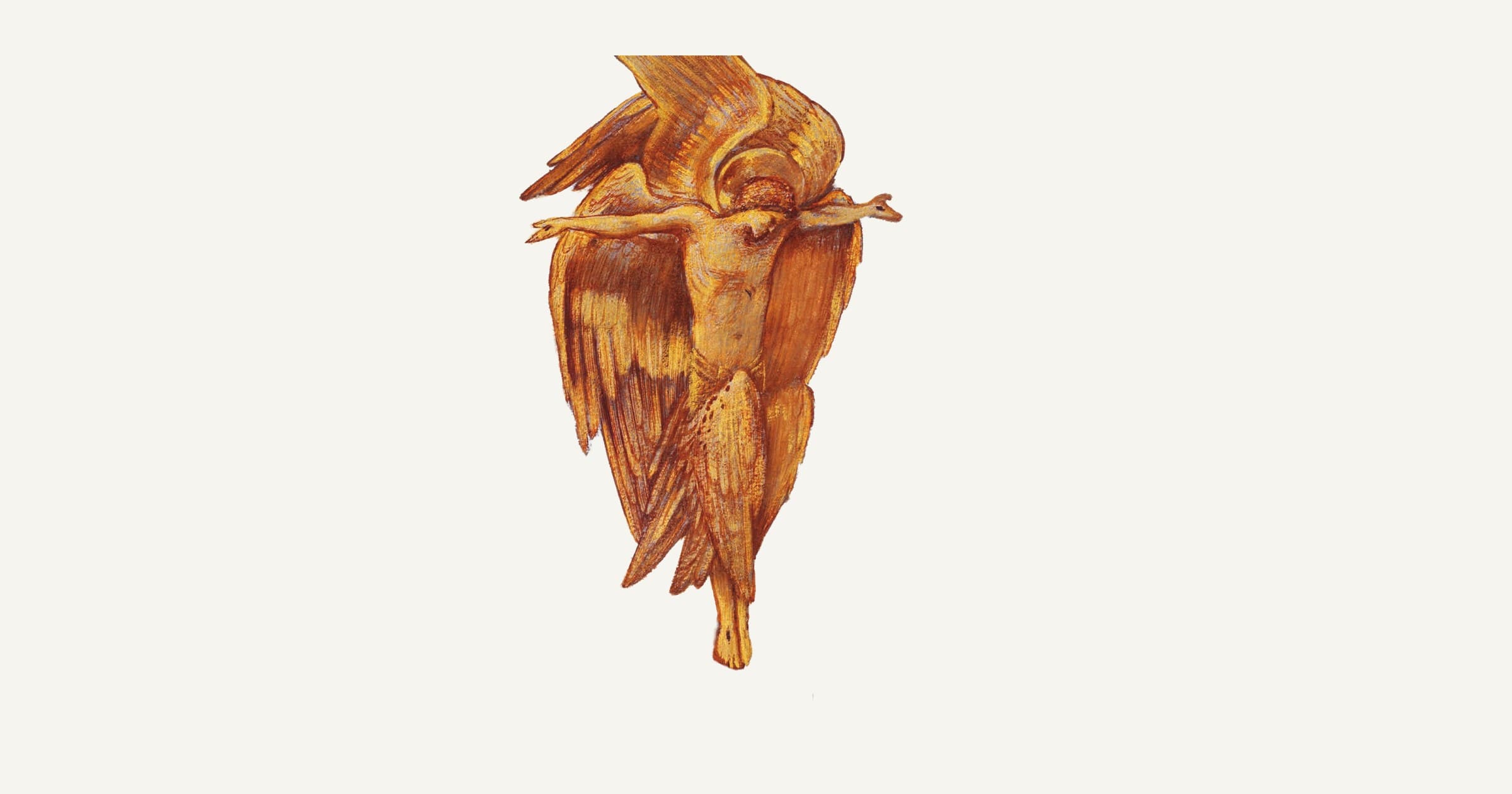
Far beyond the agnostic who merely admits the possibility of God's existence, Christians are pursued by a Lord who longs to be known. So great was His desire that He first came to know us by becoming man. The fact that Jesus himself prays to the Father expresses the profound paradox of the Incarnation. Nowhere is this more striking than in the Garden of Gethsemane, where Christ not only prays to the Father but freely submits his human will to the Father's will. Few passages reveal more clearly that prayer lies at the heart of the Christian life and of taking up one's cross daily.
This reflection is intended as both a challenge to Catholics like myself, who have only recently begun praying frequently, and as fraternal encouragement to those who find even that prospect daunting.

As an expectant father, the need to come to know God personally has felt more acute than ever. There is a natural desire to pass on what one has received – but one cannot give what one does not possess. To cultivate a habit of prayer, we need somewhere to begin.

There is a common thread among the men and women I admire most: they all seem to be on personal terms with their Creator. Their relationship with Him was never merely intellectual, as one might understand the Pythagorean theorem. Nor was it merely sentimental, as one might feel towards a historical figure or fictional character – someone about whom much can be known but whom one can never truly encounter.

Their relationship with God was immediate as well as intimate. They knew Him and spoke of Him with the ease that one might speak of a spouse. There was something wonderful in the simple, almost ordinary way they chatted with God. When they taught me about Christ, they did so with the confidence of people who spoke with Him directly, and who did so daily.

There can be something unsettling about one's parents being on first-name terms with God, particularly if one is an average child – that is to say, a disobedient one. Yet my experience was quite the opposite. Not that I was obedient, but that my parents' friendship with the Divine Judge caused them to deal mercifully with me, even if it was at times a severe mercy. Their love for me flowed from their love for Him, a love I watched them cultivate each day in prayer.

If we wish to know Christ with that same intimacy, we must be willing to meet Him daily in prayer. The precise amount of time is less important than consistency, although it is worth observing that few truly meaningful conversations last only 10 minutes. If friendship with Christ is our aim, we should set aside sufficient time each day simply to be with Him.

Remaining focused is perhaps the hardest part of prayer. Daily prayer quickly exposes the weakness of both our minds and our wills. For this reason, the Church encourages spiritual reading as an aid to recollection. The Catechism explains:

“The required attentiveness is difficult to sustain. We are usually helped by books: the Sacred Scriptures, particularly the Gospels, holy icons, liturgical texts of the day or season, writings of the spiritual fathers, works of spirituality…” (CCC 2705)

I have found that spiritual reading – whether the daily Mass readings or something concise like My Daily Bread by Fr Anthony J Paone, SJ – greatly helps to quiet distractions. Such books are not an end in themselves but a means of entering into conversation with God. We are not simply reading about Him; we are allowing Him to speak so that we might respond.

Christ is the model for every Christian, especially in the discipline of daily prayer. In Mark's Gospel we read:

“…rising very early in the morning, while it was still dark, he departed and went out to a desolate place, and there he prayed.” (Mk 1:35)

Again and again throughout the Gospels, Jesus withdraws into solitude to pray, often in the early hours of the morning.

For most of us, it is wise to pray before anything else. The mind is rarely clearer than it is upon waking, before the demands of work, family, news, emails and social media begin competing for our attention. Even if we intend to pray later, we seldom offer God the same quality of attention we could have given Him first thing in the morning.

There is also wisdom in bringing every concern of the coming day before the One who is both all-knowing and all-powerful. We can hesitate to share the details of our lives, imagining that God is either uninterested or already knows them. The truth is more beautiful: He already knows, and He still desires us to tell Him. Prayer is not the transfer of information but an act of friendship. Like Christ in Gethsemane, in prayer we submit our wills to His.

Prayer helps us keep our means and our ends in their proper order. God is not simply the means by which we accomplish our daily goals; He is our ultimate end. Our work, our responsibilities, our successes and even our frustrations become the means by which we grow closer to Him. We should certainly bring our list of tasks before God each morning, but we should also ask Him how He wishes us to carry them out.

If we begin each day by meeting God before anyone else, we gradually learn to carry His presence into every conversation, every decision and every duty that follows. Daily prayer may begin with faltering attention and countless distractions, but fidelity matters more than perfection. Over time, these ordinary meetings become the place where an abstract belief in God slowly gives way to genuine friendship with Him, and there is no greater gift we can pass on to those entrusted to our care.

Continue reading with a free account

Create a free account to read up to five articles each month
Create free account

You have # free articles remaining this month.

Subscribe to get unlimited access.
Sign up

subscribe to the catholic herald today

Our best content is exclusively available to our subscribers. Subscribe today and gain instant access to expert analysis, in-depth articles, and thought-provoking insights—anytime, anywhere. Don’t miss out on the conversations that matter most.
Subscribe