

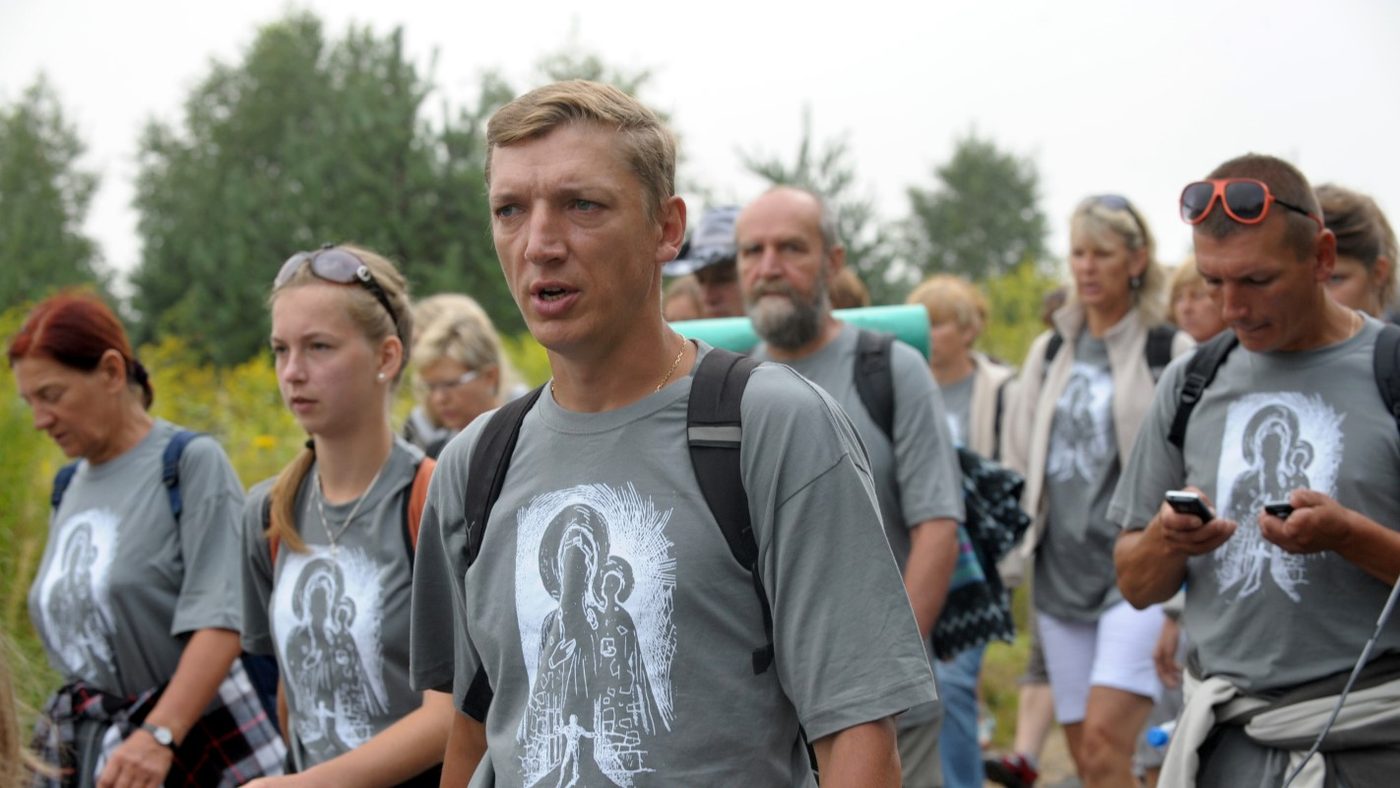
Mesco dux Polonie baptizatur, (“Mieszko, the Prince of Poland, is baptised”) was the rather laconic phrase that hailed Poland’s adoption of Christianity in 966, the most crucial moment in Polish history. For, as it would subsequently turn out, there is perhaps no other country whose survival has been so bound up with the actions of the Catholic Church. For Mieszko I, it was a political decision. He had observed the benefits which being allied to Rome brought his Czech neighbours of Bohemia. While he succeeded in getting for Poland security and status within the Christian world, not much attention was paid to actually converting the population over the course of the following 500 years. This led Melchior Giedroyć, Bishop of Samotigia, to remark, in the late 16th century, that he could barely find in his diocese “a single person who knows how to say a prayer or make the sign of the cross”. At the time, Catholics made up a very small proportion of the population, which also consisted of Orthodox Christians, Protestants, Jews, and even a significant number of Muslims, all of whom had lived together in harmony for centuries. It is perhaps unsurprising therefore how little impact the Reformation and Counter-Reformation had on Poland compared to its neighbours. Calvinism, Lutheranism and other kinds of Protestantism infiltrated certain parts of Poland; but while they provoked some interest, there was no inquisition, no one was burnt at the stake and no one was barred from office for converting. This unusually placid situation had many causes; one was that many Polish Catholics, not least the clergy – though they felt no need to convert – were committed to Church reform, attracted by the marriage of priests, the use of the vernacular in liturgy and Communion in both kinds. Furthermore, the ruling nobility, although they resented the power of the Church, believed unrest would weaken their rule and give more power to the king. Ultimately, though, what made the difference was the Polish commitment to political liberty. One exemplary figure here was Cardinal Stanislaw Hosius, a pacifist who warned in reference to Mary Tudor: “Let Poland never become like England.” It is thought that no more than 12 Protestants were executed in Poland compared with over 500 in England. Hosius also brought the first Jesuits over: they opened schools which educated pupils of all backgrounds in the faith. One leading Jesuit, Piotr Skarga, hoped that the Polish gentry would be returned to Catholicism “not by force or with steel, but by virtuous example, teaching, discussion, gentle intercourse and persuasion”. They were right: Catholicism did eventually take hold, gradually and with almost no bloodshed. There was also a significant event during the period of the Counter-Reformation which convinced individual Poles to move in the direction of Catholicism. In 1655, King Charles X Gustav of Sweden launched an invasion known as The Deluge, one of a number of Polish-Swedish wars to take place between 1563 and 1721. Protestant Swedish soldiers soon overran Catholic Poland, desecrating churches and plundering the countryside. They approached the monastery of Jasna Góra in the medieval city of Częstochowa, the last remaining holdout and home to the prized icon of the Black Madonna. With only 70 religious, a handful of nobles and their servants, and 160 infantrymen, the prior, Augustyn Kordecki, led a heroic resistance against overwhelming odds, blessing the cannons, cannonballs, bullets and barrels of powder in advance. Kordecki was successful and the victory deemed one of the greatest interventions of Our Lady in history. On September 8, 1717, the Black Madonna was crowned Queen of Poland with 150,000 of the faithful in attendance, and the country has never looked back.
4:28 PM
‘Let us never become like England’: How Polish Catholicism took shape
Oleńka Hamilton

6 min read



Already a subscriber? Sign in
5freearticles every month
Continue reading with a free account. No card needed.
- Five free articles every thirty days, on any device you sign in on
- The Catholic Herald newsletter, every morning
- Subscribe whenever you like for everything: every article and the magazine


subscribe to the catholic herald today
Our best content is exclusively available to our subscribers. Subscribe today and gain instant access to expert analysis, in-depth articles, and thought-provoking insights—anytime, anywhere. Don’t miss out on the conversations that matter most.
Subscribe



