




DISQUISITIONS ...being thoughts on Synod 2015 from various observers
FAULT LINES
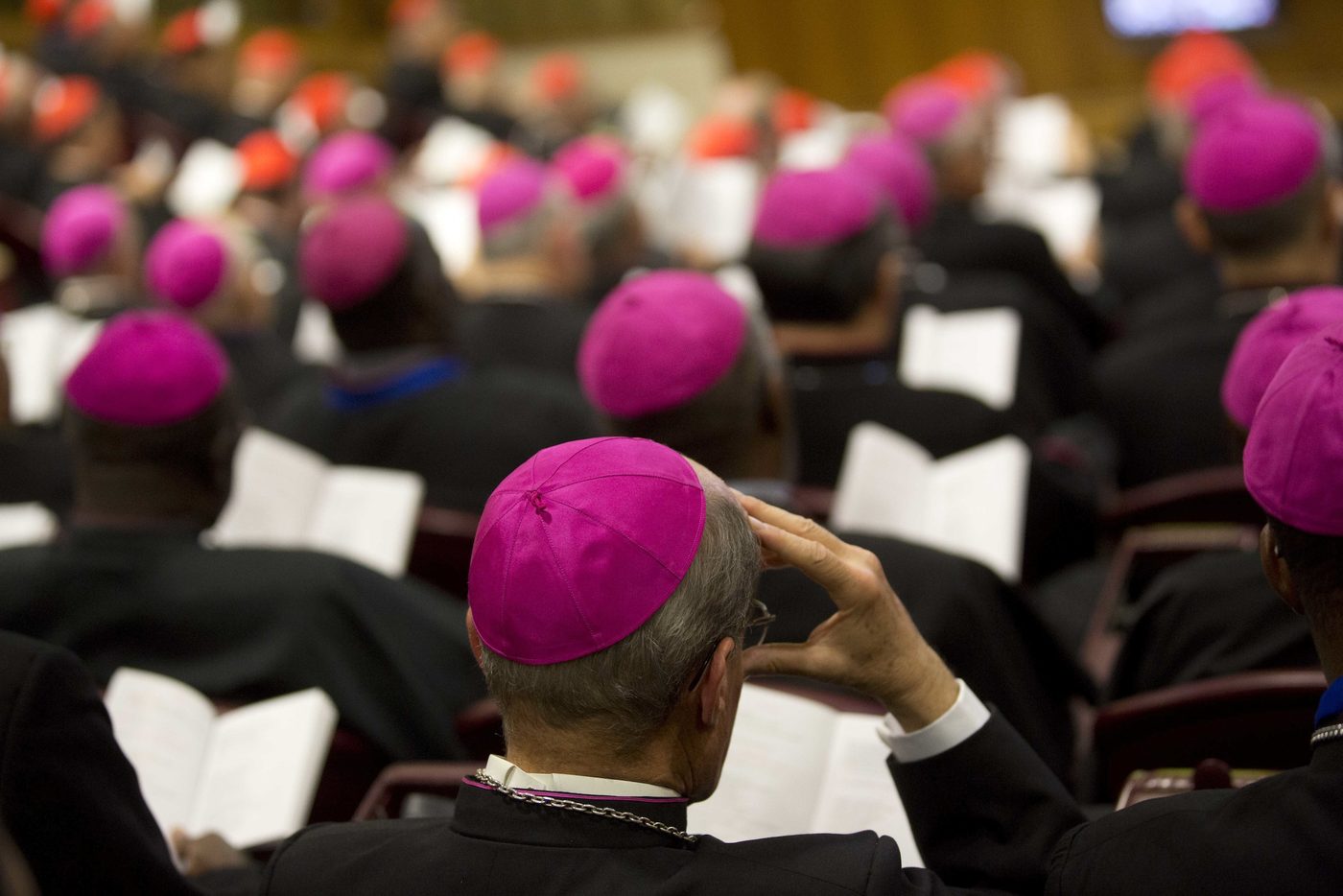
As has been noted in this space before, it’s virtually impossible to have a serious discussion when the basic materials allowed into the conversation are three-minute sound-bites. Nonetheless, that is the modus operandi the Synod general secretariat has devised for the Synod-2015’s general assemblies: three-minute speeches, with no follow-up questions, discussion, or debate. There is more openness and exchange in the Synod’s language-based discussion groups – the circuli minores, “or small circles” (memorably and mischievously mistranslated by the late Fr Richard John Neuhaus in Appointment in Rome as the “minor circuses”) – and in the hour of free discussion in general assembly at the conclusion of some of the Synod’s work days. Unfortunately, however, the general assemblies of the Synod, though are as they always have been: hours of speech-making, albeit in bite-size bits, with no real engagement between speakers and listeners. Despite all of that, it is still possible to discern some of the issues beneath the issues at a Synod by a close reading of what is said in these three-minute discorsi. And that established datum of Synod observation continues to hold at Synod-2015, in which the first rounds of these speeches have unveiled some striking fault lines among the Synod’s members. One of these fault lines involves the very definition of “family.” Can that word be properly predicated of any relationship, however structured and however lived? Do the “signs of the times” dictate how the Church should think of “family,” or does the relevant evangelical model for the Church remain the Holy Family? Does the path of “pastoral accompaniment” require the Church to accept whatever definition of “family” couples or groups wish to ascribe to themselves? Another, related fault line touches on the question of the definition of marriage – an obviously contentious question throughout the world, however bizarre that contestation might have seemed at the 1980 Synod on the Family (which led to St John Paul II’s epic apostolic exhortation, Familiaris Consortio [The Community of the Family]). Must the Church re-think or re-imagine the family for the 21st century according to the mores of the moment, at least as they present themselves in the West? How would such a re-imagining be received in a world Church whose most vital young local churches have received the Christian doctrine of marriage and family as a liberation? And if the Church is, analogously, a “family,” how do those in same-sex relationships relate to the “family” of the Church? Yet another fault line is defined by those, on the one hand, who think that the Church should uphold what some call a summons to heroic virtue (although Vatican II called it “the universal call to holiness” in Lumen Gentium, its Dogmatic Constitution on the Church), and, on the other, by those who argue that this sets an impossibly high standard, given contemporary realities. In other words, and to take a specific example, should the Church’s pastoral practice follow Moses, who permitted writs of divorce to be issued because the realities of his time, or Jesus, who taught the indissolubility of marriage as expressing the truth about the God-given nature of marriage from “the beginning”? Still another fault line involves basic questions of ecclesiology, the theology of the Church. Do local (or national) churches have the authority to make pastoral provisions that may differ from what has been the settled practice of the universal Church? If such a local pastoral provision is in conflict with the longstanding practice of the world Church (as in the case of local churches that offer Holy Communion to the divorced and civilly remarried), what does that say about the relationship of that local church to the universal Church? This, in turn, raises the contested question, along which another fault line may be found, of whether pastoral practice can be essentially disengaged from doctrinal principle, such that doctrine is affirmed but “pastoral accompaniment” is achieved by a practice that would seem to many to contradict the principle on which prior practice has been based. Still another fault line engages questions of evangelical method and communications strategy. There are those who agree that the Church must do a better job of communicating the “Yes” that underwrites every “No” the Church must say, but who also believe, with regret, that there are always going to those who reject the “Yes” no matter how it is presented. And there are those who argue against any public use of language by the Church that a marginal or minority group might consider a signal of rejection. This fault line, in turn, suggests that there are some basic divisions within the synodal house on whether human nature is essentially good, or whether it still bears the mark of original sin (although the longing for goodness and beatitude remains built into us, despite original sin). Then there is the question of how best to actualise Pope Francis’s Year of Mercy at the pastoral level. Some Synod fathers seem to believe that using the third rite of reconciliation with general absolution during the Year of Mercy will invite those who have abandoned the sacrament to return to it in its normal forms, involving individual Confession, after the Year of Mercy is concluded. Others believe that the widespread and (typically) unauthorised use of general absolution without individual Confession was one factor in diminishing the recourse to the Sacrament of Reconciliation that is notable throughout the developed world. More broadly, there is an evident fault line between those who read contemporary Western culture as deeply (and often aggressively) antithetical to the Gospel and the classic teaching of the Church on chastity, marriage and the family, and those who read the Western signs of the times differently, finding that contemporary Western culture still bears many marks of its biblical and Christian heritage that the Church should affirm. (This fault line seems to be defined, geographically, by the Atlantic Ocean, with North Americans and some Latin Americans taking the former position, and northern Europeans taking the latter position.) The fault line marked “culture” also includes the question of how the Church best engages the world. There is much talk at the Synod about “dialogue” with culture, and in fact no one opposes that. The question is, to what end is that dialogue conducted? From the Church’s side of the dialogue, does this conversation aim at conversion, or is it simply… open? It is not easy to reconcile the latter option with Pope’s Francis’s images of the Church as a “field hospital” that is “permanently in mission.” Are those taken into the field hospital through an exercise of the Church’s mercy and compassion invited to conversion, or, if they are Christians, to deepen their already-existing friendship with Jesus Christ? That would seem to be the implication of reading the two images together, as one imagines the Holy Father would have us do; but one rarely hears the word “conversion” from those pressing for “dialogue.” And then there is the ongoing debate that takes place between those who hold that mercy without truth is false compassion (and false pastoral care), and those who would argue that a rich display of mercy may lead the disaffected to reconsideration and repentance. In brief: Is the exercise of the Church’s mercy, which is Christ’s mercy, a response to repentance or an inducement to repentance? Can it be both? If so, how, without vitiating the call to repentance? Our friend the late Cardinal Avery Dulles, SJ, used to say that Vatican II was an ecclesiological council, in which the Church reflected deeply and comprehensively on its own nature. True enough. Yet like every other ecumenical council in history, Vatican II has been followed by contention – and in the case of Synod-2015, contention on the very basic issues of ecclesiology that the Council addressed. Thus the current Synod might well be considered another exercise in the reception (or digestion) of Vatican II. At Synod-2015, one way to frame the principal ecclesiological contention is through a maritime image with along history in the Catholic Church: Does the Barque of Peter have a keel or not? Are all in the Barque obliged to honoyr the keel, which is the fundamental structure that defines the boat and holds it together? Can there be such widely divergent understandings of what constitutes the keel that the keel eventually disintegrates? Can the unity-in-diversity sought by Vatican II and cherished by the Church throughout its history become so diverse that unity is fractured? And if so, what does that do to the “Church permanently in mission” of which Pope Francis wrote in Evangelii Gaudium, and for which all those most powerfully committed to the New Evangelisation long? For decades now, it has seemed clear to some that there is a de facto schism in the Church, although it is psychological rather than formally ecclesial: the schism involves “checking out” in one’s mind from the teaching authority of the Church – exercising one’s own understanding of “diversity,” so to speak – while maintaining the appearance of unity through participation in the formal structures of the Church. If this is in fact the case, it is an inherently unstable situation, and one that mitigates against the New Evangelisation. Perhaps Synod-2015 will do the world Church a great favour by bringing to light what has previously been hidden, so that it can be addressed in the spirit of candour, charity, and fraternity to which Pope Francis bids the Synod, and the rest of us. - Xavier Rynne II