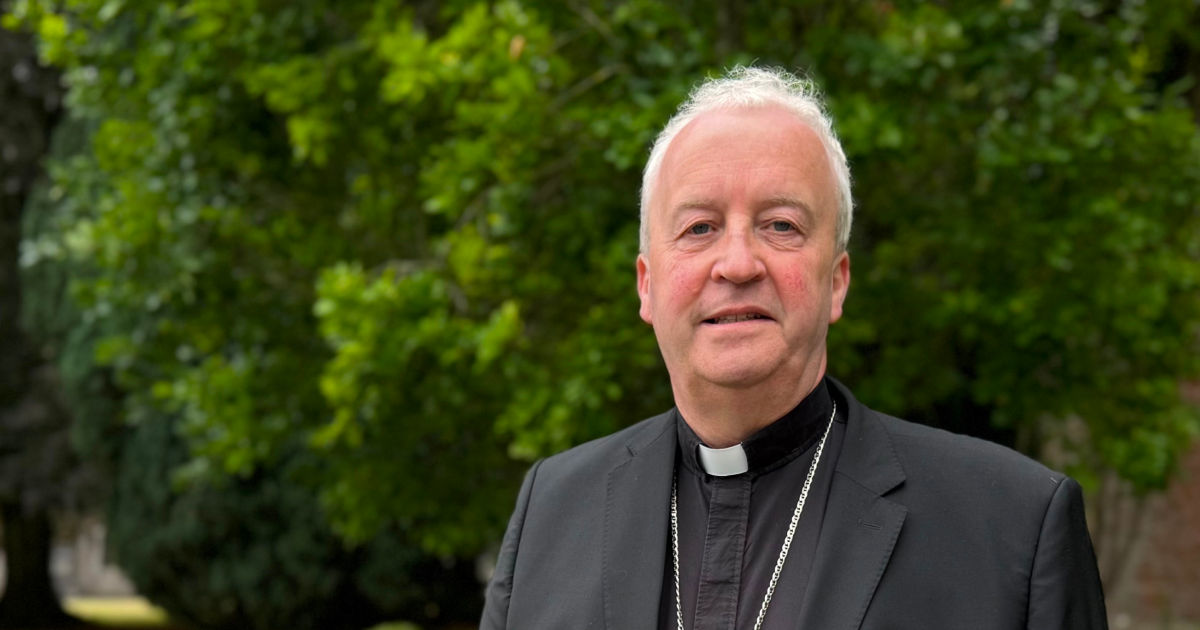


Liam Neeson has described his horror at reading about the Bon Secours Mother and Baby Home in Tuam, Co Galway, where juvenile remains were discovered without burial records. The discovery prompted widespread condemnation in Ireland, though a later inquiry by the Irish Government disputed elements of the speculation carried out by media reporting.
Neeson said the incident was brought to his attention in 2017, stating that he “got angrier and angrier” and became “quite depressed”. He later acted as a producer for the 2026 film on the subject, The Lost Children of Tuam.
In 2012, local historian Catherine Corless wrote a widely read article about the Mother and Baby Home, operated by religious sisters from 1925 and 1961 on behalf of Galway County Council. A year later, the names of almost 800 children whose deaths were recorded at the home were retrieved, mostly between 1925 to 1961. Despite this, Corless found that only two of the children had documented burials.
“I’m an Irishman, proud, brought up in the six counties, Irish Catholic. I was an altar boy for a number of years. I entertained the priesthood for 25 seconds during that period,” Neeson told the Irish Times. “But I was horrified by it. And I thought, with whatever standing I have in the movie profession, I’d love to try and get this off the ground as a film.”
An excavation at the site found a three-metre-wide, debris-filled pit in the middle which is believed to date from the 1970s, when a housing estate on the former grounds of the home was being built, with evidence that bodies were disturbed. A structure which may have contained sewage or waste water was found to have bodies within it. So far, approximately 100 infant remains have been found in forensic excavations, which appear to have been buried in coffins.
“There is a legend at the end of the film that says up to 9,000 babies, they think, are buried at various institutions that are no longer with us,” he said, emphasising the importance of uncovering what had happened.
An Irish Government inquiry into the incident found that Galway County Council, rather than the religious sisters, was primarily legally responsible for carrying out the burials, though it remains unclear how many bodies are contained within the structure, who put them there and why.
Writing for the Catholic Herald in April, David Quinn noted that the Mother and Baby Home had “operated on a shoestring” budget and, according to the official inquiry, “the sisters repeatedly asked the council for more money and were usually refused”.
Due to lack of sufficient funding, the home was cold, without hot running water, and the food was sometimes of low quality. It also lacked an isolation room, which would have prevented the spread of disease to other occupants.
“The children often died in clusters, frequently due to respiratory infections, which would spread very fast once they got into the home. The grim fact is that about a quarter of the children ever resident in the home died there, usually as babies. As soon as antibiotics and vaccinations became widely available, the mortality rate dropped dramatically,” Quinn wrote.
“Are we meant to believe that the nuns, or the council, as the case may be, were at one time burying the bodies of infants in coffins, and then one day decided to start dumping them in a septic tank instead?”
Investigations on the site are ongoing, with excavations seeking to establish the causes of death.