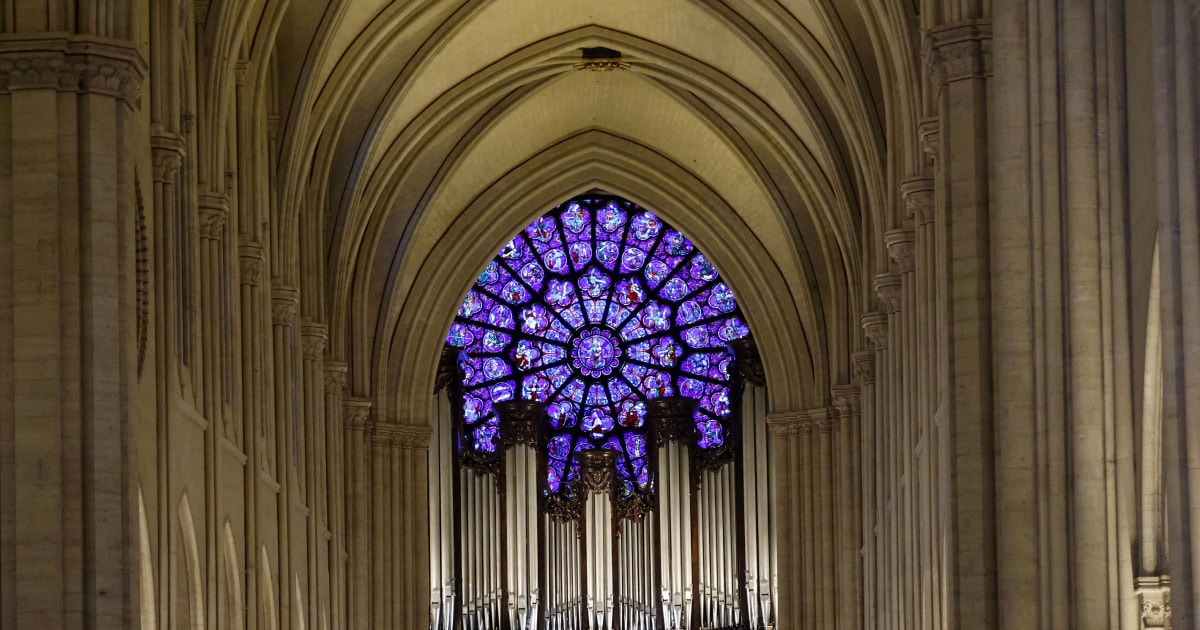




Two French heritage associations have filed urgent legal action in the Paris courts against the prefectural authorisation to remove prized 19th-century stained-glass windows by Eugène Viollet-le-Duc from Notre-Dame Cathedral, despite the fact they survived the 2019 blaze untouched.
Opponents object to President Emmanuel Macron’s plan to replace them with new works by Claire Tabouret, an artist whose use of tarot imagery has raised concerns among some traditional Catholics about the spiritual suitability of her designs for a major place of Catholic worship.
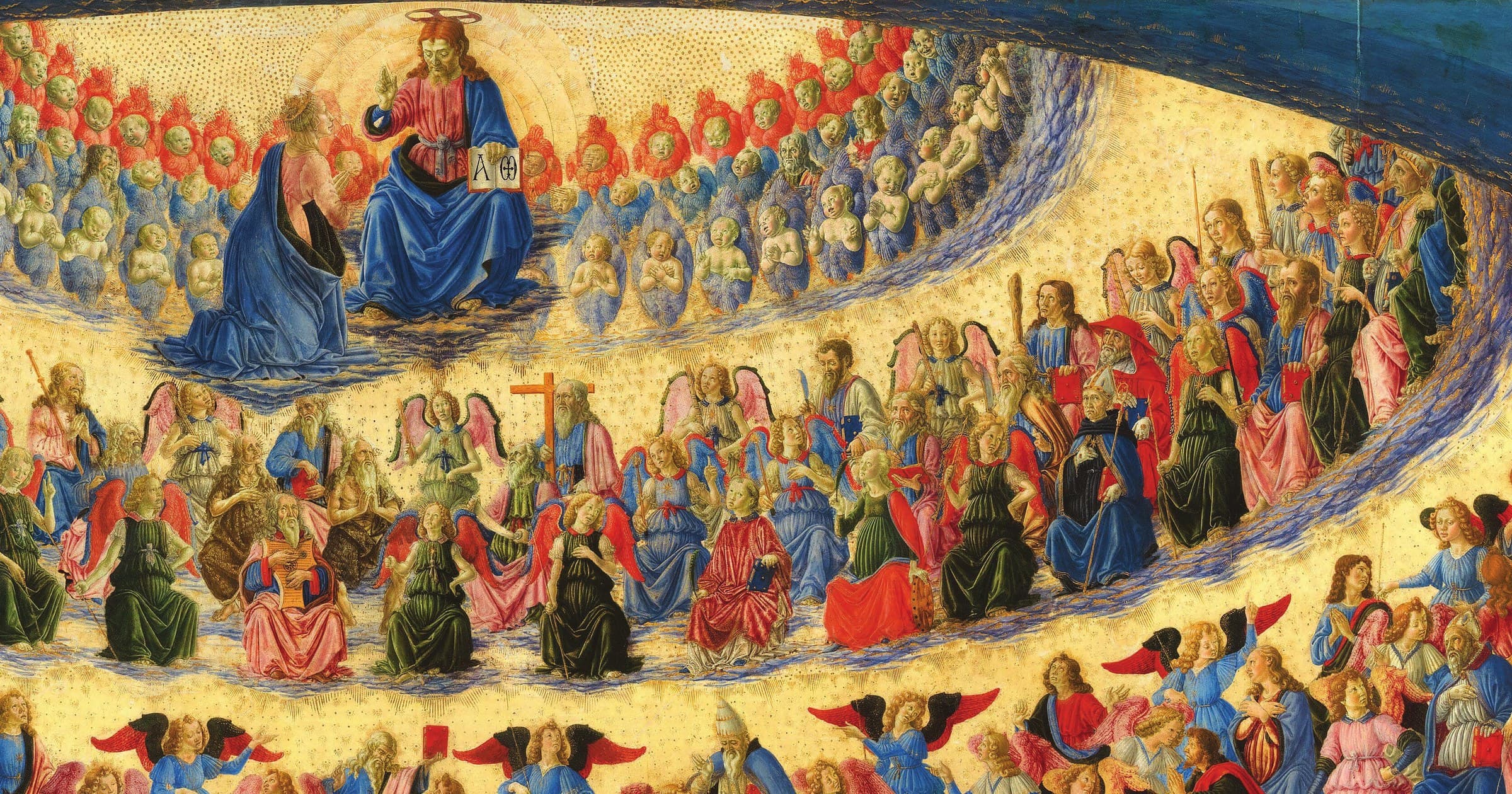
The associations Sites et Monuments, founded in 1901 to protect French landscapes and monuments, and SOS Paris, established in 1973 to safeguard emblematic sites, are contesting the decision on both urgent and substantive grounds. They argue that the removal violates international preservation standards and threatens the historic and sacred integrity of the Gothic cathedral, which was devastated by fire in April 2019 and has since undergone extensive restoration at a cost exceeding €800 million.
Tabouret, a 45-year-old French painter born in the Vaucluse and now based in Los Angeles, was commissioned in December 2024 after Macron announced in late 2023, during a visit to the reconstruction site, his intention to leave a visible 21st-century mark on the cathedral.
Tabouret’s Los Angeles home features a ceiling hand-painted with large-scale depictions of major arcana from the Rider-Waite-Smith tarot deck, including cards such as The Lovers and The Hermit. Some traditional Catholics have expressed alarm at the choice of an artist associated with tarot iconography, a symbolic system that critics regard as spiritually ambiguous for a sacred Catholic space.
The disputed windows, located in the south aisle chapels, form part of a coherent decorative ensemble created by Viollet-le-Duc during his major 19th-century restoration of the medieval cathedral. The panels were undamaged by the 2019 fire and remain in good condition.
At Tuesday’s hearing before the urgent applications judge of the Paris administrative tribunal, the associations sought immediate suspension of the works, which are scheduled to begin on June 22 with glass removal, followed by installation of the new panels by mid-October.
Francis Monamy, the lawyer representing the claimants, emphasised the urgency despite arguments from the prefecture and the public establishment overseeing the restoration that the project remained reversible.
“Theoretically everything is reversible, but if one accepts that reversible works entail no urgency, then there would never be urgency in planning matters,” he told the court, noting the €4 million cost and the practical difficulties once the new glass becomes public property.
Opponents, including conservatives, Catholics and heritage campaigners, object on multiple grounds. While some focus on heritage and aesthetic preference, arguing that the new works fall well short of the quality, coherence or religious depth of Viollet-le-Duc’s figurative designs, others raise spiritual concerns about replacing Catholic patrimony with contemporary art in a living cathedral dedicated to the Virgin Mary.
The National Commission for Heritage and Architecture issued a unanimous negative opinion on July 11, 2024, against removing the Viollet-le-Duc windows, recommending instead that contemporary works be placed in areas with plain glass, such as the belfries. Culture Minister Rachida Dati proceeded regardless. The associations say this overrides expert advice and contravenes the 1964 Venice Charter. Article 8 of the Charter states that integral decorative elements “may not be removed from the monument except where this is the only means of ensuring their preservation”. Article 11 requires respect for contributions from all periods.
Sites et Monuments has criticised the prefect’s justification that the limited scope – 121 square metres, roughly 6 per cent of Viollet-le-Duc’s 19th-century glass and 5 per cent of the cathedral’s total stained-glass surface of around 2,050 square metres – maintains a “formal, chromatic and lighting continuum” with the existing ensemble.
In a statement on its website, the association warned that such reasoning “would arbitrarily permit the replacement of the material substance of heritage by its pastiche, evocation or a work supposedly in sympathy with it, setting a very worrying precedent for other French monuments”.
Traditional Catholic opposition has been varied. Rorate Caeli wrote in an April 2026 post that the Tabouret windows marked poorer craftsmanship: “Some of the Viollet-le-Duc stained glass windows in Notre-Dame de Paris (miraculously untouched by the fire) are to be replaced this week by some modern ‘diversity’ nonsense pushed by Emmanuel Macron. The artist responsible for it, Claire Tabouret, made so many silly mistakes (since she is not a stained glass designer) – look at the heads for instance…”
The legal action follows an earlier unsuccessful challenge to the public contract awarded to Tabouret, rejected by the Paris administrative tribunal on November 27, 2025. An appeal against that decision remains pending.
Didier Rykner, editor of La Tribune de l’Art and organiser of a petition that has gathered nearly 350,000 signatures, attended Tuesday’s hearing. Mr Monamy told the court: “The prefect stands alone, since his entire administration is against him.”
Defending the authorisation, Céline Sabattier, the lawyer for the prefecture, acknowledged the “strong symbolic dimension” of the case but insisted that public emotion did not determine law. She confirmed that the windows were being removed for restoration purposes.
Philippe Hansen, representing the public establishment, stressed the small relative scale and the legislative intent to allow a visible contemporary trace of the fire in a “living cathedral” that evolves over time. The original Viollet-le-Duc panels would be conserved and displayed at sites including the Château de Pierrefonds and the Cité du Patrimoine.
The dispute highlights broader questions about the post-fire identity of Notre-Dame, whose foundation stone was laid in 1163 and which has survived the French Revolution, two world wars and the 2019 blaze. Its stained glass, including medieval survivals and 19th-century additions, has long formed an essential part of its liturgical and artistic witness as France’s pre-eminent Catholic monument.
Earlier proposals by Macron to replace the destroyed spire with a contemporary design were abandoned after widespread protest.
A substantive ruling on the authorisation is expected early next week, while the full merits of the case will be heard separately. Should the urgent application fail, further challenges to any eventual installation remain possible. The associations maintain that ample plain glass exists in the belfries for Tabouret’s works, preserving the coherence of Viollet-le-Duc’s ensemble without loss to the sacred monument.

.jpg)