
April 22, 2026

Online claims of Pope Benedict's resignation misread Vatican legal procedure

The Catholic Herald
More
Related
Min read
share

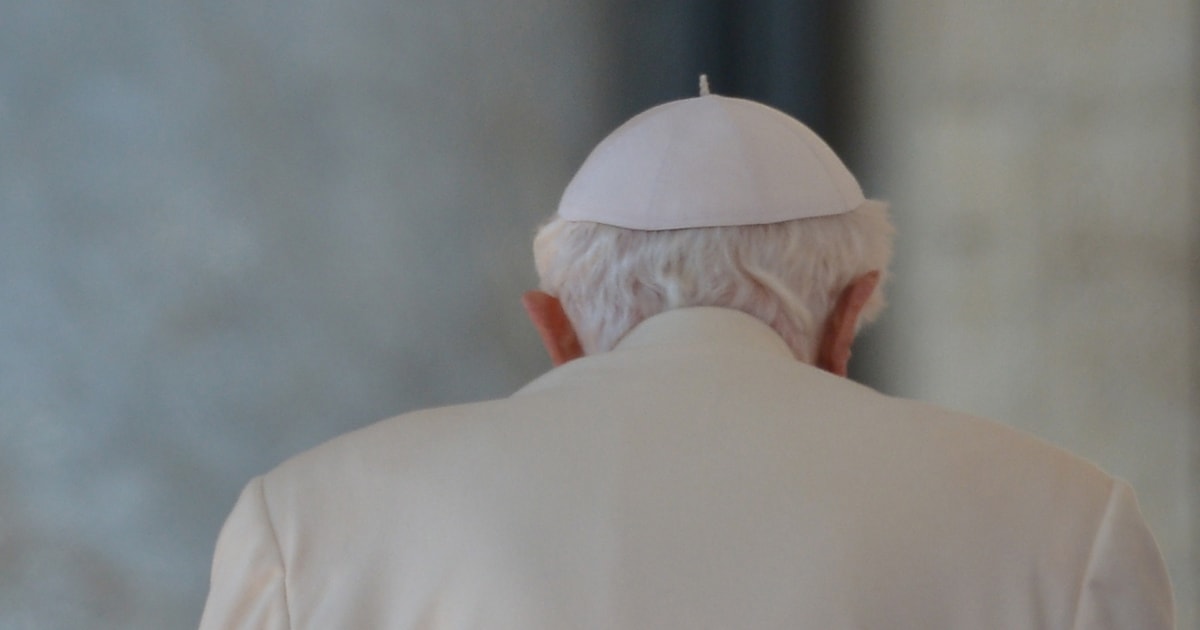
Rumours circulating online that Vatican authorities are formally investigating the resignation of Pope Benedict XVI have drawn international attention this week, after a routine legal response from the Vatican prosecutor’s office was widely interpreted as evidence of a deeper inquiry.

The speculation centres on correspondence issued by Alessandro Diddi, the chief prosecutor of the Vatican City State, who declined a request for access to documents linked to a petition questioning the validity of the 2013 resignation of Pope Benedict XVI. His office stated that the matter remained in an “investigative phase”, prompting claims across social media that a formal investigation into the resignation itself was underway.
The request for access to files pertained to a petition filed by Andrea Cionci, author of The Ratzinger Code, a work published in 2022 that contentiously promulgated the theory that Benedict deliberately resigned invalidly.

However, canon lawyers and Church officials have consistently maintained that the resignation of Benedict XVI – the first pope to step down in nearly six centuries – was lawful, freely made and fully valid under Church law. No authoritative ecclesiastical body has endorsed claims to the contrary.

On February 11, 2013, Benedict announced in Latin before the College of Cardinals that he would renounce the papal office, citing declining strength due to advanced age. “After having repeatedly examined my conscience before God,” he said at the time, “I have come to the certainty that my strengths … are no longer suited to an adequate exercise of the Petrine ministry.” He confirmed that decision again two days later, emphasising that he had acted “in full freedom for the good of the Church”.

The resignation formally took effect on February 28, 2013, leaving the See of Rome vacant and leading to the conclave that elected Pope Francis on March 13. The transition followed established provisions of the Catholic Church’s Code of Canon Law, which states that a pope may resign provided the decision is made freely and properly manifested, without requiring acceptance by any higher authority.

The legal petition at the centre of the recent controversy was filed by supporters of a fringe theory sometimes described as “Benevacantism”, which argues that Benedict did not validly relinquish the papal office. The theory gained attention following the publication of The Ratzinger Code by Italian author Andrea Cionci in 2022, which suggested that Benedict intentionally used ambiguous language in his resignation announcement.

Scholars of canon law and Latin linguistics have repeatedly rejected those claims, noting that the terminology used in Benedict’s declaration corresponds to standard legal formulations. Benedict addressed the issue directly in later years, stating on several occasions that his resignation was “a conscious choice” and affirming that there was only one reigning pope.

Officials familiar with Vatican legal procedure note that the phrase “investigative phase” has a specific technical meaning and does not necessarily indicate that substantive action is being taken. Under canonical norms, authorities must open a preliminary file when a complaint is received, even if the allegation ultimately proves unfounded or is dismissed without further proceedings.

Commentators at The Pillar have also emphasised that the role of the Vatican prosecutor is limited in matters concerning ecclesiastical governance. Questions regarding the validity of a papal resignation fall primarily within the competence of canonical institutions such as the Dicastery for Legislative Texts or the Supreme Tribunal of the Apostolic Signatura, rather than the civil courts of the Vatican City State.

Observers note that speculation surrounding Benedict’s resignation has periodically resurfaced in the years since 2013, particularly among critics of the current pontificate. Yet the historical precedent for papal resignation remains well established. The last previous example occurred in 1415, when Pope Gregory XII stepped down during the resolution of the Western Schism, demonstrating that the papacy, while unique in authority, is nonetheless an office that can be relinquished.

For now, Vatican officials have given no indication that any formal investigation into Benedict’s resignation is being pursued. The consensus among canonists remains unchanged: the resignation announced in February 2013 was valid under Church law, and the subsequent election of his successor proceeded in accordance with established norms.

Continue reading with a free account

Create a free account to read up to five articles each month
Create free account

You have # free articles remaining this month.

Subscribe to get unlimited access.
Sign up

subscribe to the catholic herald today

Our best content is exclusively available to our subscribers. Subscribe today and gain instant access to expert analysis, in-depth articles, and thought-provoking insights—anytime, anywhere. Don’t miss out on the conversations that matter most.
Subscribe