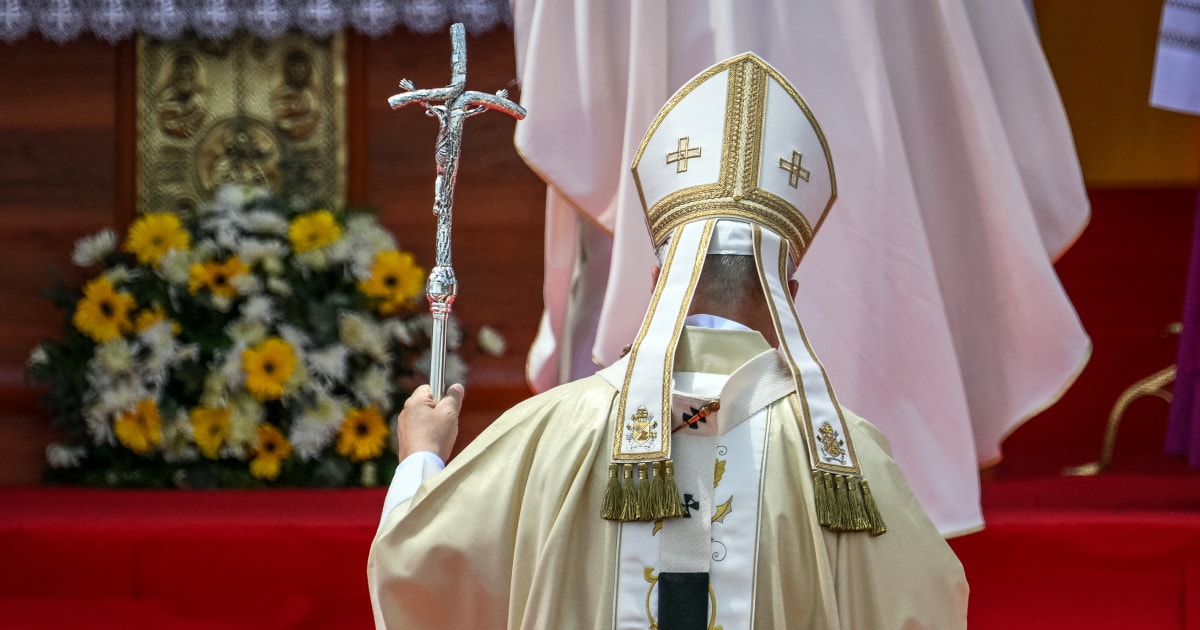
Pope Leo XIV has renewed his appeal for an end to armed conflict in Ukraine and the Middle East during a speech in Kilamba, Angola, on April 19, urging political leaders to pursue dialogue rather than escalation, as violence intensifies on multiple fronts and diplomatic efforts remain fragile.
The appeal came during the Regina Coeli prayer following Mass on Sunday in the Kilamba district of Luanda, part of the Pope’s ongoing apostolic visit to Angola. Speaking to thousands of worshippers gathered for the liturgy, the Pontiff expressed concern over the mounting toll of war on civilian populations and called for renewed commitment to peaceful negotiation.
The remarks were delivered by the Pope at a moment of heightened international tension. In recent days, Russian forces have launched some of the most intense strikes in months against Ukrainian cities, while diplomatic initiatives in the Middle East have struggled to stabilise a volatile security situation.
“I deeply regret the recent intensification of attacks against Ukraine, which continue to affect the civilian population,” the Pope said, adding: “I renew my appeal for the weapons to fall silent and for the path of dialogue to be pursued.”
The war in Ukraine, widely referred to as the Russian invasion of Ukraine, has entered its fourth year, with repeated waves of drone and missile strikes reported across major urban centres. Civilian casualties have continued to mount despite intermittent ceasefire efforts, including a short-lived truce observed during Orthodox Easter.
Turning to the Middle East, the Pope described a recently announced ceasefire in Lebanon as “a sign of hope”, encouraging diplomats and political leaders to build upon the temporary halt in hostilities. The truce follows months of cross-border violence involving Israeli forces and armed groups operating in southern Lebanon, which has resulted in thousands of deaths and large-scale displacement.
The Pope’s intervention forms part of a consistent pattern of appeals for peace issued since the beginning of his pontificate. In recent weeks, he has repeatedly emphasised the moral responsibility of political authorities to seek negotiated solutions to conflict and to safeguard civilian life, themes that have featured prominently in his public addresses and diplomatic messaging.
His remarks have also unfolded against a backdrop of visible political reaction in the United States, where prominent figures associated with the Make America Great Again movement have expressed unease over aspects of the Vatican’s tone on international security and migration. US Vice-President JD Vance recently cautioned in public remarks that Western leaders must balance humanitarian appeals with firm strategic deterrence, comments widely interpreted by analysts as an indirect response to the Holy See’s diplomatic emphasis on dialogue.
President Donald Trump also drew attention after posting on social media earlier this month that “peace comes through strength”, a message circulated widely among supporters following renewed papal calls for ceasefires. Trump decried the Pope as “WEAK on Crime [sic]” and accused him of “catering to the Radical Left”.
Concluding the address, Pope Leo invited the faithful to unite in prayer for those affected by war and instability. Reflecting on the Easter season, he urged Christians to bear witness to hope even amid suffering, stating that believers are called to foster “love, true justice, and peace, beyond every obstacle and difficulty”.
.jpg)


.jpg)