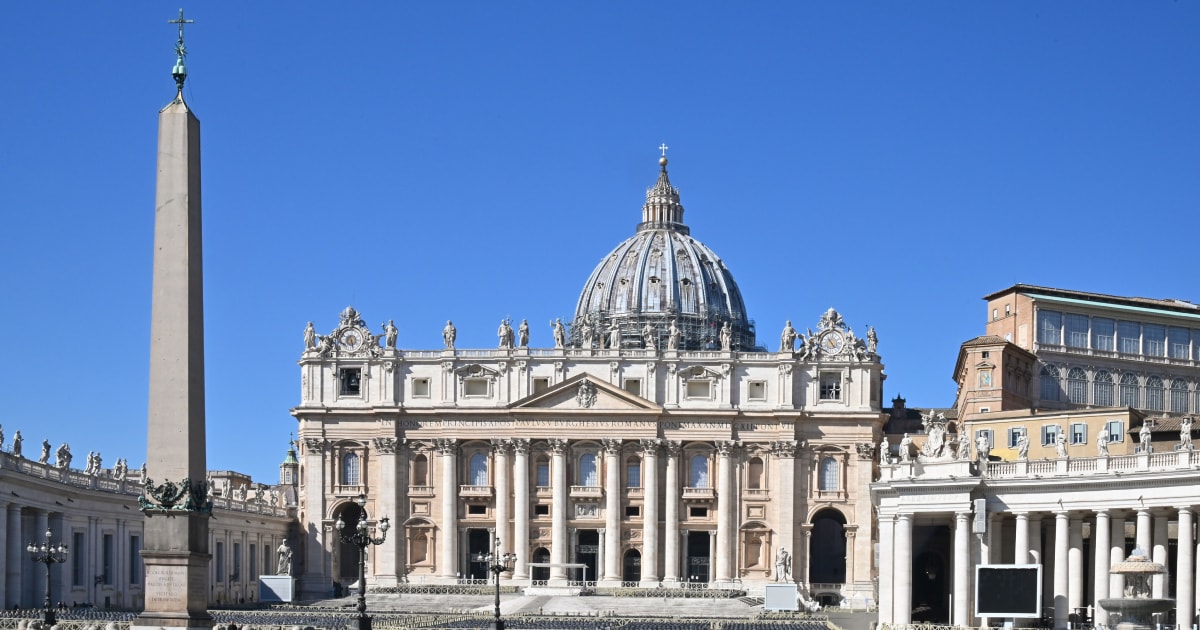


Parishioners in Northamptonshire have vowed to appeal to Rome after the Diocese of Northampton confirmed plans that will see three churches in the Kettering area cease hosting regular Sunday Mass.
The decision, announced at Sunday Masses on March 1, means St Bernadette’s in Rothwell, Holy Trinity in Desborough and St Nicholas Owen in Burton Latimer will no longer hold regular Eucharistic celebrations. St Edward’s in Kettering is set to become the sole centre of parish life under proposals endorsed by the Bishop of Northampton, Bishop David Oakley.
Peter Anderson, who attends Mass at St Edward’s and St Bernadette’s, told the Northampton Telegraph that the strain on clergy lay at the heart of the crisis. “Our highly respected priest is run ragged covering the parish and it can only get worse when we lose his assistant,” he said. Referring to the limited number of overseas clergy permitted to serve, he added, “At present, we are allowed a paltry five visas for foreign priests to work across the entire diocese … We have only 53 priests serving 69 parishes and it’s a huge dilemma deciding who gets extra help.”
He insisted the campaign was motivated by concern for pastoral provision rather than defiance. “In challenging these closures we are seeking clarity, not confrontation. But make no mistake. We will take this fight to the Vatican if we have to and have a range of options to challenge these closures which will become clear in due course.”
James Squire of Rothwell also told the Northampton Telegraph that the churches are anchors of communal identity. “The issue is not simply about buildings, but about belonging, spiritual continuity and pastoral care within our own communities,” he said. “These churches are not just anonymous properties. They are places where our children were baptised, where our parents were married, where we find prayer, friendship and support.”
Diocesan officials have framed the changes as part of a broader pastoral discernment process across the St Luke’s Pastoral Area, which encompasses Corby, Kettering, Wellingborough, Rushden and numerous villages. A spokesman said the “strong recommendation” to emerge from consultation was that the parish become “one community, one body, one church at St Edward’s”.
“This will integrate the communities with a strong parish identity, enabling a focus on families and faith formation and provide a sustainable workload for one priest into the future,” the spokesman said.
Out of that consultation emerged three principal models. The first would centre the entire parish around St Edward’s in Kettering, with one priest and one church forming a single hub for sacramental life, catechesis and outreach.
A second option envisages one priest serving two churches, with St Edward’s remaining the primary base while Holy Trinity in Desborough operates as a missionary outpost. Under this arrangement, a weekly Mass would continue in Desborough, the furthest community from Kettering, maintaining a sacramental presence while avoiding the duplication of full parish structures.
The third proposal would retain the three smaller churches as community-led satellite hubs but without regular Sunday Mass, reflecting the limits of having only one resident priest. In this scenario, lay leadership would sustain prayer, catechetical activities and charitable initiatives, though significant repair costs would fall to local communities without assurance of long-term viability.
The present issue over parish closures comes as the Diocese of Northampton faces mounting problems with vocations and long-term sustainability.
Priestly numbers are at a low for the diocese. According to figures circulated by the National Office for Vocation, Northampton ranks among the lower dioceses in England and Wales in terms of seminarians. In 2024, only one candidate entered seminary for the diocese. No ordinations took place in 2024 or 2025 and projections indicate that just one priest is expected to be ordained in 2026 and another in 2027. With limitations on visas for priests from abroad imposed on the diocese, the imbalance between supply and demand has become increasingly stark.