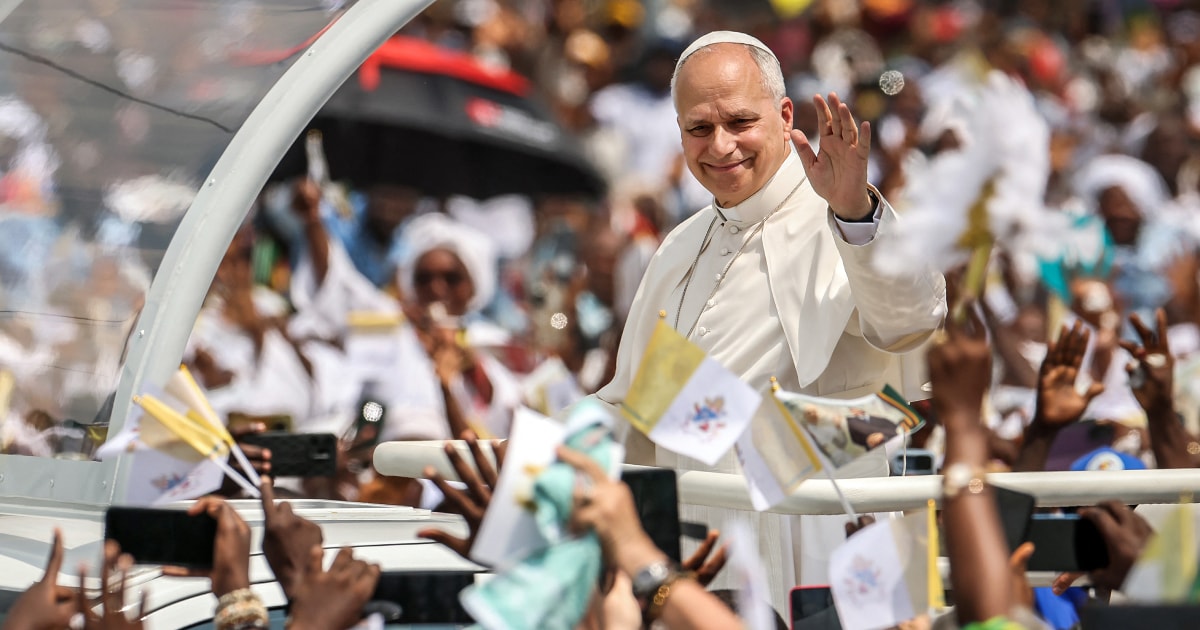
Pope Leo XIV is to continue his African journey with a visit to Angola this weekend, following engagements in Cameroon, according to the official programme released by the Holy See.
The Pontiff is scheduled to depart Yaoundé on Saturday, April 18 after celebrating Mass at Yaoundé-Ville Airport at 9.30am. A farewell ceremony will take place at Yaoundé-Nsimalen International Airport at 12pm, before his departure for Luanda at 12.30pm. He is due to arrive at “4 de Fevereiro” International Airport in the Angolan capital at 3pm, where a welcome ceremony will be held.
The first day of the visit will include a courtesy call on the President of the Republic at the Presidential Palace at 3.40pm, followed by a meeting with authorities, civil society and the diplomatic corps at 4.15pm. The day will conclude with a private meeting with the bishops of Angola at 7pm.
On Sunday, April 19, the Pope will celebrate Holy Mass in Kilamba at 10am before travelling by helicopter in the afternoon to Muxima, one of the country’s most significant Marian pilgrimage sites. He is expected to arrive at 4.15pm and will take part in a Rosary prayer on the esplanade in front of the shrine known locally as “Mama Muxima” at 4.30pm. He will return to Luanda later that evening.
The programme for Monday, April 20 includes a visit to the eastern city of Saurimo. The Pope will depart Luanda at 7.50am and arrive at Saurimo’s Deolinda Rodrigues Airport at 9.20am. After a visit to a nursing home at 9.45am, he will celebrate Mass at the Saurimo esplanade at 11.15am. He is scheduled to return to Luanda in the afternoon, where he will meet bishops, priests, consecrated men and women, and pastoral workers at the Parish of Our Lady of Fatima at 5.30pm.
The visit to Angola will conclude on Tuesday, April 21 with a farewell ceremony at Luanda’s international airport at 8.45am. The Pope will depart for Malabo at 9.15am, arriving in the capital of Equatorial Guinea at 11.45am, marking the next stage of his African tour.
Angola represents one of the most historically significant centres of Catholicism in sub-Saharan Africa, with roots stretching back to the late 15th century. Portuguese explorers first reached the region in 1483, and missionaries followed within a decade. By 1491, the ruler of the Kingdom of Kongo, Nzinga a Nkuwu, had been baptised as João I, initiating the conversion of his court and establishing one of the earliest organised Catholic polities in the region.
Missionary activity expanded alongside Portuguese settlement, particularly after the founding of Luanda in 1575. Religious orders including the Jesuits, Franciscans and Dominicans established missions, while a diocese was created in São Salvador in 1596, later transferred to Luanda. Despite disruptions caused by the slave trade and the suppression of religious orders at various points, Catholicism developed a lasting institutional presence.
During the colonial period, the faith became closely associated with Portuguese administration. Policies formalised in the 20th century reinforced this relationship, with missionary activity tied to the promotion of Portuguese language and culture. Catholic institutions played a central role in education and social organisation, contributing to the emergence of a Lusophone Catholic identity among sections of the population.
Following independence in 1975, the new government initially regarded the Church with suspicion due to its historical links to colonial rule. However, Catholicism remained deeply embedded in Angolan society. By 1978, it had been formally recognised as a legitimate religion, and in the decades that followed the Church assumed a role in efforts at national reconciliation, particularly after the end of the civil war in 2002.