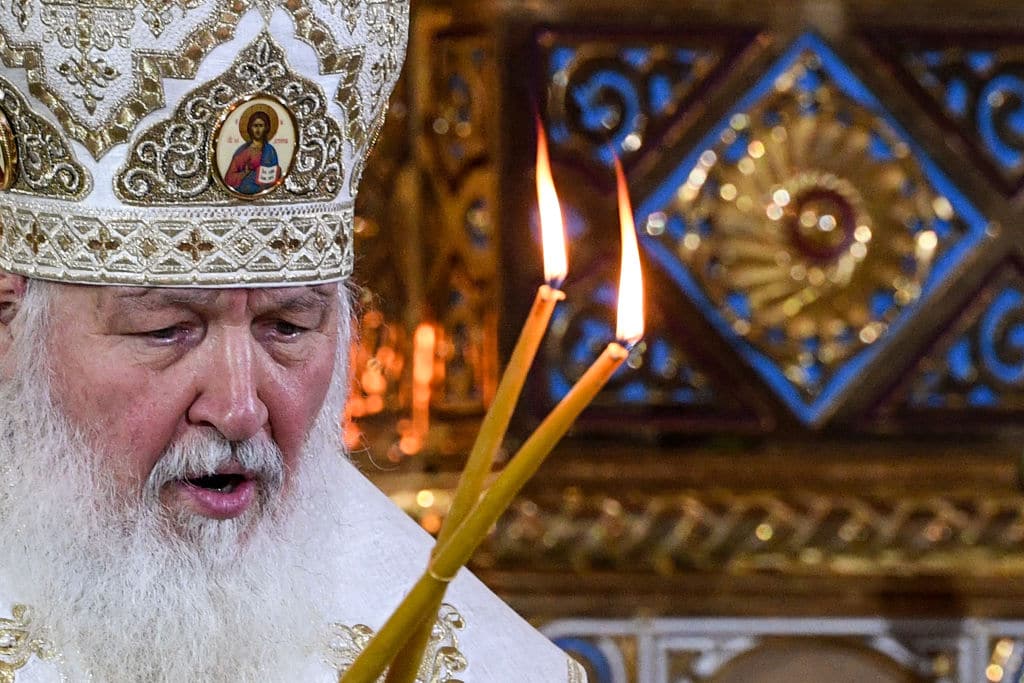





There are many who see in Patriarch Kirill’s reluctance to condemn the Russian invasion of Ukraine, evidence of Caesaropapism. Certainly, it is likely that Patriarch Kirill sees Putin’s “special military operation” as regrettable but necessary in order to restore the divinely ordained unity of the Russian people – a unity undermined by the emergence of a western-oriented, independent Ukraine, right at the very epicentre from which ancient Christian Rus emerged.
The Byzantine Empire of Constantinople – the “New Rome” – from which Orthodox Moscow, known as the “Third Rome”, traces its origins, saw itself as a Christian commonwealth, transcending ethnic and national divisions. Kirill too sees Russia’s future in terms of a new, transnational, trans-ethnic Orthodox oikoumene, stretching East to West. Before scoffing too loudly at this idea, it is worth noting that it is Kirill’s vision of a Christian empire, rather than the Enlightenment’s vision of a secular nation state, that reflects the historic Christian position. In the 19th century, the Catholic Church was as vociferous in its condemnation of Italian nationalism as the Orthodox Church was of Greek nationalism.