



One is, and should be, reluctant to offer advice to His Majesty the King, and it is quite possible that unsolicited counsel is not always easily received. There are, however, some serious difficulties with new language appearing in the Sovereign Grant Annual Report 2025–26, which notes “His Majesty is Supreme Governor of the Church of England and protects the space for Faith within the multi-faith nation”.
Whether originating with HM Treasury, the Royal Household or through consultation between the two, it appears to reflect an attempt to reshape the constitutional and religious understanding of the monarchy in a way that conforms more closely to the idiosyncratic religious map we are often told the King cherishes. No public explanation has accompanied the change. Instead, the revised wording appears unassumingly in the document prepared under the authority of a government department, raising obvious questions about how and why this constitutional description has been altered.

On the positive side, last year’s report inaccurately described the King as “Head [sic] of the Church of England and Defender of the Faith, including the protection of all faiths”. The first of these has now been corrected to “Supreme Governor of the Church of England”, the title assumed by Elizabeth I in 1558, rejecting her father King Henry VIII’s assumption of the title of “Supreme Head”. Catholics, of course, will be reminded that Henry VIII’s assumption of that office followed the break with Rome and the rejection of papal jurisdiction in England.
Whatever satisfaction that historical correction may give those with a well-informed grasp of constitutional history, something much more significant has occurred at the end of the same sentence. In addition to the King’s clear role in the Church of England, it notes he “protects the space for Faith within the multi-faith nation”.
The difficulties this presents are serious: full of competing and internally contradictory concepts, this sentence risks conveying a misleading impression. It is as constitutionally and philosophically problematic as it is conceptually muddled.
To begin with process rather than substance, the Sovereign Grant Report is not the appropriate vehicle through which to introduce a significant development in the constitutional understanding of the monarchy.
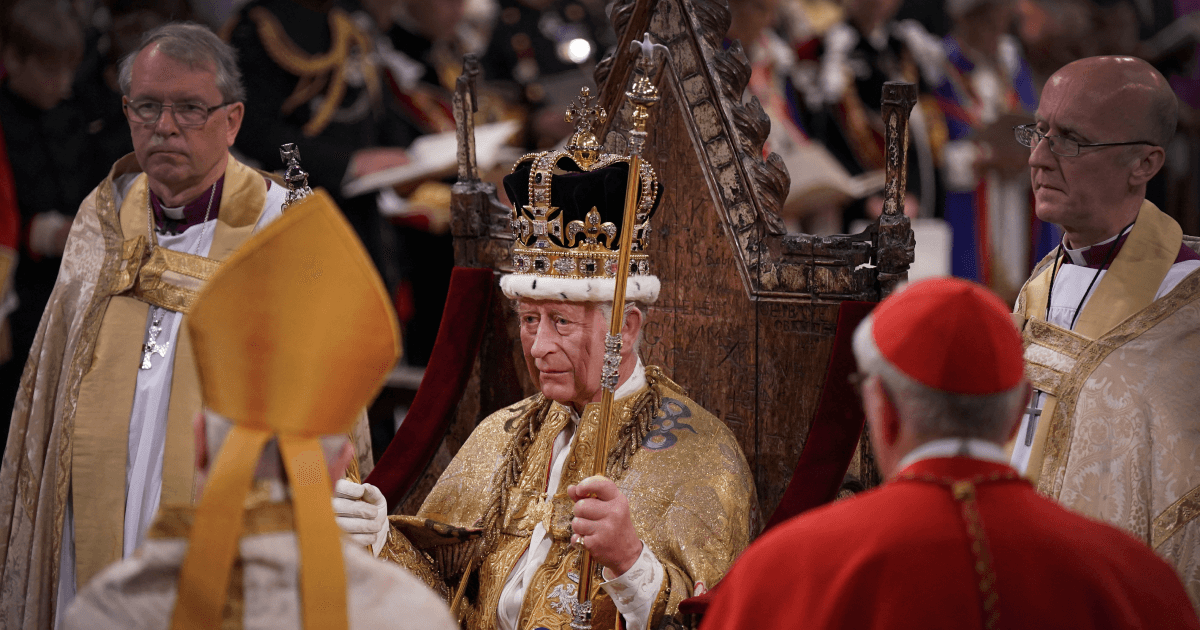
That observation leads directly to a second difficulty. The revised language appears to sit uneasily alongside the King’s Coronation Oath and naturally raises questions about how the two are to be reconciled.
This, in turn, raises the question of to whom the King – and the King’s Government – is accountable. The events of 1688 made the Crown’s accountability to Parliament clear. Indeed, the House of Windsor reigns by invitation of Parliament, subject to constitutional conditions that have long included the Sovereign’s Protestant succession and the duty to uphold the Protestant religion established by law. The addition of a responsibility to “protect the space for Faith within the multi-faith nation” is therefore no small matter and deserves public explanation.
Opinions will differ as to whether the new role has any meaningful constitutional existence. If it does, then questions inevitably arise about its relationship to the King’s established constitutional duties. If it does not, then it risks creating confusion without serving any discernible constitutional purpose.
To anyone familiar with the history of religions, it must be clear that whatever elements of overlap there are, and there are many, the religions distinguish themselves by being in conflict with each other.
The conflict may not be very deep in some. For example, the arena of overlap between Buddhism and Judaism is one with little history of mutual distinction and little antipathy. The conflict between Zoroastrianism and the Sikhs is not one that has derailed much of Asian history.
But the conflict between Islam and everybody else, and in particular Christianity, runs deep and long and is steeped in blood. The idea that there is a space of Abrahamic mutuality is a confection of a particular cast of political and theological mind that has emerged in the last century or so and has no basis in actual history.
That’s not to say that people haven’t tried to construct a revisionist history of mutuality that reflects the way they would like things to have been rather than the way they were. This shallow and fantasy revisionism founders whenever it is confronted with the facts on the ground, as for example in the book The Myth of the Andalusian Paradise.
Nor is it obvious what is meant by a “space for Faith within the multi-faith nation”, still less how such a space might be protected in constitutional terms. Were such a role capable of precise definition, it might indeed commend itself to a monarch concerned with safeguarding the peaceful exercise of religion by all communities, particularly smaller or vulnerable ones. Yet it remains unclear what practical constitutional responsibilities the title is intended to describe. Nor is there much public evidence that this newly articulated role has yet been exercised in defence of vulnerable religious communities whose freedom is under pressure.
This leads naturally to the next question: whether the duties traditionally associated with the title “Defender of the Faith” are today being fulfilled. Many Christians believe that their freedom to practise and express their faith is under increasing pressure. They point to prosecutions connected with activities near abortion clinics, restrictions on public expressions of religious belief, and incidents such as violent attacks on Christian converts and speakers at Speakers’ Corner.
Whether or not one accepts every aspect of that analysis, it is understandable that some Christians should wonder what practical meaning now attaches to the Sovereign’s historic role as Defender of the Faith. If the constitutional office still carries that responsibility, some will ask why it appears to have found so little public expression. That inevitably raises wider questions about the relationship between the Coronation Oath and the present understanding of the monarchy’s religious responsibilities.
The deeper concern for those who take the constitution seriously lies in the process by which this revised language has appeared. The constitutional settlement established after the Revolution of 1688 was intended precisely to prevent the Crown from altering the religious settlement by personal or executive means. The Bill of Rights 1689 affirmed that changes of this character belonged to Parliament rather than to unilateral action.
Whether the revised wording in the Sovereign Grant Annual Report 2025–26 originated within HM Treasury, the Royal Household or through consultation between them, it inevitably raises questions about constitutional process.
The report exists principally to account for the expenditure of public money under the Sovereign Grant. It is not an obvious constitutional instrument through which the religious understanding of the monarchy should be reformulated.
Public lawyers sometimes employ the French expression détournement de pouvoir to describe the use of a lawful administrative power for a purpose other than that for which it was conferred. One need not press the analogy too far, but some constitutional lawyers may reasonably wonder whether a financial reporting mechanism is the appropriate vehicle for introducing language with potentially significant constitutional implications.
Parliamentary scrutiny of the Sovereign Grant is directed principally towards public expenditure. Neither the National Audit Office nor the Public Accounts Committee exists to determine questions concerning the constitutional or theological meaning of the Coronation Oath.
That is why the revised wording is likely to trouble some constitutional historians. Whatever one thinks of the substance, constitutional developments of this kind ordinarily deserve explicit explanation rather than quiet incorporation into an annual financial report.
There is also a broader constitutional point: the Crown derives its authority through the constitutional settlement established by Parliament. Parliament, in turn, remains accountable to the electorate. If the understanding of one of the Crown’s historic constitutional duties is indeed changing, many will reasonably ask whether that development ought to be openly explained and publicly debated rather than simply appearing in revised administrative language. If the revised wording genuinely reflects a redefinition of the Sovereign’s religious office, they might also ask if it represents a failure to maintain the understanding of that office solemnly affirmed at the Coronation.
That is already a sufficiently serious constitutional concern. It is unnecessary to speculate further about the King’s personal religious convictions, which remain known fully only to God. Will this smuggling of new terminology into an accounting document upset Parliament? The answer is probably not greatly. It no longer cares about the Christian faith or its Protestant variant. It does care about taxes, of course, and political opinions, but not faith in Christ unless it is expressed outside an abortion clinic.
But many Christians – Anglican or otherwise – who take their faith seriously might view HM Treasury’s terminology as one more nail in the coffin of public Christianity. Just at the very moment when the faith is under immense pressure in this country from the political progressive left and what one might call the theocratic right, and Christians are being de-platformed, cancelled, unemployed and sometimes imprisoned for their determination to choose Christ above the demands of political culture, the Sovereign Grant Report gives the impression that the Crown is abandoning the cause. Given the frequency and fervour with which the King has spoken up in defence of persecuted Christians worldwide, this is at the very least unfortunate and at most an inaccurate depiction.
We have a constitutional settlement which involves a monarch solemnly crowned in a historic Christian abbey whose government sits in a parliament democratically accountable to his subjects. Tinkering with this constitutional arrangement without debate or transparency is a dangerous measure. The King’s good servants should tread carefully.