
February 12, 2026

Rome ‘will recognise’ four Chinese bishops

Staff writers
More
Related
Min read
share

A breakthrough may be near in the long-running dispute between the Holy See and China over the ordination of bishops.

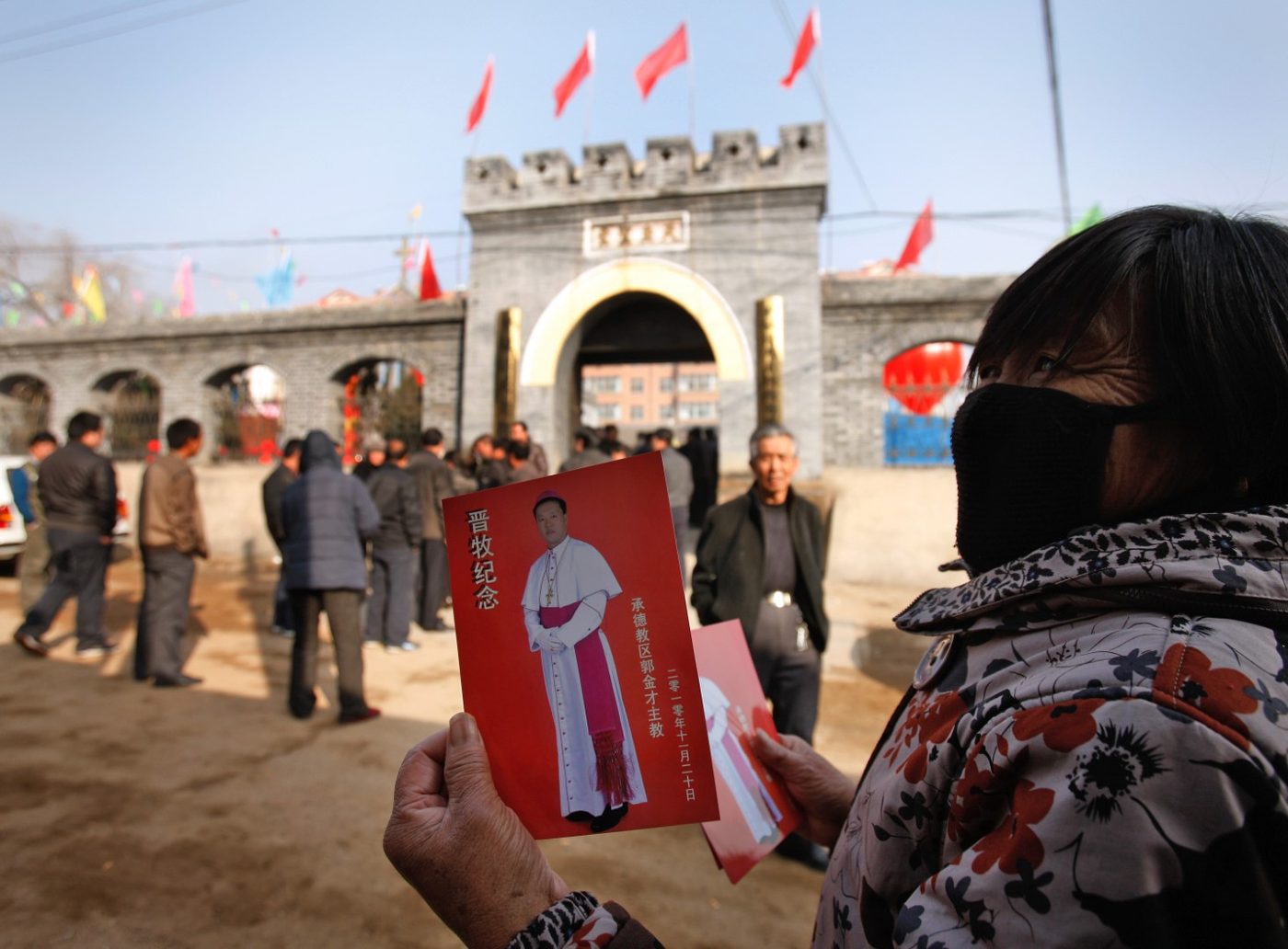
According to Reuters, the Vatican will recognise at least four Chinese bishops who were appointed by the Chinese government without the consent of the Pope, who have until now been considered illegitimate by the Holy See. This follows a meeting in mid-August between some of these bishops and representatives of the Vatican.

For more than six decades the Chinese Communist Party has contested the right of the Vatican to appoint new bishops to serve the 10 million Catholics in the country. Instead China has appointed bishops who have not been approved by the Church, while “underground” bishops ordained by the Church have risked arrest and imprisonment.
The four bishops who sources say will be recognised are Joseph Ma Yinglin, the Bishop of Kunming; Guo Jincai, of Chengde; Yue Fusheng, of Harbin; and Tu Shihua, of Puqi.

Under the draft agreement, new bishops in China will be chosen by local clergy, with the Pope making the final appointment. The Pope will have the power to veto a candidate, for instance on ethical grounds.

At least two of the bishops still not recognised by the Church have girlfriends or children.

There are still issues to be resolved. Some 30 bishops recognised by the Vatican work in the “underground” Church and risk persecution by the state. The Vatican hopes that these bishops will be recognised by the Chinese government.

Of the 100 dioceses on the Chinese mainland, around 30 are without a bishop.


Congo bishops lead efforts to make national elections fair

Six Congolese bishops are leading a recruitment drive to get hundreds of thousands of people to volunteer as election monitors.

The scheme is in response to rising tensions in the Democratic Republic of Congo.

The bishops’ conference has played a major role in mediating between political opponents.

The main opposition parties accuse President Joseph Kabila of controlling the courts and other state institutions in a bid to remain in power. The constitution prohibits him from running for another term.

The crisis erupted into violence in September when security forces dispersed opposition protesters in Kinshasa, killing about 50 people and arresting hundreds more.

American Bishop Oscar Cantú, chairman of the US bishops’ committee on international justice and peace, said the Congolese bishops’ conference “is respected by all”.

Bishop Cantú told the Catholic News Service that the country “needs an independent voice that calls for fair process” and that the Catholic Church fulfils that role.

He said: “People see that the work the Church does serves everyone, and they don’t see that from public officials.”


New cardinal seeks to end crisis

There must be dialogue between Venezuela’s government and the opposition, the country’s newly named cardinal has said.

Cardinal-designate Baltazar Porras Cardozo, a long-standing critic of the socialist government, has begun talks with both sides in an attempt to bring them together to help solve Venezuela’s economic crisis.

On Monday, Pope Francis received President Nicolás Maduro in a private audience.

A breakthrough may be near in the long-running dispute between the Holy See and China over the ordination of bishops.

According to Reuters, the Vatican will recognise at least four Chinese bishops who were appointed by the Chinese government without the consent of the Pope, who have until now been considered illegitimate by the Holy See. This follows a meeting in mid-August between some of these bishops and representatives of the Vatican.

For more than six decades the Chinese Communist Party has contested the right of the Vatican to appoint new bishops to serve the 10 million Catholics in the country. Instead China has appointed bishops who have not been approved by the Church, while “underground” bishops ordained by the Church have risked arrest and imprisonment.
The four bishops who sources say will be recognised are Joseph Ma Yinglin, the Bishop of Kunming; Guo Jincai, of Chengde; Yue Fusheng, of Harbin; and Tu Shihua, of Puqi.

Under the draft agreement, new bishops in China will be chosen by local clergy, with the Pope making the final appointment. The Pope will have the power to veto a candidate, for instance on ethical grounds.

At least two of the bishops still not recognised by the Church have girlfriends or children.

There are still issues to be resolved. Some 30 bishops recognised by the Vatican work in the “underground” Church and risk persecution by the state. The Vatican hopes that these bishops will be recognised by the Chinese government.

Of the 100 dioceses on the Chinese mainland, around 30 are without a bishop.


Congo bishops lead efforts to make national elections fair

Six Congolese bishops are leading a recruitment drive to get hundreds of thousands of people to volunteer as election monitors.

The scheme is in response to rising tensions in the Democratic Republic of Congo.

The bishops’ conference has played a major role in mediating between political opponents.

The main opposition parties accuse President Joseph Kabila of controlling the courts and other state institutions in a bid to remain in power. The constitution prohibits him from running for another term.

The crisis erupted into violence in September when security forces dispersed opposition protesters in Kinshasa, killing about 50 people and arresting hundreds more.

American Bishop Oscar Cantú, chairman of the US bishops’ committee on international justice and peace, said the Congolese bishops’ conference “is respected by all”.

Bishop Cantú told the Catholic News Service that the country “needs an independent voice that calls for fair process” and that the Catholic Church fulfils that role.

He said: “People see that the work the Church does serves everyone, and they don’t see that from public officials.”


New cardinal seeks to end crisis

There must be dialogue between Venezuela’s government and the opposition, the country’s newly named cardinal has said.

Cardinal-designate Baltazar Porras Cardozo, a long-standing critic of the socialist government, has begun talks with both sides in an attempt to bring them together to help solve Venezuela’s economic crisis.

On Monday, Pope Francis received President Nicolás Maduro in a private audience.

subscribe to
the catholic herald

Continue reading your article with a subscription.
Read 5 articles with our free plan.
Subscribe

subscribe to the catholic herald today

Our best content is exclusively available to our subscribers. Subscribe today and gain instant access to expert analysis, in-depth articles, and thought-provoking insights—anytime, anywhere. Don’t miss out on the conversations that matter most.
Subscribe