



SAINT OF THE WEEK: May 12 – Saint Pancras
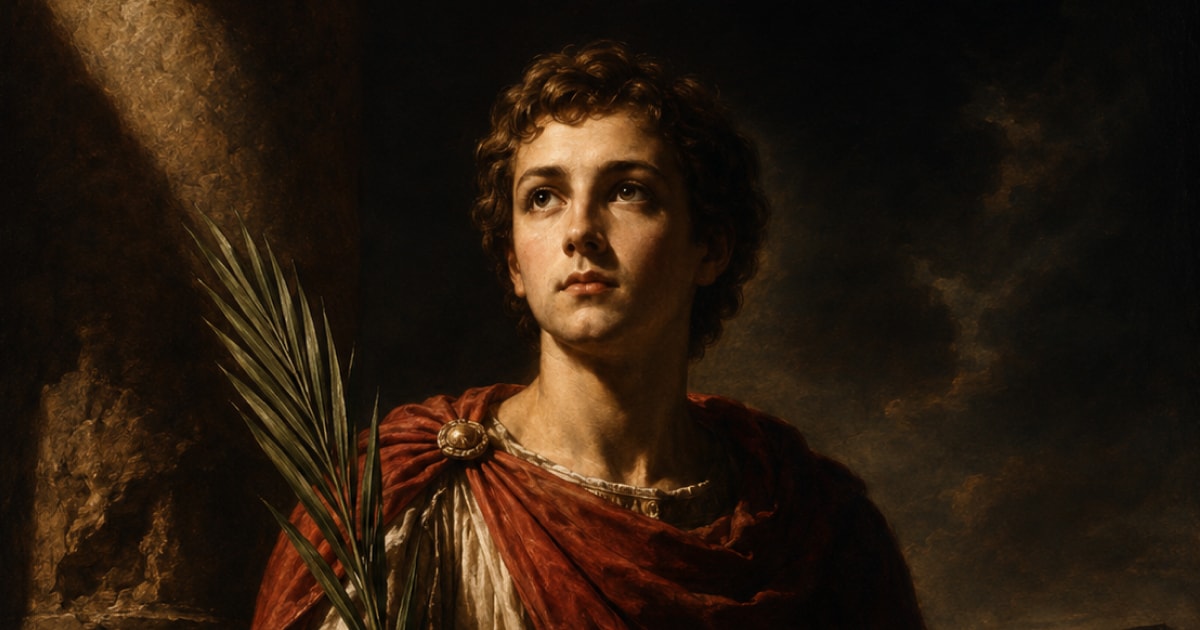
Saint Pancras is the most famous saint in London who no one knows anything about. So far as we know, he was a Roman citizen of Phrygia born around AD 289. When Pancras was nine years old, his mother Cyriada died during childbirth; not long after, his father died of grief.
Entrusted to his uncle Dionysius’s care, Pancras moved to Rome and lived in a villa on the Caelian Hill. Both nephew and uncle were converted to Christianity by a man named Marcellinus and became steadfast upholders of their new faith. Dionysius died, leaving Pancras on his own at still a very young age.

At 14 years old, the Christian Pancras refused to make sacrifices to the Roman gods, and during the severe persecutions unleashed by the Emperor Diocletian he was hauled before the authorities in AD 303/304. A traditional story holds that Pancras was brought before the Emperor himself, who was fascinated by his boldness and promised him wealth and power if he would but offer sacrifices to the pagan gods. This is almost certainly false, since Diocletian had not been physically in Rome since AD 286, choosing instead to rule from Nicomedia in Anatolia. Nonetheless, Pancras was beheaded on the Via Aurelia in Rome by the imperial authorities in AD 303/304.
The cult of Saint Pancras must have been strong early on, as the basilica of San Pancrazio was erected on the site of his martyrdom by Pope Symmachus in the late 5th century. Devotion to him in Rome was strong enough that when Pope St Gregory the Great sent Augustine to England, he gave him relics of the martyr Pancras. Arriving in Kent, the first church Augustine established was dedicated to this martyr-saint, and its ruins at Canterbury are still visible today.
It is likely that the relics of Pancras at Canterbury may have been divided, and some sent to Middlesex to found a church dedicated to him there. St Pancras Old Church gave its name to the surrounding village which, as London grew into a great city, eventually became the Metropolitan Borough of St Pancras. The Prague district of Pankrác also bears his name, as do several places in Italy, Austria and Germany.
During the great railway boom of the 19th century, the Midland Railway’s services ended up in London using the Euston station of a rival company. Seeking a London terminus of its own, the company purchased a goods yard at St Pancras next to King’s Cross and constructed the magnificent Victorian Gothic station that bears the saint’s name. Since 2007, it has been the home of Eurostar, London’s rail link to Paris and the Continent, under the name of St Pancras International. The next time you are whirring through the Channel Tunnel, remember the brave teenager who faced death in Rome rather than deny his Saviour more than 1,700 years ago.