.png)



Shortly before midnight on the evening of December 14, 1957, there was a knock on the door of the parish house of the village of Rábakethely in far western Hungary, just shy of the Austrian border. With the parish priest away, the young curate answered the call to find a teenage boy. He pleaded that his uncle in the neighbouring hamlet of Zsida was gravely ill and likely to die soon. Could the priest come at once?
For a young priest already known for his zeal for souls, there could only be one answer. Fr János gathered the Blessed Sacrament and the holy oils and set off on foot through the winter darkness intending to deliver the Last Rites to a dying soul. Such night calls are ordinary events in the life of a priest, but the events that followed that evening led to Fr Brenner becoming one of the most famous names among Hungary’s Catholic majority. To understand why, we must leave the young curate on that woodland path for now.
János Brenner was born on December 27, 1931 into a family whose Catholic faith was deeply embedded in its daily life. Openness to the priesthood must have been part of that atmosphere as János and two of his brothers all answered the same vocation. In his early days, János was educated by Cistercians and Norbertines but felt an instinctive calling to the former. After he finished his secondary studies at the Cistercian school at Zirc, he entered the novitiate of that order in the same town in 1950.
Answering a vocation to the religious life could hardly have come at a worse time. Hungary was now firmly under Soviet-backed communist rule. The new government worked to suppress religious orders, close monasteries and bring Church institutions under the control of the Party. Hungary’s new rulers understood that the Catholic Church was one of the few institutions in the country’s life capable of fostering and commanding the loyalties of ordinary people.
Brenner’s plans to become a Cistercian and live an ordinary religious life were overturned by the events of history. To protect the men discerning their calling, the novice master of Zirc was forced to move them outside the abbey to places where the secret police would find it more difficult to keep an eye on them. Despite these difficulties, he was allowed to enter the diocesan seminary instead and studied there until his ordination in 1955.

His class of brother priests formed a remarkable generation. They were among the first Hungarians to pursue the priesthood and be ordained entirely after the communist regime’s takeover. They began their priesthood at a time when the Church’s once-flourishing schools, religious houses and lay apostolates had been attacked, dismantled or driven underground by the state. Priests themselves had to operate under the threat of constant surveillance by the servants – willing or otherwise – of the country’s new overlords.
The uprising of 1956 only increased the tensions in Hungary. While the revolution had raised hopes that Soviet domination might be overturned and a less totalitarian future pursued, the crushing of the revolt imposed a renewed climate of fear across the country. Thousands who had taken advantage of a brief gust of fresh air were killed, imprisoned or – if lucky – forced into exile. Any form of life or gathering that existed outside the strict confines of the Party came under suspicion from the state.
It was an inauspicious time for Fr János to start his priesthood. The bishop assigned him to serve as curate at the parish of Rábakethely, with its four branch churches at Magyarlak, Máriaújfalu, Zsida and Farkasfa. He was remembered there as cheerful, energetic and tireless.
“He had a certain aura that cannot be expressed in words,” one of his parishioners in Rábakethely said later. “People loved him, and they tried to go where he was and listen to his words. There was something about him that attracted people.”
“He won many people to the Faith, to the Church. He could not pass by a person without stopping and saying at least two words to him. That eternal, kind smile on his face... He preached the word of God seriously, testifying to the faith at every moment.”
The existence of young priests like Fr Brenner challenged the communist notion that the old priests would simply die off and the superstition of religion would fade away when a new generation was born under enlightened socialist rule. Here was a young priest who was personable and savvy and possessed a natural ability to connect with young people. The local communist authorities took note. One day, Fr János was travelling back from Farkasfa on his motorbike when he was attacked by having logs thrown at him. Through deft manoeuvring of his vehicle, he managed to evade the attack and made it home only to proclaim “They were unlucky!” and laugh off the threat.
The local state commissar for religious affairs went to the bishop and raised the subject of Fr János, suggesting he be transferred to lessen the impact he was having in his parish. In turn, the bishop asked Fr János if he wanted to leave, but the young priest said: “I am not afraid: I am happy to stay.” When the commissar found out Fr János was not being moved, he told the bishop: “Very well. Let them see the consequences.”
That December evening a teenager led Fr János down a woodland path not to a dying uncle but to a group of armed men waiting in the woods. When the priest approached, the group assaulted him, knocked him unconscious, stabbed him 32 times, beat his body and trampled on his throat. His corpse was discovered the following morning, his arms still closely clasping the pyx containing the Blessed Sacrament to his chest.
Given that he was almost certainly murdered by agents of the state, the police investigation that followed Fr János’s death was unsurprisingly risible. The authorities attempted to spin a number of slanders – that the murderer was a jealous former lover of the priest, that Fr János was a human trafficker, that the parish priest was envious of his curate’s success and killed him – but the accusations all met with the indignation of the locals. As more and more testaments to the murdered priest’s nobility and virtues were produced, a local wag said the communist police had just conducted János Brenner’s canonisation investigation.
Eventually the police found a man who had no alibi and sentenced him to death, but the verdict was overturned on appeal. The teenager who sent for him – obviously an accomplice to the act – was finally arrested, found guilty and given a life sentence, but was then quietly released from prison.
The memory of young Fr János persisted, even while the official authorities forbade any public celebration of his life and commemoration of his martyrdom. The police even tried to break up the crowds at his funeral. But communist hopes that Christianity would simply fade away proved unfounded. In the end, it was faith in Marxism that evaporated.
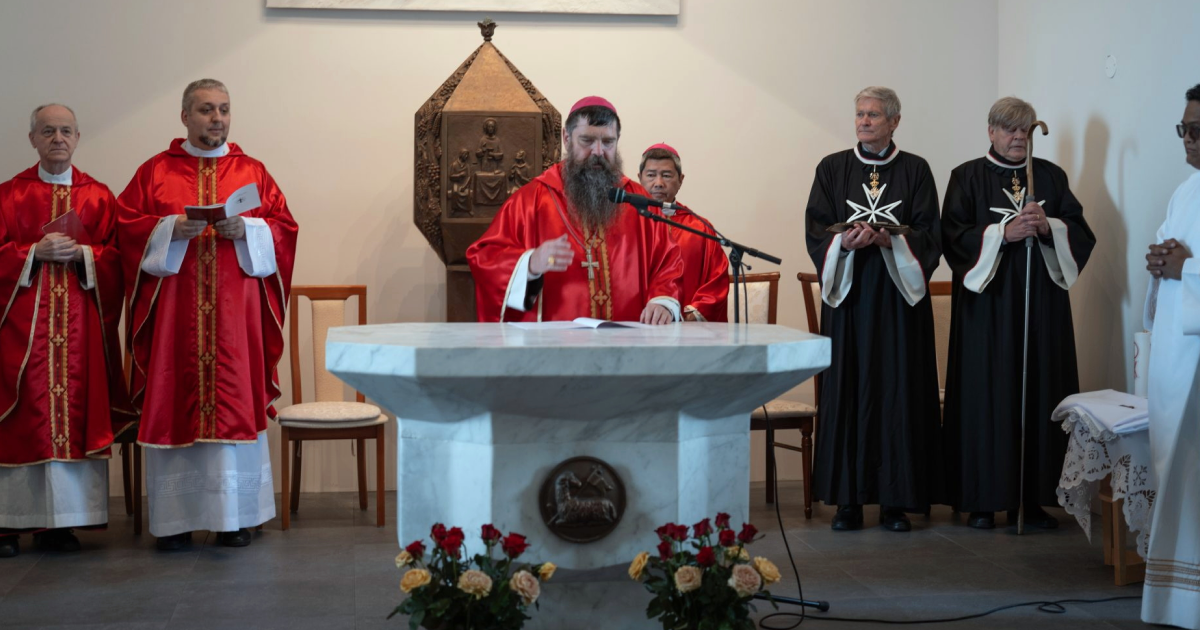
Following the collapse of communism, it became possible to investigate Fr János’s life and death more openly. A small chapel was erected on the site of his murder. The Church concluded that he had been killed in hatred of the Faith and recognised him as a martyr. Pope Francis approved the decree of martyrdom in 2017, and the following year János Brenner was beatified in his native Diocese of Szombathely. Plans for a church dedicated to him near the site of his death are now in the planning stages.
The significance of Blessed János Brenner lies not simply in the manner of his death, but in the kind of priest he chose to be. He did not lead a political movement. He did not seek confrontation. His determination was directed towards a far simpler objective: bringing souls to Christ.
Communist regimes imagined that the Church’s strength resided in institutions, buildings and public influence. Brenner demonstrated that its true strength rested elsewhere: in the fidelity of ordinary priests, the resilience of families who nurtured vocations and the quiet conviction that Christ remained worth serving regardless of the cost.