


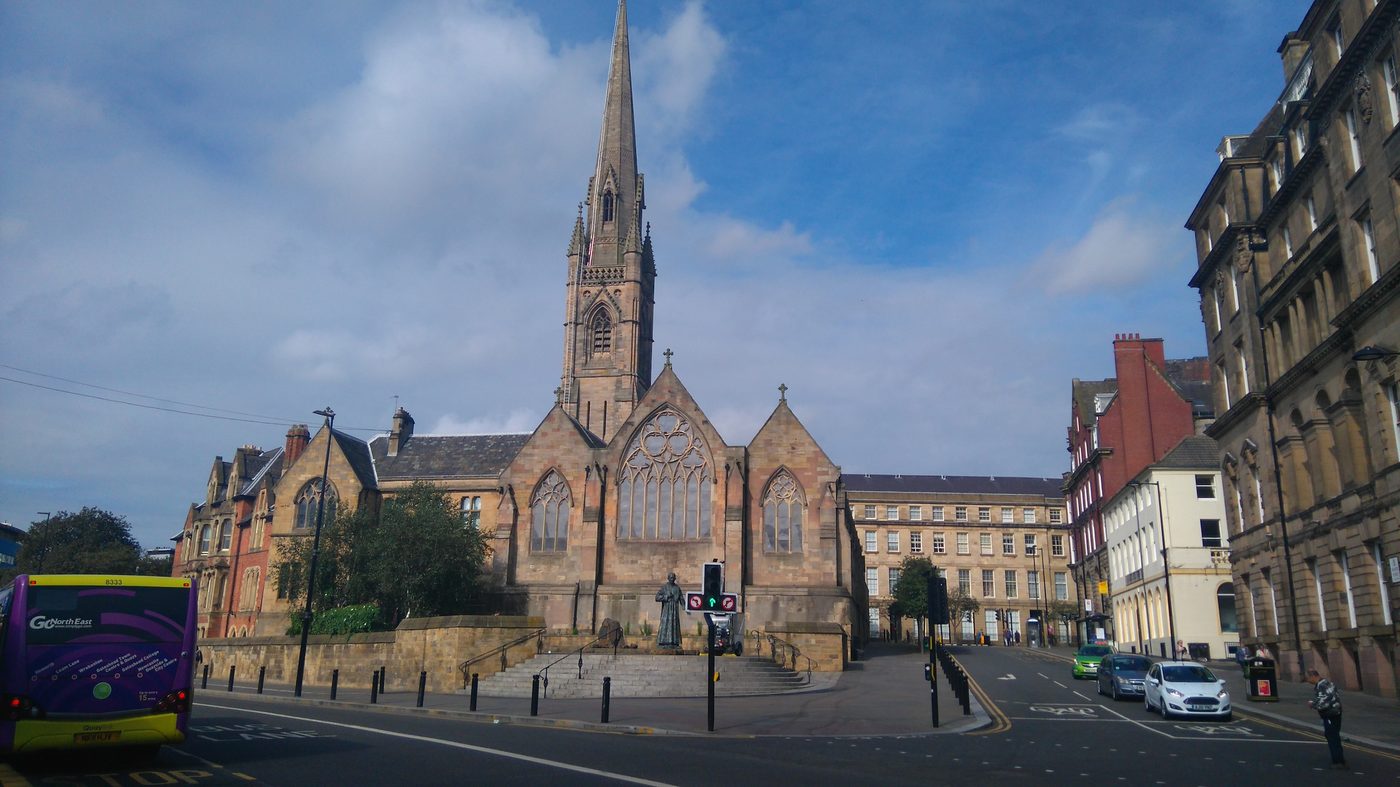
Arriving in Newcastle lifts the soul for those of good taste and good faith. The Central Station, once decaying and spattered in pigeon dung, has been transformed into an uplifting cathedral for trains. Thanks to the new Japanese locomotives that shoot you to and from London in less than three hours, both the places I call home feel closer than ever. Opposite the station is St Mary’s Cathedral, which I have attended since my teenage years. The comforting figure of Cardinal Basil Hume welcomes arrivals to the city. Whether making a pilgrimage northward for the football, the nightlife or the rolling Northumberland countryside, sticking your head into St Mary’s will imbue you with its warm dignity. The cathedral is the work of Pugin, architect of the Palace of Westminster. His style captures the best of this island’s heritage and grandeur. St Mary’s has hosted several poignant moments for me, including the recent funerals of two of the finest Geordies in my family: Winifred Sanderson and Carol McKenna. Both attended Mass at there for years, having drifted from their local parishes. They were devoted believers throughout their long lives but eventually found solace in the heart of the city. My fondest memories of these two are not sitting sharing sermons or candlelit services, but in the coffee shop. After Sunday Mass, our family would occupy a whole corner to share breakfast, scones, teas and coffee. It may not be the most theological of motivations, but these are the memories that draw me to Catholicism. The twin aspirations of family and togetherness are making a comeback in politics. Two Conservative MPs in the new intake, Danny Kruger and Kieran Mullan, used their maiden speeches to speak about regaining the lost sense of belonging in British society. Here is a creed with an appeal beyond party politics, one with the potency to bring the country together. The dramatic votes of recent years suggest that, believers or otherwise, the electorate is yearning for a better sense of community.
2:54 PM
Sebastian Payne's Diary: Poignant moments in a Pugin cathedral
Sebastian Payne

5 min read



Already a subscriber? Sign in
5freearticles every month
Continue reading with a free account. No card needed.
- Five free articles every thirty days, on any device you sign in on
- The Catholic Herald newsletter, every morning
- Subscribe whenever you like for everything: every article and the magazine


subscribe to the catholic herald today
Our best content is exclusively available to our subscribers. Subscribe today and gain instant access to expert analysis, in-depth articles, and thought-provoking insights—anytime, anywhere. Don’t miss out on the conversations that matter most.
Subscribe



