July 2, 2026

Seven liturgical reforms every Catholic can get behind

Clement Harrold
More
Related
Min read
share

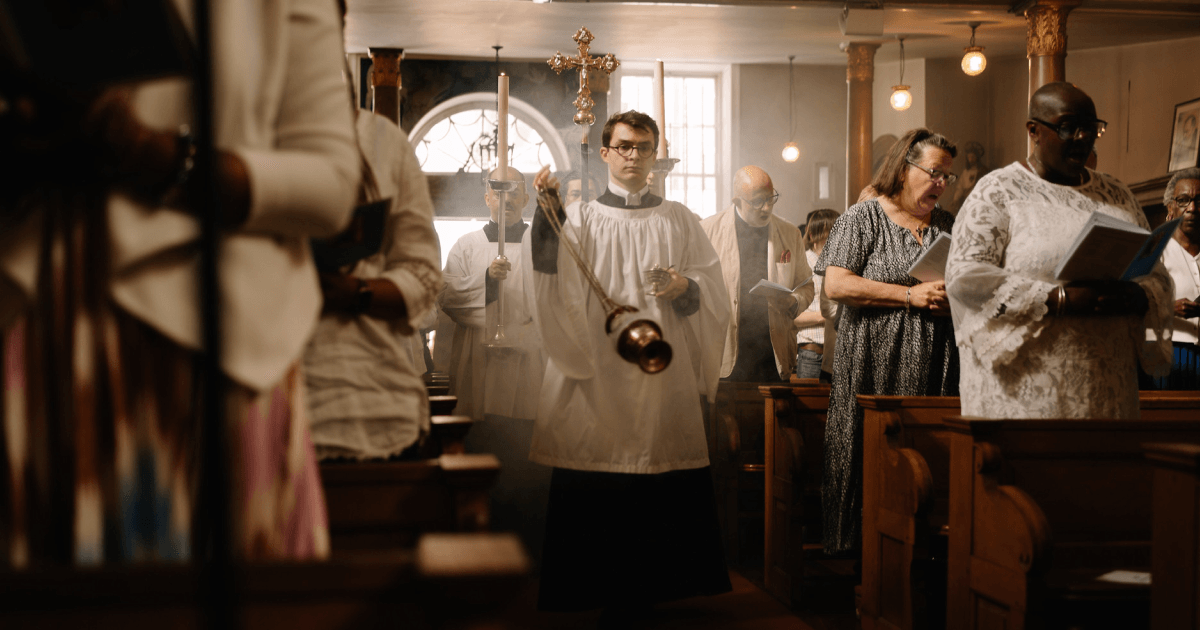
Every June I go camping with my family in the Forest of Dean, and during our time there we’re blessed to be able to attend an Ordinariate Mass. For those who haven’t experienced it, the Ordinariate liturgy is often characterised as being akin to “an Old Rite Mass translated into English”.

The Anglican Use preserves many of the distinctive elements of the Traditional Latin Mass, such as prayers at the foot of the altar, the dual Confiteor and the Last Gospel. While the language is in the vernacular, it’s the kind of elevated English where “your spirit” becomes “thy spirit”, “It is right and just” becomes “It is meet and right so to do”, and imperatives such as “vouchsafe” abound.
The Anglican Use also includes several elements that the Old Rite lacks. Among these are the Prayer of Humble Access, offered by the priest and the people before receiving Holy Communion, as well as a beautifully constructed prayer of thanksgiving that is recited after Communion.

Although I attend a Novus Ordo parish, my annual exposure to the Anglican Use periodically reminds me that today most Catholics’ experience of the Mass is severely impoverished, to say the least. Whatever its intentions, the liturgical revolution of the 1960s and 1970s has resulted in a situation where the great majority of the faithful find themselves attending Masses that feel irreverent and banal.

Thankfully, I am not the one responsible for sorting out the present liturgical crisis. But if I were, I might begin my restoration efforts with seven common-sense reforms that would help the Novus Ordo better glorify God and sanctify souls.

1) Require the priest to face ad orientem

While the practice of celebrating Mass ad orientem has never been universal, it was the norm in both East and West for over a thousand years. Requiring the priest to face the same direction as the people reinforces the truth that he is leading them in a sacrifice of praise that is fundamentally theocentric in its orientation.

By contrast, as soon as the priest faces versus populum, it becomes much easier for the personality of the priest to become the centre of attention. This in turn feeds into an unhealthy clericalism. Since there really aren’t any good arguments for Mass to be celebrated versus populum, it makes perfect sense to restore the ancient practice of celebrating it ad orientem.

2) Bring back altar rails

Despite having studied theology for six years, I have never once heard a convincing explanation for why the faithful should receive Holy Communion standing and in the hand instead of kneeling and on the tongue. It’s hard even to think of what such an explanation might look like.

Perhaps the best candidate is that some people received in the hand in the early Church, and that people don’t kneel to receive Communion in the Eastern liturgy. These are not good arguments. The early Church didn’t have crucifixes either, but that doesn’t mean we should strip them from our altars.

As with crucifixes, so with the reception of Communion: over time the Church grew in her understanding of what is most reverent and helpful. Receiving on the tongue reminds us that the Eucharist is no ordinary food, and it teaches us that the Church is our spiritual mother who feeds us like a mother bird feeding her chicks. It also reduces the risk of sacrilege. As for kneeling, this is the normal way that Western Christians express homage and veneration, so why wouldn’t we demand this of the faithful when they approach the King of Kings? Exceptions should be made, of course, for those who are unable to kneel because of age or infirmity.

3) Restore Eucharistic reverence

There’s much that could be said here, but I’ll limit myself to three suggestions.

First, reinstate the priest’s genuflection immediately after the words of consecration. In the Novus Ordo, the priest first elevates the sacred species, and only then does he genuflect. Here the Old Rite is both more reverent and more pedagogical: as soon as the miracle of transubstantiation takes place, the priest pays homage because God is present on the altar. Only after the priest has genuflected does he then elevate the Host or the Chalice.

Second, require Communion plates at every Mass at which an acolyte is serving. These serve an obvious practical purpose – preventing consecrated Hosts from falling to the ground – as well as helping to restore a sense of the sacred. There is no good reason why Communion plates shouldn’t be used.

Third, limit the use of extraordinary ministers. While I’m not opposed to extraordinary ministers in principle, it’s their gradual morphing into “ordinary distributors” of Holy Communion that I and many other Catholics take issue with. In many churches, the use of extraordinary ministers could be avoided altogether simply by limiting Holy Communion to reception under one kind.

4) Require the Roman Canon

When I open my Universalis app and go to the Order of Mass for July 1 (St Oliver Plunkett), I am met with no fewer than 10 options for the Eucharistic Prayer: four standard ones, two for “Reconciliation”, and another four for “Various Needs”. This doesn’t even address the three additional Eucharistic Prayers that exist for Masses with children. Despite this, nobody has ever been able to explain to me the value in allowing the priest to wake up each morning and pick a different Eucharistic Prayer based on what he felt drawn to over breakfast.

Prior to the liturgical revolution, the Roman Canon (“Eucharistic Prayer I”) was used in every Roman Rite Mass for over a thousand years. It therefore seems legitimate to ask why the Holy Mass should succumb to modern man’s penchant for endless novelty and customisation. Why did we meddle with the Roman Canon? What exactly did we gain by changing it? What does Eucharistic Prayer II have that the Roman Canon lacks? The only meaningful answer is brevity. But this answer is hardly convincing when we consider that the Roman Canon is a mere 453 words – just three minutes in speaking terms – longer than Eucharistic Prayer II. 

5) Standardise the Penitential Rite

If anyone can explain to me why it was a good idea to make the Confiteor optional, I’d love to hear it. What is it, precisely, that makes this ancient (albeit modified) penitential prayer appropriate on a Tuesday but unnecessary on a Wednesday? And why should the inclusion of such an integral part of the Mass be left to the whim of the priest?

Under the present practice, the presider has the freedom to skip the Confiteor altogether and replace it instead with a series of invocations – at least seven different sets of options are available in the United States – most of which don’t even mention the word sin.

6) Move (or remove) the sign of peace

I try to make an effort with the sign of peace, but the fact of the matter is that the current form of the ritual has become saccharine beyond repair. It’s an unhelpful distraction during one of the most solemn moments of the Mass.

One potential solution would be to follow the Ambrosian Rite and move the sign of peace to just before the Offertory. Another would be to place it immediately after the Penitential Rite, although this has less historical precedent. Alternatively, it could be scrapped altogether.

7) Introduce more silence

Silence and song are the two highest expressions of worship. The former is encapsulated in the traditional Low Mass. The latter is woven throughout the traditional High Mass and the Eastern Divine Liturgy. A clear defect in most contemporary celebrations of the Novus Ordo is that the singing is dreadful, while silence is almost entirely absent. One way to improve this would be by having the priest pray the offertory prayers in silence. Another would be for the congregation to refrain from singing hymns after Holy Communion when the priest is purifying the sacred vessels.

• • •

Needless to say, the above recommendations are the musings neither of an expert nor of a cleric but simply of a (I hope, thoughtful) lay Catholic who attends the Novus Ordo and sees its defects. If any of the foregoing prescriptions were ever to be adopted, it would be essential to implement them with due pastoral sensitivity and care.

By all accounts, the ditching of the Old Mass in the 1960s and 1970s caused a widespread crisis of faith among the faithful. Virtually overnight the Mass of the Ages was unceremoniously abandoned by the wayside. For many, this sea change begged the question: if the Church’s liturgy can be so easily overturned, then why can’t the same be done with her moral teachings?

If we wish to avoid repeating the mistakes of the past, then any future reform of the liturgy must be carried out carefully and gradually, and accompanied by sound catechesis.

Continue reading with a free account

Create a free account to read up to five articles each month
Create free account

You have # free articles remaining this month.

Subscribe to get unlimited access.
Sign up

subscribe to the catholic herald today

Our best content is exclusively available to our subscribers. Subscribe today and gain instant access to expert analysis, in-depth articles, and thought-provoking insights—anytime, anywhere. Don’t miss out on the conversations that matter most.
Subscribe