
May 6, 2026

Sons of the Most Holy Redeemer reject Pope Leo XIV and post-conciliar popes

Thomas Colsy
More
Related
Min read
share

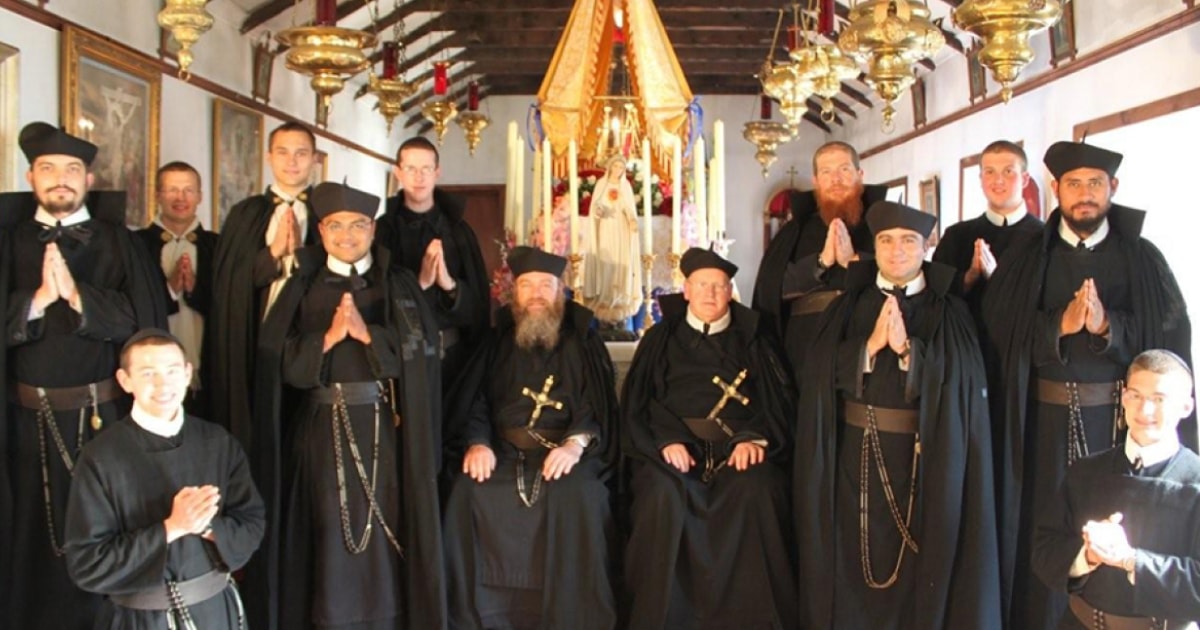
The Sons of the Most Holy Redeemer, a traditionalist Religious congregation based on the island of Papa Stronsay in the Orkney archipelago, have issued a 21-page declaration formally withdrawing recognition from Pope Leo XIV and his predecessors back to Paul VI, describing the post-conciliar period as “a spiritual catastrophe of the greatest imaginable proportions”.

The document, titled *The Dogma to Steer By* and published on May 2, the feast of St Athanasius, represents the most significant rupture in the community’s trajectory since its reconciliation with Rome under Pope Benedict XVI. The congregation – also known as the Transalpine Redemptorists and formally styled the *Filii Sanctissimi Redemptoris* (FSSR) – was canonically erected as a clerical institute of diocesan right by the Diocese of Aberdeen on August 15, 2012.

In their declaration, the priests and brothers state that “new doctrinal, moral, liturgical, and disciplinary decisions since Vatican II cannot be accepted because they contradict what came before”, and conclude that Catholics must “give no juridical recognition to those who have departed from it, including Leo XIV and his bishops”. They further express regret for their 2012 reconciliation, describing it as “a great mistake on our part to think that the hierarchy of the Novus Ordo was sufficiently Catholic for us to operate under its command”.

Despite the severity of those conclusions, the community insists it does not regard itself as having left the Church. “We are not saying that we should leave the Catholic Church,” the declaration states. “The Catholic Church is the Ark of Salvation, the Mystical Body of Christ, the Bride without spot or wrinkle. We cling to her with all our strength. But we must recognise that the institutional structures that claim to be the Catholic Church have been infiltrated.”

The congregation traces its origins to 1988, when it was founded by Fr Michael Mary Sim as a traditional Redemptorist community affiliated with the Society of St Pius X (SSPX), itself established in 1970 by Archbishop Marcel Lefebvre. The community settled on Papa Stronsay – a small island whose name derives from the *Papar*, early Irish monks who established monastic settlements in Orkney from at least the seventh century – in 1999. It previously maintained a monastery in the Diocese of Christchurch, New Zealand, from which it was expelled in July 2024 following a dispute with the diocesan bishop, and retains a presence in the Diocese of Great Falls-Billings, Montana.

The May declaration is the culmination of a sequence of public interventions. In October 2025, following the community’s General Chapter, the congregation issued an open letter to “Catholic Bishops, Priests, Religious and Faithful” criticising recent papal documents including *Amoris Laetitia*, *Traditionis Custodes* and *Fiducia supplicans*, and a Dicastery for the Doctrine of the Faith note – signed by Leo XIV – judging the title Co-Redemptrix as applied to the Blessed Virgin Mary to be “inappropriate”. That letter stopped short of formally declaring the papal office vacant. Bishop Hugh Gilbert OSB of Aberdeen, the congregation’s diocesan ordinary, responded that its tone and direction were “incompatible with the Catholic sense of the Church’s unity” and that the competent dicasteries of the Holy See had been consulted on the canonical implications.

The present document goes further. Its practical conclusions include an explicit refusal of obedience to the current pontiff and a call for what the community describes as an “Imperfect General Council” – a gathering of bishops who, in its judgment, have preserved the Catholic faith – to resolve the current crisis. The proposal draws on historical precedent: it echoes the resolution of the Great Western Schism (1378–1417), during which the Council of Constance acted without clear papal mandate to end a division in which multiple claimants simultaneously claimed the throne of Peter. Fr Michael Mary, speaking to a New Zealand outlet in April, described the council as a means of reaching “Catholics all over the world left in ‘Catholic bunkers’ who know what is going on”.

The council proposal is associated with Bishop Pierre Roy, a Canadian bishop who operates outside regular canonical structures and has advocated an imperfect general council as a vehicle for formally establishing the vacancy of the Holy See. It is understood that the FSSR has received conditional ordinations from Bishop Roy, though this has not been officially confirmed by the community.

The declaration places the community in a position that observers within traditionalist circles have characterised as proximate to sedevacantism, the position – held by a small but organised minority within Catholicism – that the papal throne has been vacant since the death of Pius XII in 1958, or in some versions since the close of the Second Vatican Council. The FSSR declaration does not explicitly endorse a specific date for the beginning of vacancy; it uses the formulation “apparent Popes” for the post-conciliar pontiffs from Paul VI onwards.

The move places the community at a remove from the SSPX, under whose auspices it was founded, and which has consistently maintained that the post-conciliar popes are legitimate even while subjecting their documents and decisions to sustained criticism. The SSPX’s canonical situation – itself irregular, though the Holy See has granted its priests faculties to celebrate the sacraments validly – differs significantly from the position now adopted by the Papa Stronsay community.

The Diocese of Aberdeen has not issued a formal response to the May declaration at the time of publication. The congregation has one house in the United States. A 24-year-old novice, Brother Ignatius, was reported missing from the Papa Stronsay monastery in April 2026 and is presumed drowned; Police Scotland is treating the matter as a missing persons case and has not indicated that any third party is involved.

Continue reading with a free account

Create a free account to read up to five articles each month
Create free account

You have # free articles remaining this month.

Subscribe to get unlimited access.
Sign up

subscribe to the catholic herald today

Our best content is exclusively available to our subscribers. Subscribe today and gain instant access to expert analysis, in-depth articles, and thought-provoking insights—anytime, anywhere. Don’t miss out on the conversations that matter most.
Subscribe