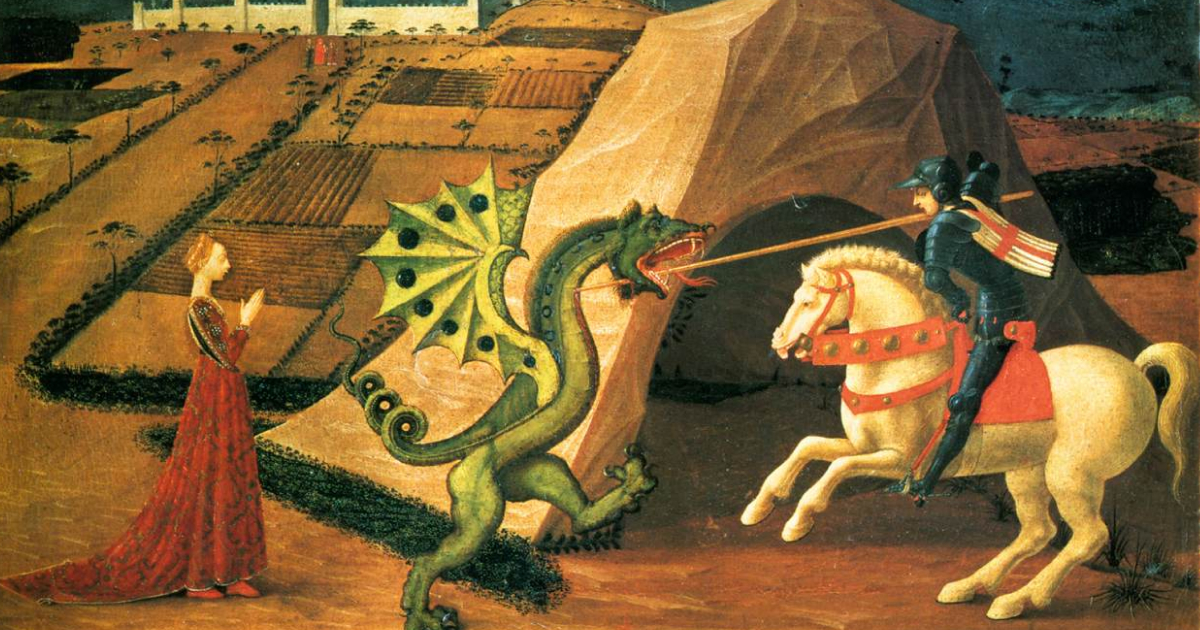


St George’s Day invites England to remember a patron saint who was not English at all, but a martyr of the early Church whose fame far outstripped the scant details of his life. Tradition presents him as a Roman soldier from Cappadocia who chose death rather than deny Christ, and it is that witness — more than any later embroidery — which explains his enduring hold on the Christian imagination.
Around that historical core grew the famous legend of the dragon: a vivid medieval tale of courage, rescue and conversion. Whether taken as legend, allegory or popular devotion, it helped make George the image of the Christian warrior — not merely brave in battle, but steadfast in the face of evil.
His adoption by England came gradually. Devotion to St George spread widely across Europe, especially among soldiers and knights, and by the 14th century Edward III had placed him firmly at the centre of English chivalric life by making him patron of the Order of the Garter.
That inheritance is written into St George’s Chapel at Windsor, begun in 1475 and completed in the early Tudor period. One of the glories of Perpendicular Gothic, it remains both a royal chapel and a living place of Christian prayer, linking England’s religious past with its public ceremonial life.
St George endures, then, because he represents something larger than nationality. He is honoured not as an English hero by blood, but as a saint whose courage, sacrifice and fidelity made him worthy of England’s love.