
April 12, 2026

The empty tomb and the promise of the resurrection

Brother René Stockman
More
Related
Min read
share

When Jesus was laid in the tomb, everything seemed to be definitively over. Yet his words continued to resonate amongst his followers, particularly how he would tear down the temple and rebuild it after three days. Had he not spoken here of the temple of his body?

The chief priests and the Pharisees also remembered these words, and that is why they asked Pilate to station guards at the tomb to prevent Jesus’s disciples from removing their master’s dead body, so that they could then tell the people that he had risen (cf. Mt 27:62–66).
Nothing is written in the Scriptures about the moment of the Resurrection itself. It is an event that is indescribable. This is different from the raising of the boy from Nain, the only son of a widow (Lk 7:11–17), and of Lazarus (Jn 11:1–44). Both were brought back to this earthly life by Jesus and would die again afterwards. The Resurrection from the dead in Jesus, on the other hand, is an entry into a new life, eternal life, where death will no longer have a hold. It is God’s love that has fully manifested itself here on earth and leads us to affirm that love is stronger than death (cf. Song of Songs 8:6). If it is God’s love that lies at the foundation of our creation as human beings, it is the same divine love that recreates us as human beings and, through the Resurrection, allows us to enter into eternal love with and in God. Time and again, we can only repeat that God is love and that it is through this love that God manifests himself to humanity.

The risen Christ is no longer the same as the Christ whom they had put to death. That is why, at his first appearance to Mary Magdalene, he says: “Do not hold on to me” (Jn 20:17). She must let go of the Jesus she knew, her “Rabboni”, in order to follow the glorified Christ from now on. It is striking that at first she does not recognise him and thinks she is dealing with the gardener, but the moment he calls her by name, her eyes truly open.

The same will happen to the disciples on the road to Emmaus, who will only recognise Christ when he breaks bread. They, too, are not allowed to keep the Lord with them, as they had first intended when they invited him as a stranger to stay with them for the night. He vanishes from their sight, because Jesus, with his risen body, fully shares in eternity where time and place no longer exist.

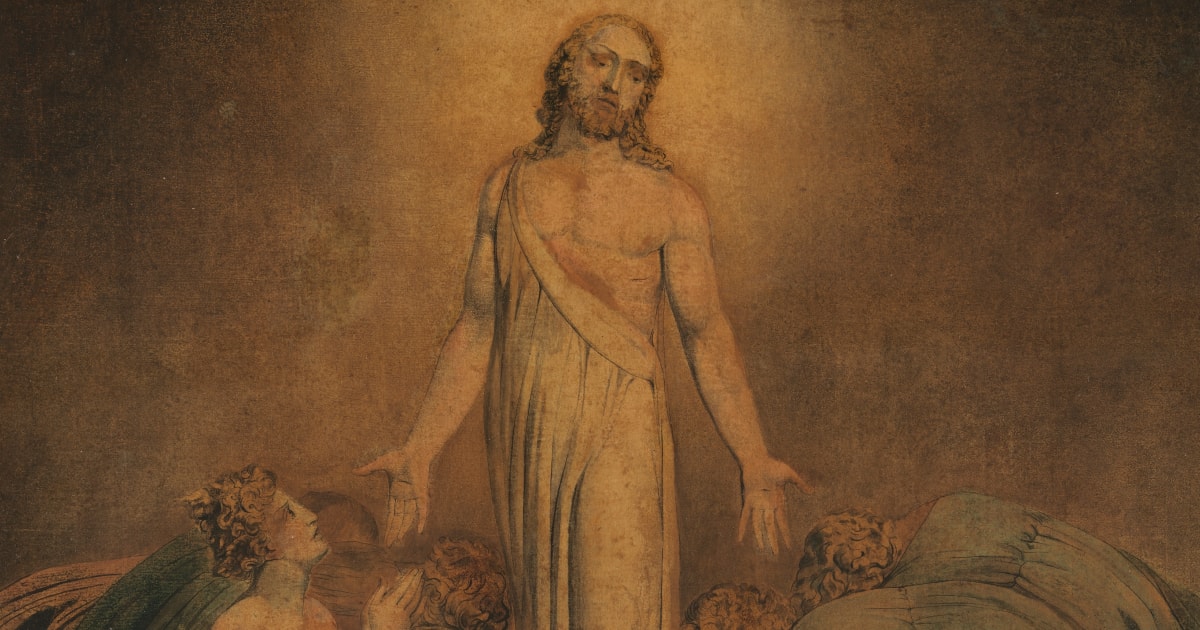
In the other accounts of his appearances, the same pattern is repeated: he suddenly appears in their midst, even eating with them to show that he is not a spirit but has truly risen from the dead in his body, only to disappear again. Finally, he will disappear for good at the Ascension, when the apostles are given the command not to keep staring at the sky, but to go out into the world with the Lord in a new way, after having received from Jesus himself the promise that his Spirit would give them the power to bear witness to him (cf. Acts 1:8–11).

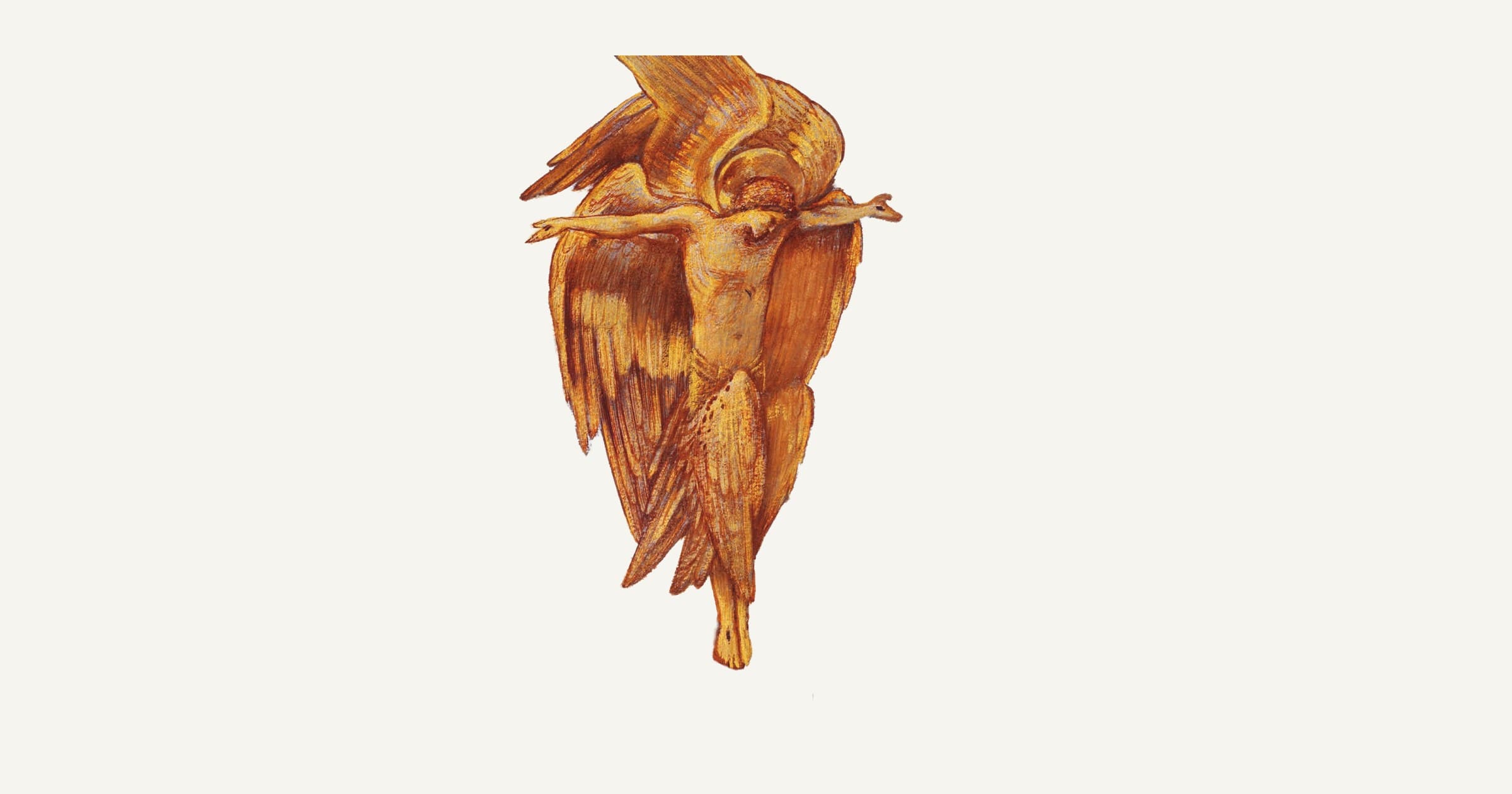
“The Word became flesh and made his dwelling among us” (Jn 1:14). What is expressed in the opening verses of John continues to resonate here. Jesus is glorified with the body he took on as a human being. He does not leave it behind in the tomb when he is taken up in glory to his Father. That says everything about the way in which our bodies, too, will one day be taken up into the glory of God. What God has created in his image and likeness, he does not allow to be lost. That is why we profess in the Creed that we believe in the resurrection of the body, yes, our earthly body with which we have fulfilled our mission as human beings here on earth. That John speaks so explicitly about the body from the very first page certainly has to do with the Gnostics, an early pseudo-Christian group who had developed a rather negative view of the physical. They saw the body exclusively as a gateway to evil, thereby creating a dichotomy between the spiritual and the physical, and believed only the soul would live on eternally. But even today, many believe that at death our soul will leave our body to live eternally, while our body will pass away forever and return to dust.

Through his Resurrection, Jesus shows us that we will rise as whole human beings and that God will not let the body he created be lost. Therefore, we can profess that our body is truly the temple of the Holy Spirit and thus deserves our absolute reverence.

This is a theme that is particularly relevant today, in light of the debates surrounding abortion, euthanasia and medically assisted suicide. Self-determination over the body seems to be taking the place of the body’s absolute worthiness of protection. It is through our body that we are human and can manifest ourselves as human beings. Therefore, it can never become an object over which we have free disposal, for then we deny our true self as human beings. We do not have a body; we are our body.

Here we can also refer to the Eucharist. Before his departure, Jesus shared bread and wine with his apostles and spoke the words: “This is my Body; this is my blood.” He clearly spoke here of his body and blood that he wished to share with us, and he did not say: “This is my Spirit.” At every Eucharist, we therefore participate in this full presence of the glorified Lord, not with his Spirit, but with the full reality of how he was present among us after the Resurrection. The sacraments are not merely words spoken to commemorate something, but through the tangible signs of bread, wine and water, they are expressions of Jesus’s desire to be present with us and within us through his glorified body. The sacraments are therefore places of encounter with the living Lord.

But Jesus also said that whatever we do for our fellow human beings, even for the least among them, we have done for him (cf. Mt 25:40). This too is a new reality: that Jesus makes himself present in every person, and that every encounter with a fellow human being thus becomes an encounter with God. It was Vincent de Paul who experienced this in a special way in his care for the poor, seeing in every person, in every poor person, an icon of Christ. It is from this reality that he was able to develop such great reverence and love for every poor person and unite prayer with charity, “to leave God for God”, as he put it. When, during our time of prayer, a poor person calls upon us, we must leave our prayer to help this poor person, or rather, according to Vincent, continue our prayer in helping this poor person, for Jesus, who is present in the tabernacle, is also present in this poor person. Therefore, we must and can leave God in order to truly encounter God in our fellow human beings.

For us, too, the grave here on earth will be a temporary dwelling place. Since time and place are earthly concepts and no longer matter in eternity, we may believe that after our death we will be taken up into this eternity and will also leave our grave, still bound to place and time, empty, so that with our glorified body we may be fully taken up into God’s love. It remains extremely difficult for us to imagine this, since our capacity for understanding has only place and time in which to situate itself and express itself. As long as we cling to our human concepts and take ourselves as the reference point, it will be difficult, indeed impossible, to grasp this. Here we must take a leap of faith and no longer take ourselves, but God, as the reference point for our framework of thought.

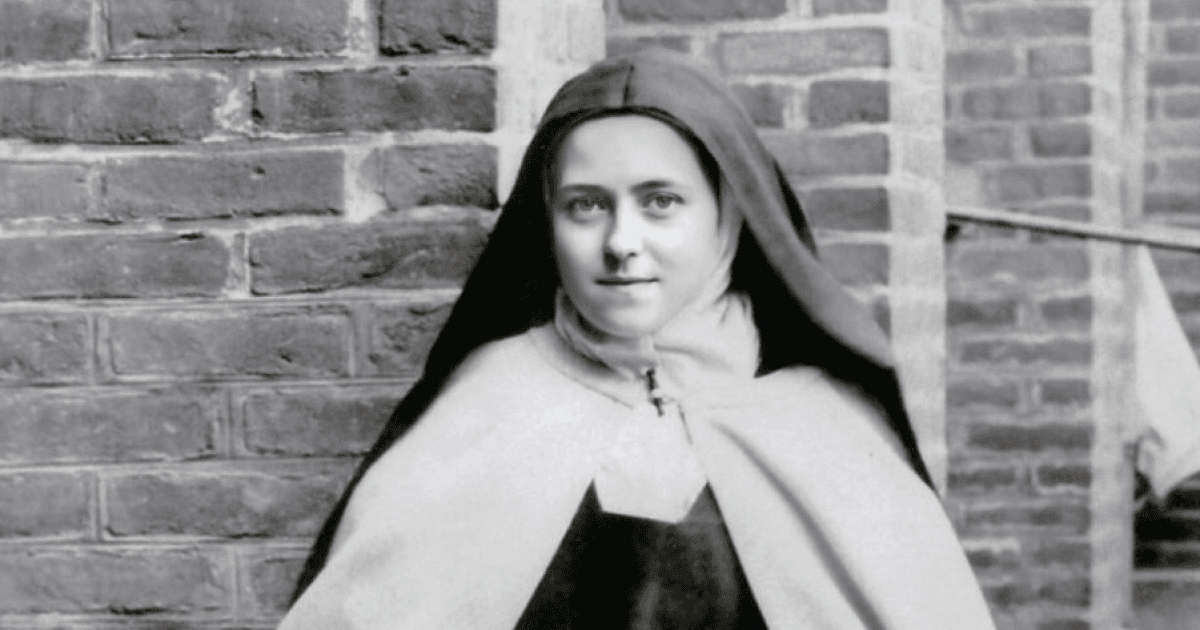
From our purely human perspective, we can only assume that, at best, we will live on after our death in the memories of our loved ones. The more prominent among us can take comfort in the fact that a portrait or statue of them will be left behind, or a biography will be written, so that they will have a place in history and belong to the small group of fortunate ones who will not be quickly forgotten. But most of us will slip away forever into the mists of time. Take a walk through a cemetery; often you will search in vain for the final resting place of acquaintances, because their headstone has already been removed and the spot taken by another. It all points to the transience of this life. Here on earth, our life is indeed confined between our birth and our death. But our faith in the Resurrection tells us that our death is actually a new birth, the birth into eternal life. It is from this faith that St Thérèse of Lisieux said as she was dying: “I am entering into life.”

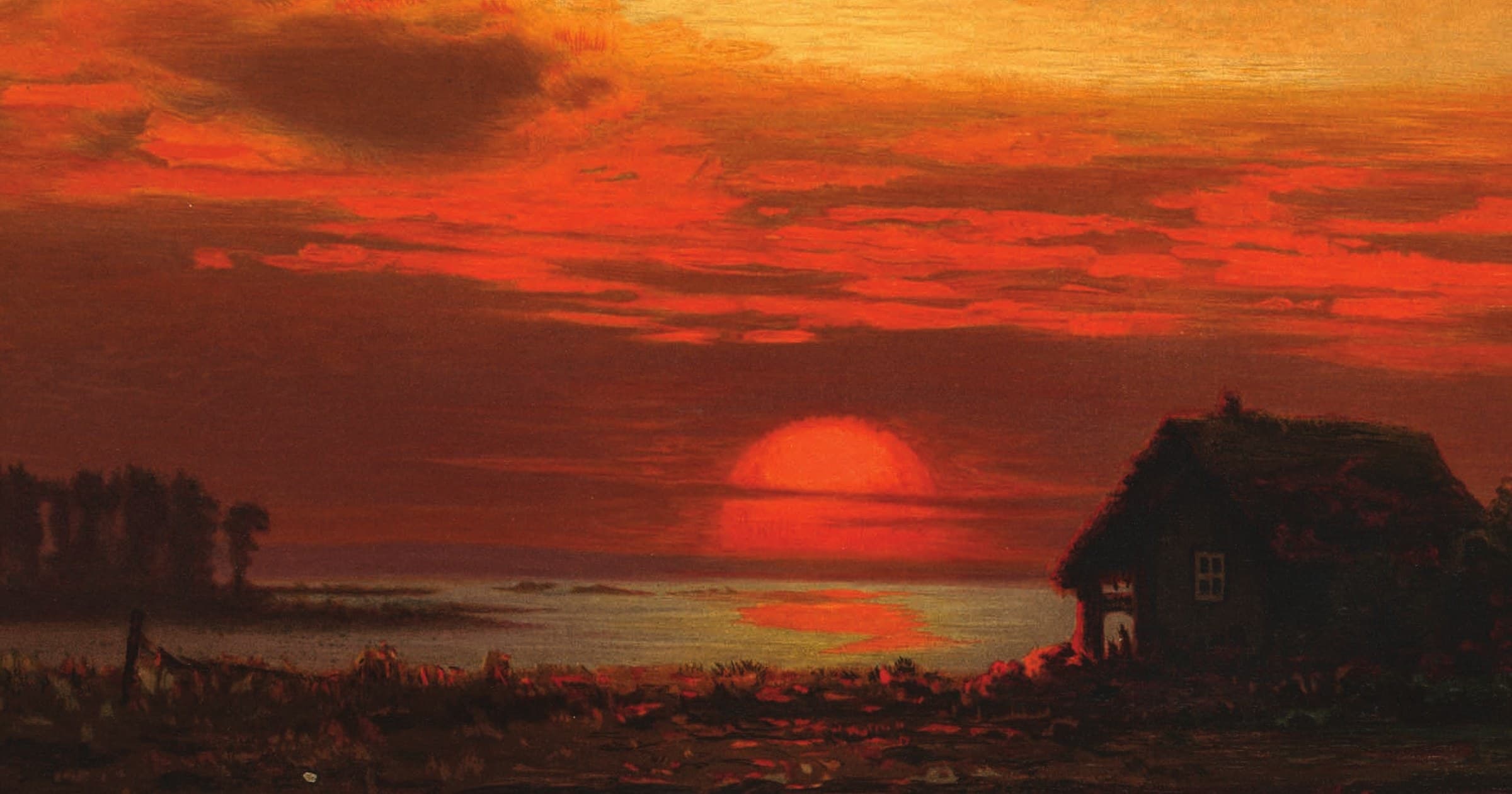
From our faith, we are invited to prepare ourselves for this new birth, so that we may face our death without fear. Our journey through this life will unfold differently if we know our final destination and also look forward to it. Faith in eternal life and in the Resurrection must shape our lives, and everything that happens along our life’s journey must be viewed and experienced from this perspective. When we truly believe in the Resurrection, there are no longer any hopeless situations, for behind every dark cloud in our existence the sun shines, and this sun will ultimately dispel even the darkest cloud.

The empty tomb must be a powerful sign to us that death will no longer have the final and ultimate say, but rather life, glorified life, a life in which we will be able to dwell forever in God’s love. We have been placed in the world out of God’s love to journey towards him. For each of us, it will be a unique journey, but all are invited to arrive at the same destination. It is there that God awaits each of us to welcome us into his infinite love, and this for eternity. Let us not lose our way to our destination, but let us continually open ourselves to the guiding hand of the Lord who walks with us. And if we should momentarily lose the right path, we can trust that he will set us back on the right path. We have nothing to fear.

Continue reading with a free account

Create a free account to read up to five articles each month
Create free account

You have # free articles remaining this month.

Subscribe to get unlimited access.
Sign up

subscribe to the catholic herald today

Our best content is exclusively available to our subscribers. Subscribe today and gain instant access to expert analysis, in-depth articles, and thought-provoking insights—anytime, anywhere. Don’t miss out on the conversations that matter most.
Subscribe