
May 25, 2026

Visions of Heaven

Dominic Perrem
More
Related
Min read
share

When I was a child, our family had a pet cat called Boswell, who was named after Samuel Johnson’s biographer, James Boswell. Our cat’s namesake was a brilliant writer who had a profound influence in the 18th century; he recounted amusing anecdotes from life around him and those he knew. His keen observations painted a wonderful picture of Dr Johnson, the celebrated intellectual.

Observing well, and telling the story of what is happening, can have a great influence on the world. Sherlock Holmes would be nothing without his Dr Watson, whom Arthur Conan Doyle uses as the narrator of the great detective’s cases. Historical observation is a genre for us daily, as the four Evangelists recount to us what they were blessed to witness. It is clear that without Alexander Solzhenitsyn, the Soviet Union would not have been embarrassed into its collapse as quickly as it was; merely observing what is true holds tremendous power.
To accept that where one is can be remarkable, and worth recording, takes humility, which is something we might struggle with. A great hero of mine, Fr Walter Ciszek, spent many years thinking God had given him some great mission to Russia after the outbreak of the Second World War, but had to learn that where he ended up – a Siberian labour camp – was where God truly wanted him. This is something that transformed his priestly ministry, and had him shovelling coal in Soviet pits with serenity, and even gusto. His records of this ministry are profound and interesting, as is the journey of his soul in getting there.

We might have tremendous plans for the future, full of a resonance with our longing and vocation. At times, it can be painful to accept that “this is it”. We might long for a change, or a life of more interest, or company, the passing of more kindness and the society we would enjoy. But perhaps life is already happening, and we are missing it, failing to see and observe the remarkable.

Recently, my dear five-year-old daughter asked God to help her understand Heaven. She closed her eyes, and, in the usual contented, luxurious way, told me that Heaven “is like a speck of dust that passes us by”. I think this was a vision of the mustard seed.

If you have ever watched a child at play, you will find that they are extremely busy exploring the world, and learning all about its materials, its little quirks and puzzles. They are aware of sounds, and scents (some of which they create), and lonely places. When they are able, and undistracted by hunger or tiredness, they will stay in those places for hours, absorbed in the detail and content. Then they return, keen to share what they have seen, and the horrid bugs they have captured.

Nothing, then, might be more fascinating, or have as much potential, than the present moment in which God has currently placed you (thankfully you are reading something good, at least). It could be that you and I are being carried away to some place we know not where. You, like me, might know many who are unhappy at work, or sad about their relationships in life, or the tragedies unfolding in the fallen world around them. But here we should be, being carried forward.

When Ratty is introducing Mole to the joy of the River in The Wind in the Willows, he sums up his life’s experience as “messing about in boats”:

“Whether you get away or whether you don’t; whether you arrive at your destination… or whether you never get anywhere at all, you’re always busy, and you never do anything in particular.”

Mole is happy to journey with Rat, and be carried along too, just as any good friend and observer would be who encounters something or someone special. Christ tells us that the Kingdom of Heaven is worth giving everything up for, after all.

Still, to trust that we do not know the destination, and cannot control it, is what might stop us from entering the boat. After all, the boat will lead us to martyrdom, and then to a place we have never been. How can we be prepared for it?

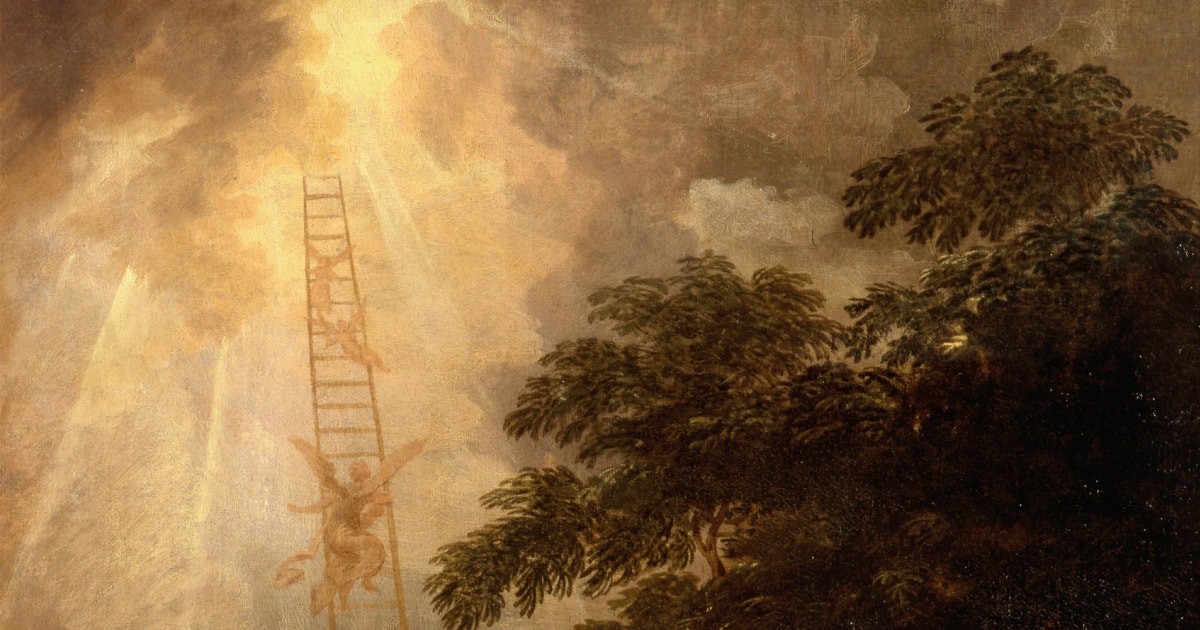
My children started to share with me, shyly, what they thought Heaven would be like. There was a great bridge, which passed under the throne of God, and led to an immeasurable city. There was a tremendous throne room in which the Blessed Mother chose, most of the time, not to sit on her throne, but placed others in it, such as little children. There was water, always, and greatness, and light.

The impressions of this place that come to us are that it is entirely huge, natural, impressively engineered or created, and calm and full of wonders. Perhaps, in your favourite church, which I hope you might see this summer, this rich combination of endless power, love and creativity, awesomeness and serenity can remind you of where you are headed.

But it seems our best preparation is to know that this, now, is where we are, and it is worth being here, wherever it is, and letting the river take us along. It would be good to take time to observe these great churches we love, and long to pray in. It is also right that each moment of observation of where we are might, in the end, bring about that vision of our longing, as we learn to know that where God has us is where we ought to be. It is then, I suppose, that we might not be afraid of where we will end up.

Continue reading with a free account

Create a free account to read up to five articles each month
Create free account

You have # free articles remaining this month.

Subscribe to get unlimited access.
Sign up

subscribe to the catholic herald today

Our best content is exclusively available to our subscribers. Subscribe today and gain instant access to expert analysis, in-depth articles, and thought-provoking insights—anytime, anywhere. Don’t miss out on the conversations that matter most.
Subscribe