

This month’s ‘Saint Who’ series features saints who took detours in life (see page 30). When the Son of God became the Son of Man, his life did not follow a straight or comfortable path. He was born in a stable, not a palace. His parents had to evade soldiers and traverse a desert to protect his life… Only God knows how best to save souls, and sometimes His actions look like mistakes to us.
The lives of the saints are full of these detours. Some chose selfish paths out of greed or sensuality but turned their lives around, to the astonishment of their families. Other saints kept their baptismal innocence but made startling decisions out of piety or humility. Each of this month’s saints reminds us that the narrow path that leads to heaven rarely runs in a straight line – at least to our eyes.
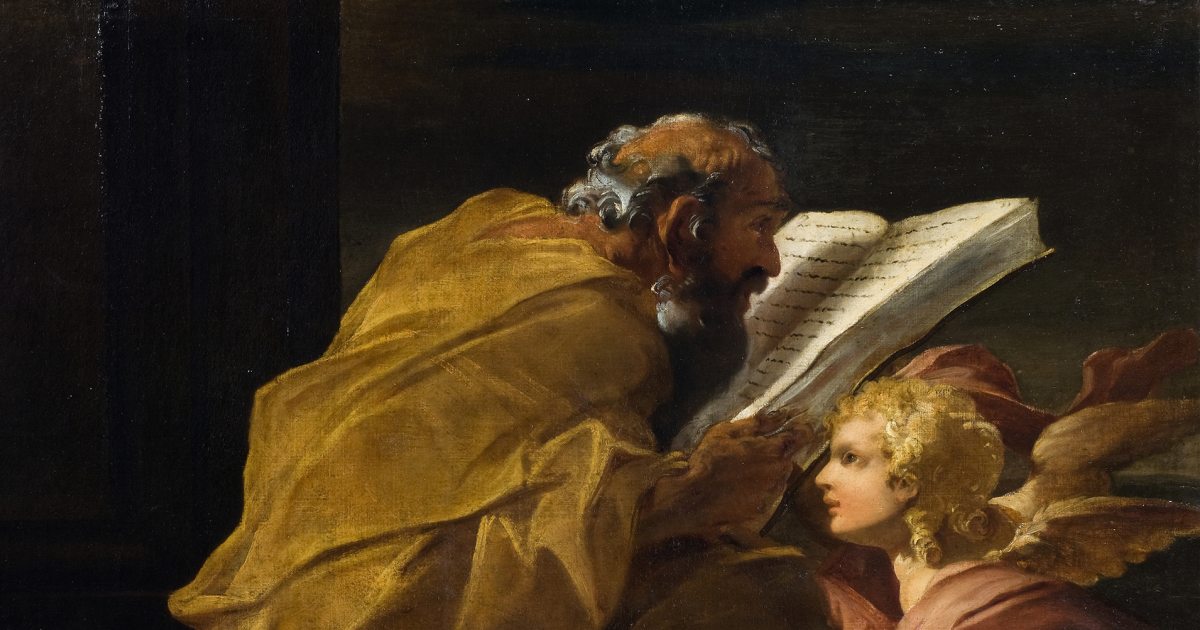
First up is St Matthew, the Apostle and evangelist, who, after colluding with the Roman occupiers by collecting taxes, was invited by Jesus simply to get up and follow him (page 55). After accepting Jesus’s invitation, Matthew invited his friends – public sinners just like himself – to eat dinner with his new teacher. Matthew was eventually named one of the Twelve and, after the Resurrection, wrote his own account of the life of Christ.
Tradition says that Matthew – or Levi, as the Gospels of Mark and Luke call him – preached the Good News to Jews for 15 years, travelled to the East and died a martyr in Persia, far from his tax booth and his former way of life.
Matthew is followed by other early saints, such as St Pachomius the Great, St Moses of Ethiopia, St Mary of Egypt and St Bavo of Ghent. Saints who come from unexpected places remind us how faith works in mysterious ways.
The story of St Peter trying to walk on water in Matthew 14:22–36 is a demonstration of this. Curiously, it appears – unless you use the alternative Gospel reading for Tuesday – no fewer than three times this week, beginning on Monday and culminating on Sunday. The Lectio Divina for Sunday (page 114) is well worth pondering even before Saturday evening.
Monday’s meditation is a telling one from St Charles de Foucauld on this Gospel:
How many times have I told myself, ‘I can’t do it,’ regarding something good, something You wanted… Forgive me, my God, for all this lack of faith! Give me perfect faith in the future; let me see clearly in everything. And if You want me to do it, and as soon as I am aware of it, as soon as I know that You have said to me:
‘Come,’ let me jump on to the water like my dear St Peter and walk on the water to the end, with the absolute faith that, by Your call of ‘Come,’ You have given me everything I need to go to You, to follow You, to accompany You, to do whatever You ask.
Tuesday brings us a great saint from the period just before de Foucauld: St John Vianney, the Curé of Ars. Famous for spending many hours a day in the confessional – no wonder he is the patron of priests – he encouraged souls to trust in the mercy and goodness of God. While we pray for our own priests to have this level of dedication to the care of souls, we can read St John Vianney’s meditation (page 64), which puts our own trials in perspective:
What caused the persecutions of the Apostles, who were continually imprisoned, tortured and maltreated, so that their life from the death of our Lord onwards was a continuous martyrdom? They all had to die in a most cruel and painful manner. And what had they done that they should suffer all that? They had sought only the honour of the Lord and the salvation of souls.
If you are reproached, derided, mocked or persecuted, though you have done nothing wrong, so much the better for you. If you have had to undergo no suffering in this world, how will it stand with you before the Lord on the day of Judgement? If you are persecuted, ridiculed and injured, though you have done nothing wrong, you are indeed on the right way to heaven.
What did the Saviour say? ‘Take up thy cross and follow me; they have persecuted me, they will persecute you; but be not discouraged, rather rejoice, for great is your reward in heaven. He who is not ready to suffer all things, even to lose his life for love of me, is not worthy of me.’
Friday’s meditation (page 98), from Dom Hubert van Zeller, extends the reflection on suffering and its crucial role in forging our faith:
“Deprived of material support, disconcerted by seeming unfairness, uncertain as to what to do next, the soul takes the long view and plunges into the ultimate promise held out by God. This is hope. As a matter of fact, it is all three theological virtues: faith, hope, charity. Suffering brings faith out of what could be infidelity, hope out of what could be despair, love out of what could be hate. The Cross is a signpost: it marks the parting of the ways.”
If we need an image of refreshment amid the undoubted suffering that this summer’s drought is bringing to many of us, we can remember the miraculous August snowfall in Rome in the 4th century. It led to the building of Santa Maria Maggiore and caused the glorious basilica also to become known as Santa Maria ad Nives, “Our Lady of the Snows”.
The Gospel reading for Tuesday, Matthew 15:21–28, recounts the faith of another woman: the Canaanite who persistently asked Jesus to cure her demoniac daughter and earned the words: “O woman, great is your faith! Be it done for you as you desire.”
This is followed by a telling meditation (page 74) from the late novice mistress at St Cecilia’s Abbey on the Isle of Wight, Sister Mary Totah OSB:
“It seems to me that when we allow ourselves to look ahead and become discouraged, it usually means we are focusing too much on ourselves. The true grace is to forget oneself, and living in the present moment helps us to do that and gives us the strength and courage to respond.”
Thursday’s Feast of the Transfiguration is a good moment to reflect on how our vision of Christ can help to transform us from this narrow, self-interested perspective. As the Mass introduction puts it, gazing at Jesus, we are told to “have no fear”. Instead, we “lift up our eyes” and see what is in store for God’s beloved sons and daughters by grace:
“Our goal is nothing less than being transfigured with Christ on the last day. We are strengthened for the way of the Cross that leads to the Resurrection. The radiance of Christ’s glory is more dazzling than even the sun” (Fr Andrew Hofer OP)
St Dominic, whose feast we celebrate on Saturday this week, is a clear example of this transfiguring charism. Tramping around the Languedoc during a crucial period in war-torn medieval Europe, he undertook to convert heretics through persuasion and loving patience, famously sitting up all night in conversation with an innkeeper.
Dominic’s sons and daughters still walk our streets today, applying their learning for the glory of God and attending to souls in need of companionship and guidance. It is fitting, therefore, to end this week’s digest of the treasures in Magnificat with a 13th-century Dominican blessing (page 109):
May God the Father bless us,
May God the Son heal us,
May the Holy Spirit enlighten us
and give us eyes to see with,
ears to hear with
and hands to do the work of God with,
feet to walk with
and a mouth to preach the word of salvation with,
and the angel of peace to watch over us
and lead us at last,
by our Lord’s gift, to the Kingdom. Amen.
Magnificat is a spiritual guide to help you develop your prayer life, grow in your spiritual life, find a way to a more profound love for Christ, and participate in the holy Mass with greater fervour. If you are in the UK, you can subscribe here.