
Pope Benedict XVI once said that the Holy Spirit was, in some ways, the neglected Person of the Most Blessed Trinity. His work is almost always invisible – moving the heart and conforming the sons of God to the image of the Son. Yet some of this neglect is not merely an accident of the Holy Spirit’s hidden activity. It is partly a failure of memory.
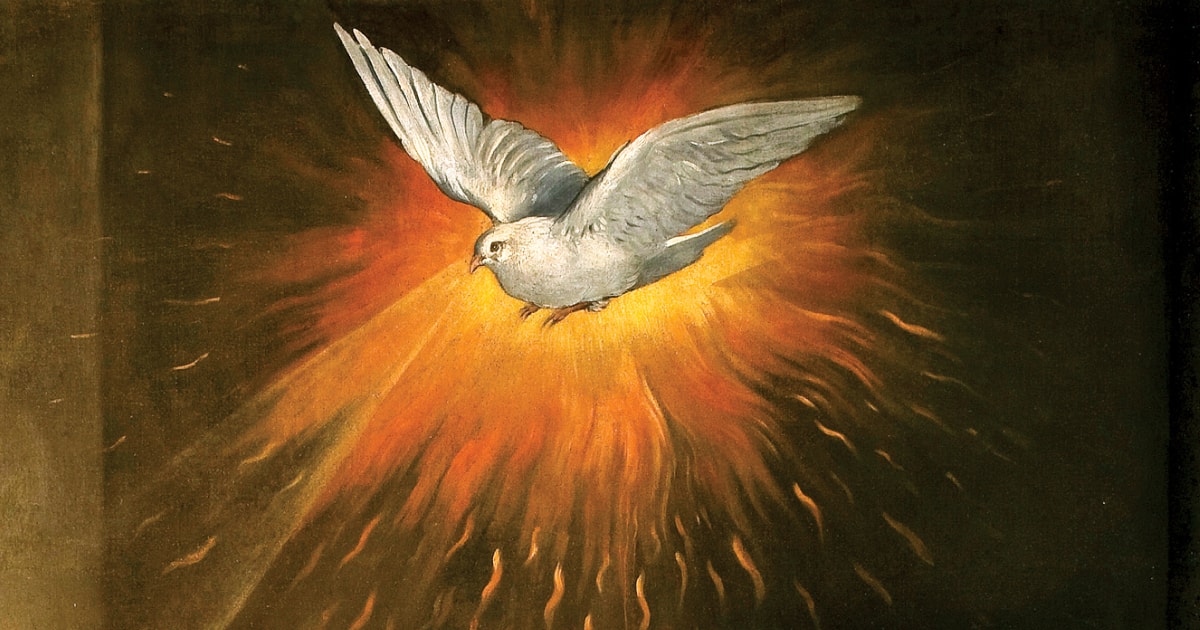
There was once a time when He was not so quiet: an occasion when His whisper became the roaring whirlwind, and, like the pillar in Exodus, His glory shone in flickering fire. Once, the Church remembered that day of wonder with lingering reverence – the day the hidden life of the Church burst forth before the nations. It is little wonder that the Holy Spirit should be neglected when so little attention is given to the great work of Pentecost. Pentecost was once crowned with an octave like the great feasts of the year – Christmas and Easter – but now it is all but forgotten.
Let us take a moment to appreciate what Pentecost really was. Here begins the Church’s public ministry on earth. Call to mind the dove that descended upon Jesus after the baptism of John – that anointing which drove Christ into the wilderness to do battle with the Devil. Pentecost is the moment the Apostles were driven into the world. This was the day when the fishermen of Galilee truly became fishers of men. The Church began something that day so tremendous that it filled the whole earth, and shook it so intensely that the gates of hell could not stand against it.
Imagine the rush of confusion that must have seized the crowd as each man beheld these unlearned tradesmen preaching. There is a kind of irony in confusion born from understanding, because each man understood what these Galileans proclaimed as clearly and intimately as though it were spoken in his own family dialect. What mankind had not known since the curse of Babel, those men knew on that Pentecost. Men once built a tower to reach the heavens and were scattered for their pride, but the Son of Man ascended into heaven and reunited men by His Holy Spirit. Pentecost is not merely the beginning of the Church’s ministry to the nations, but also the healing of the family of God.
A great deal of what may be said about the Holy Spirit is shrouded in mystery. He is the breath of love eternally shared by the Father and the Son. He is the descending dove, the unconsuming fire, the rushing wind. Even when we turn to the great saints, we encounter still deeper mysteries – such as St Maximilian Kolbe’s powerful yet elusive phrase, “the Uncreated Immaculate Conception”.
If Pentecost reveals one thing clearly, it is the Holy Ghost’s practicality. He knows who is waiting to hear the Word, and so He drives the Apostles into Jerusalem. It is almost amusing to observe that the Person of the Trinity, who is perhaps the most theologically obscure, is also the most practically active in daily life.
He descends quietly into ordinary things such as water, oil, bread, wine and human words to bring about new children of God. Wherever the Church offers the Sacraments to her children, there is the Holy Ghost at work. This is unsurprising in one way; for true Love always pours itself out in action.
Considering what Pentecost once meant to the Church, its quiet fading from the liturgical imagination is striking. There were once eight days set aside to remember this divine Person and to linger over His work at Pentecost. The octave of Pentecost was abolished in 1969 after having been celebrated for well over a thousand years. These were days devoted to reflecting upon the Holy Spirit and acknowledging His work through the Church.
Pentecost even possessed a Vigil similar to that of Easter, during which those who had not received Baptism at Easter could be brought into the Church, just as the three thousand were on that first Pentecost. In 1955 the great Vigil was curtailed, and in 1969 the octave itself was abolished. Only two octaves now remain in the Church’s calendar: Christmas and Easter.
For Catholics such as myself, who grew up knowing only the Ordinary Form, there is little now to distinguish Pentecost within the liturgical year. Barely anything remains to indicate that this was once one of the three great feasts that shaped the Church’s calendar.
As we approach this great feast once more, set aside time in the days that follow to reflect upon the Holy Ghost. Remember that the fire of His love has been poured into our hearts for the conversion of the nations. Sing the Veni Sancte Spiritus in your homes and light candles during the eight days after Pentecost. Encounter the Holy Spirit in the Holy Sacrifice of the Mass. Even if a beautiful tradition has been neglected for generations, we need not neglect it – nor Him who made that day matter. The fire that descended upon the Apostles still burns wherever Christ is preached, and His Sacraments are offered.
Veni Sancte Spiritus.