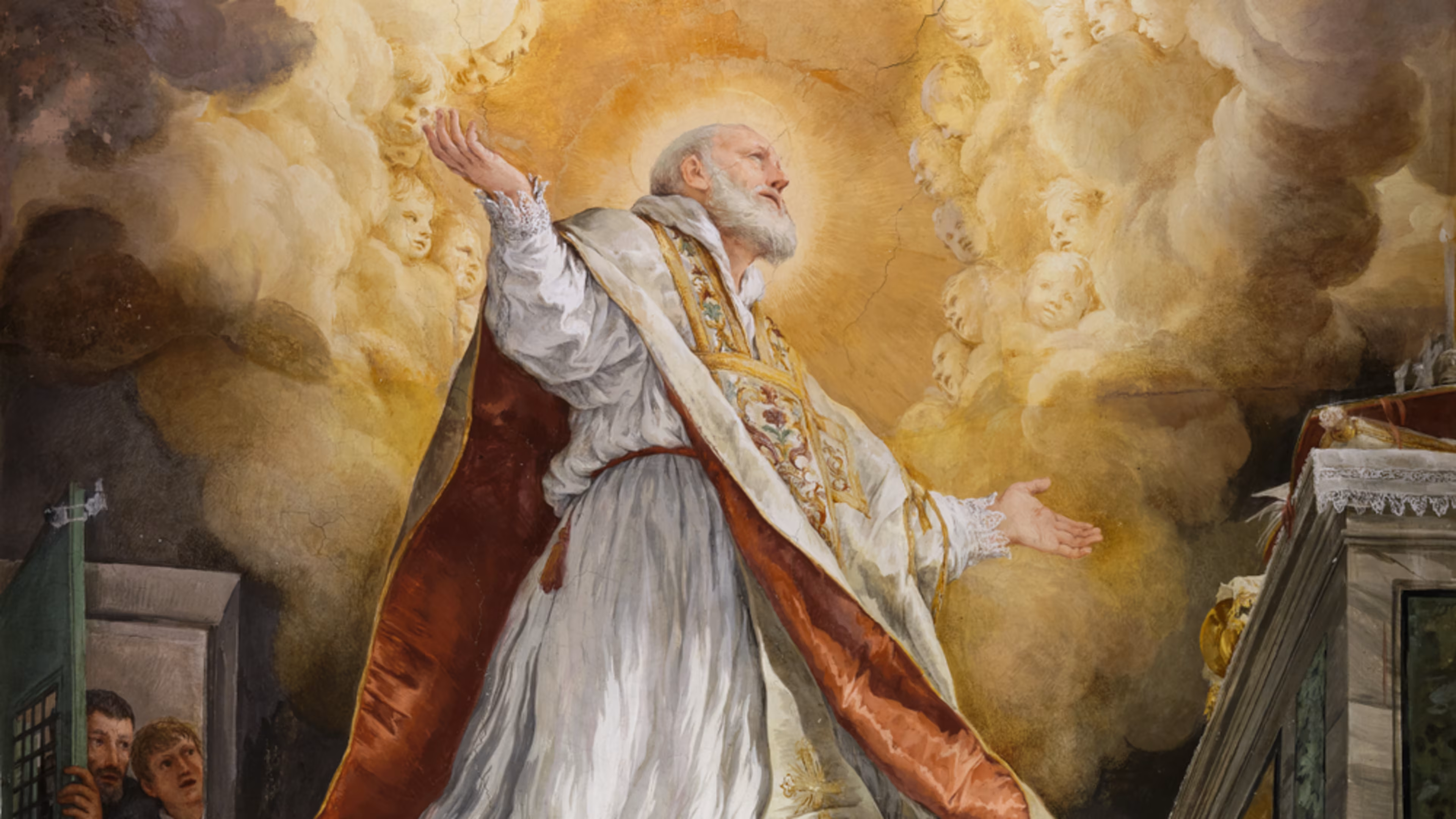



SAINT OF THE WEEK: 26 May - St Philip Neri
A vain young Roman once came to St Philip seeking spiritual direction. Listening to the man dwell upon his own importance, the saint prescribed an unusual penance: he was to walk through the streets of Rome for an entire week with a monkey tied up to his shoulder. St Philip understood vanity to be one of the gravest dangers to the spiritual life, and believed it could often be corrected more effectively by ridicule than rebuke. The 16th century produced many saints of reforming zeal, but few have remained so beloved for their joy as St Philip Neri.
Born in Florence in 1515 amidst the brilliance and instability of Renaissance Italy, St Philip’s home town combined commercial wealth, artistic brilliance, political violence and religious zeal in roughly equal measure. The city still lived under the long shadow of the Dominican friar Girolamo Savonarola, whose denunciations of corruption and luxury had briefly transformed Florence into an austere yet enthusiastic religious republic until his execution in the Piazza della Signoria.
As a young man Philip was sent south towards Naples to learn commerce under the supervision of an uncle, but trade interested him less than prayer. He abandoned a mercantile future and instead travelled to Rome, arriving in a city that combined outward magnificence with spiritual exhaustion. The Rome of the early 16th century was a place of swaggering noble families, ambitious prelates, pilgrims, dilapidation and vice. The sack of the city in 1527 had traumatised Rome and exposed the weakness and corruption of much ecclesiastical life. Reform was desperately needed.
Supporting himself at first through tutoring, Philip devoted long hours to prayer in Rome’s churches and catacombs whilst gradually attracting a circle of young men around him. He organised walks, pilgrimages, visits to the seven great basilicas of Rome, shared meals and evenings of music and conversation. Young Romans found themselves drawn to his programmes and sermons, but also to the character of Philip himself. He was plainly holy, but also funny, humane and entirely free of the self-importance that can sometimes attach itself to enthusiastic piety.
Eventually he gathered priests and laymen into what became known as the Congregation of the Oratory. Unlike monks or friars, the Oratorians took no formal vows and were not bound to a rigid rule. They lived together in community as secular priests devoted to prayer, preaching, music, confession, scholarship and friendship. Philip wanted religious life to feel recognisably human.
Beneath his joy and sense of humour lay an immense seriousness of purpose. Philip spent exhausting hours hearing confessions, caring for pilgrims at Santissima Trinità dei Pellegrini and looking after the poor and the sick of the city. Soon everyone in Rome seemed to know Philip: cardinals consulted him, a succession of popes respected him and ordinary Romans simply liked him. He was reputed to possess mystical gifts and extraordinary spiritual insight, though he consistently resisted honours and ecclesiastical advancement whenever possible.
The Oratory flourished after Philip’s death in 1595 and spread across Europe. Its houses became especially associated with preaching, learning, sacred music and liturgical beauty. Indeed, the very word “oratorio” for a form of sacred musical performance derives from the devotional exercises conducted in Philip’s Roman communities.
In England, the Oratory has exercised a generous influence upon Catholic life seemingly out of proportion to its numbers. It was St John Henry Newman who founded the Birmingham Oratory and first brought St Philip’s style of life to Britain. The London Oratory in Brompton became – and continues to thrive as – one of the great centres of English Catholic life, associated with magnificent liturgy, music and education. The London Oratory School educated generations of prominent Catholics, including the offspring of some members of the political class who could perhaps benefit from the penance of being made to carry a monkey around Westminster.
On the feast of Corpus Christi in 1595, St Philip heard confessions late into the night before retiring to bed. Having suffered years of poor health, he died in the early morning with a smile upon his face. More than four centuries later, Oratorians still continue his work in Rome, London, Birmingham and far beyond: preaching, teaching, hearing confessions, cultivating sacred music and reminding Christians that holiness and joy need not be strangers to one another. In this, at least, St Philip’s spirit appears very much alive.