
May 24, 2026

Why Catholics cannot share Communion with Anglicans

The Herald Chaplain
More
Related
Min read
share

‘Susan is a good friend and a member of the Church of England. We often talk about faith. I am surprised how much we share. One Sunday she invited me to St Luke’s. They were really friendly. The service was very similar to ours. I happily received Communion with Susan. The next week she joined me at Holy Family. Fr spoke to Susan at the altar and refused her Communion. She was really angry. I am confused and hurt. How can the Catholic Church reject Susan? She is a much better Christian than me.’

It is painful that Christians cannot share fully in the sacraments. This is not what Jesus intended. He founded one Church and prayed that we might all be one.

We must think about the principles at stake here. It is not a question of one person being a ‘better’ Christian than another. The priest is not making a subjective judgement about Susan. Before we approach the altar, we say: ‘Lord, I am not worthy.’ None of us ‘deserve’ to receive the sacraments. It is always a question of God’s gift.

Rather, this concerns the objective status of the different Churches and communities and their understanding of the sacraments. As you say, it is good to discover how much we share: our faith in Jesus, the same Baptism, Scripture, lives of prayer and charity. By virtue of your common Baptism, Susan and you are both Christians, but in ‘imperfect’ or ‘partial’ communion.

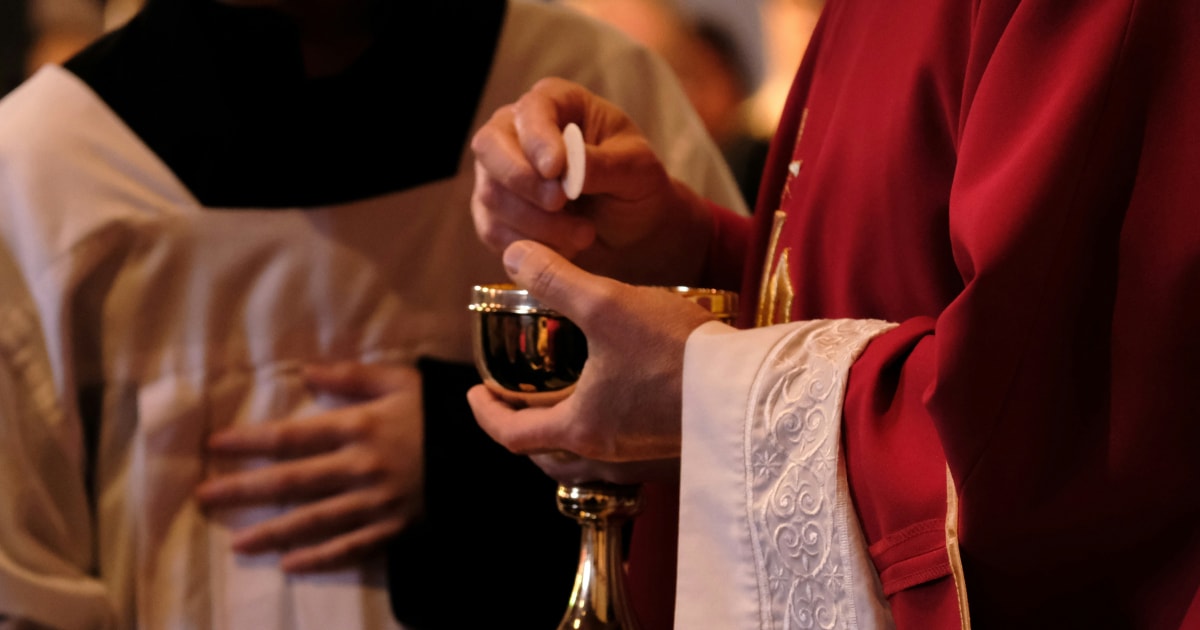
The Eucharist is the sacrament of unity and charity. On earth it signifies the highest degree of sharing in the life of God and, in consequence, with our fellow believers. Of course, you wish to be united with Susan at the altar. We must ask, however, whether we share fully the same beliefs, particularly concerning the Eucharist. We receive Holy Communion together only when that is the case. Sharing Holy Communion when we hold different beliefs would not be honest and would misrepresent the sacrament.

At an official level, sadly, there remain fundamental differences. The Church of England was founded partly as the explicit rejection of the Mass and the priesthood. Many Protestants still reject any notion of the Real Presence of Jesus. The Eucharist is for them simply a re-enactment of something which happened 2,000 years ago; at best a vague, spiritual presence. Most Anglicans reject the necessity for a male priesthood. Some think a priest unnecessary for the Eucharist. Catholics consider themselves bound by what Jesus gave us at the Last Supper, by the constant teaching of the Church. It matters profoundly whether Holy Communion is Jesus, or simply a piece of bread.

Matters are complicated by High Church Anglicans who may say that they share the Catholic understanding and practice regarding the Eucharist – although most Anglicans do not. We cannot be left speculating on the personal views of the individual minister when we approach the altar. Moreover, it requires a validly ordained priest to celebrate Mass. Those who left the Catholic Church at the Reformation broke from the apostolic succession, which guarantees the validity of priestly ministry. There must be full, official agreement on the nature of the priesthood before we can share the Eucharist.

Catholics require, and enjoy, the absolute certainty that it is Jesus whom they receive in Holy Communion at a Catholic Mass. This is why Catholics should not receive Communion in an Anglican Church.

Susan should be welcomed warmly when she attends a Catholic church. I hope that she feels able to do so again. We share in prayers and fellowship, but not Holy Communion. When we receive Holy Communion, we respond ‘Amen’, meaning ‘So be it’. This signifies our assent that this is truly Jesus present in the Eucharist, that we are fully united in belief and practice with everyone else receiving Holy Communion. It is not right to receive Holy Communion if we cannot give this affirmation with conviction. (Susan is welcome to come forward for a blessing, if she wishes.)

An example illustrates the position. A non-Catholic asked a Catholic bishop if she could receive Holy Communion at Mass. She was surprised and delighted when the bishop said yes. She was less pleased when the bishop continued: she could become a Catholic. She protested that she did not believe what the Catholic Church taught. That, the bishop explained, was why she was unable to receive Holy Communion.

God bless you for wanting to share your faith with Susan. You have discovered the real pain which exists when family members or friends cannot share the sacraments. This is the reason for the urgent task of proper ecumenism, working and praying for that unity of all Christians which we know is the will of Our Lord. I encourage both of you to engage in this work of ecumenism. Ask Susan and your priest if they would be willing to have a conversation so she can understand our position, rather than being left feeling hurt and rejected. For there to be genuine unity, differences must be acknowledged and resolved, not ignored. Above all, pray for that unity.

Continue reading with a free account

Create a free account to read up to five articles each month
Create free account

You have # free articles remaining this month.

Subscribe to get unlimited access.
Sign up

subscribe to the catholic herald today

Our best content is exclusively available to our subscribers. Subscribe today and gain instant access to expert analysis, in-depth articles, and thought-provoking insights—anytime, anywhere. Don’t miss out on the conversations that matter most.
Subscribe