
January 28, 2026
January 28, 2026

St Thomas Aquinas is the antidote to a very modern problem

Min read
share

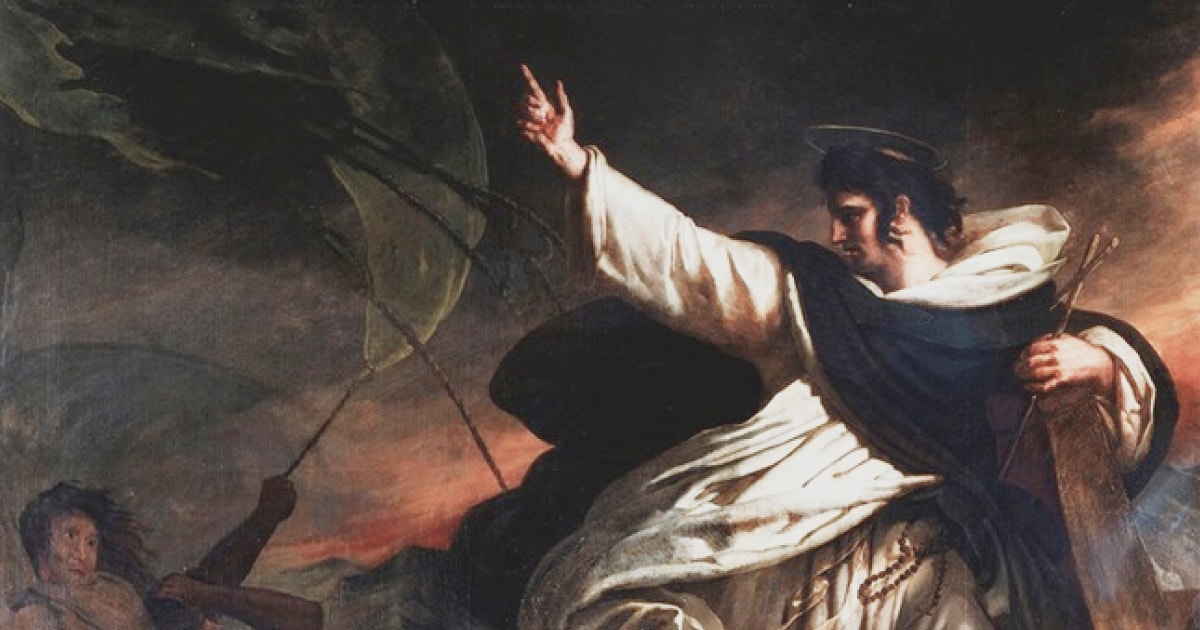
Each January, the liturgical calendar places before us the figure of St Thomas Aquinas. His feast arrives after the frenetic haze of the holidays and just before the country’s collective return to political theatre, tax season, and the yearly cycle of resolutions that fade with predictable speed. The timing therefore feels providential, since the Church invites us to consider a 13th-century Dominican at precisely the moment when our attention spans face their most perilous annual trials. The contrast reveals something valuable. Aquinas enters the stage just as many realise their minds have drifted towards the condition of a browser window with too many tabs open.

This late January feast therefore offers an invitation to a quiet revolution. The intellectual life embodied by Aquinas stands as a counterpoint to the digital age’s most familiar ailments. Contemporary culture has developed an attachment to distraction that few previous societies could have imagined. Every device offers a steady stream of stimuli designed to keep desire oscillating between anticipation and consumption. Silicon Valley calls this innovation, although it bears an uncomfortable resemblance to a refined method of keeping the mind perpetually agitated. Aquinas, who believed that the highest act of human reason lay in contemplation of the divine, might raise an eyebrow at an age that treats contemplation as an accidental byproduct of airplane mode.

Yet his feast day offers far more than a sentimental reminder of a saintly scholar. It creates an opportunity to recover an ordered vision of the human mind. Aquinas understood the intellect as oriented towards truth, and he believed that the human person flourishes when reason governs desire. Such an idea feels alien to a culture shaped by an entertainment economy that practises the opposite approach, regularly encouraging desire to govern reason. Each swipe, scroll, notification, and algorithmic prompt reinforces habits that weaken the capacity for sustained thought. As the technology commentator Nicholas Carr observed in The Shallows: “The Net seizes our attention only to scatter it. We focus intensively on the medium itself, on the flickering screen, but we’re distracted by everything that’s happening on it.” This dynamic creates a peculiar tension during a month when many Catholics embrace spiritual reading as part of their resolutions. The same phone that delivers the Summa Theologiae through an app will also interrupt the reader with alerts that pull the intellect towards trivial social media with unsettling efficiency.

The crisis of attention that afflicts modern people therefore points to a deeper crisis of interiority. Aquinas understood interiority as something shaped through rational discipline ordered towards contemplation. Contemplation required time, silence, and a willingness to approach reality with receptivity rather than agitation. The French Dominican priest A G Sertillanges taught with clarity: “You must create a zone of silence around you; you must have hours of solitude, of recollection… detach yourself from everything so as to attach yourself to God alone.” A society that avoids God and is conditioned by constant stimulation undergoes a subtle shift, as interiority becomes thin, restless, and reactive. Philosophers and psychologists have observed this pattern with growing concern, although the Church sensed the problem long before the first social media platform appeared. Aquinas therefore stands before us each January as a reminder that the mind has a vocation. His example reframes intellectual discipline as a form of sanctification rather than a niche hobby for bookish Catholics.

There is also the matter of desire, since the digital age has assigned it a tyrannical role. Many commentators describe a dopamine economy in which corporations shape behaviour through engineered reward cycles. The consequences include shrinking attention spans, difficulty with silence, and heightened restlessness reported across generations. Aquinas proposed a vision that moves in the opposite direction. Desire, in his account, seeks the good, and the highest good draws the mind towards contemplation of God. Disorder arises when desire clings to lesser goods in disordered ways. The intellectual life therefore offers a remedy for cultural restlessness, since the pursuit of truth guides desire towards its proper object. January’s celebration of Aquinas thus takes on a pastoral dimension, offering a path out of the labyrinth of distraction through the reorientation of the mind.

The feast also provides an opportune moment for Catholics to reclaim confidence in reason. Public discourse has grown suspicious of reasoned argument, often gravitating towards emotional reaction rather than careful reflection. Aquinas observed in the Summa Theologiae: “It is requisite for the perfection of human society that there should be men who devote themselves to the contemplative life… for the contemplation of truth it is better to have leisure for it” (II-II.188.6.res.). The absence of contemplation has created a cultural environment in which sustained argument feels exotic, and the very act of thinking carries an air of subversion. Aquinas stands as a patron for those weary of the noise. His integration of faith and reason challenges the contemporary assumption that religious conviction comes at the expense of intellectual seriousness. The Catholic who chooses to study Aquinas in late January therefore engages in a form of quiet resistance. Each page read becomes a refusal to surrender the mind to the flattening influence of digital culture.

January also offers a symbolic advantage. Civic life often treats this month as a time for audits and inventories. Households take stock of finances, while institutions plan for the year ahead. This atmosphere favours introspection. Aquinas invites Catholics to extend this audit to the interior life. How many minutes of each day are lost to unexamined digital absorption? How often does the mind reach for distraction in moments that could otherwise invite contemplation? How frequently does the interior life flatten under the weight of triviality? These questions echo Aquinas’s insistence that virtue is formed through habituation. His feast day therefore encourages a deliberate recalibration of intellectual habits in order to reclaim the soul from engineered distraction.

A quiet revolution thus begins each January when Catholics approach the feast of St Thomas Aquinas with seriousness. Few revolutions announce themselves with notifications. This one begins with the simple choice of contemplation over noise. Aquinas offers a strikingly contemporary invitation, calling the Catholic to rebuild the interior life through reason disciplined by love for truth. A society that treats distraction as a default setting requires such a guide. Late January therefore stands as an annual summons, as the Church invites us to recover our minds through the example of one who understood that the intellect reaches its true dignity only when ordered towards God.

Each January, the liturgical calendar places before us the figure of St Thomas Aquinas. His feast arrives after the frenetic haze of the holidays and just before the country’s collective return to political theatre, tax season, and the yearly cycle of resolutions that fade with predictable speed. The timing therefore feels providential, since the Church invites us to consider a 13th-century Dominican at precisely the moment when our attention spans face their most perilous annual trials. The contrast reveals something valuable. Aquinas enters the stage just as many realise their minds have drifted towards the condition of a browser window with too many tabs open.

This late January feast therefore offers an invitation to a quiet revolution. The intellectual life embodied by Aquinas stands as a counterpoint to the digital age’s most familiar ailments. Contemporary culture has developed an attachment to distraction that few previous societies could have imagined. Every device offers a steady stream of stimuli designed to keep desire oscillating between anticipation and consumption. Silicon Valley calls this innovation, although it bears an uncomfortable resemblance to a refined method of keeping the mind perpetually agitated. Aquinas, who believed that the highest act of human reason lay in contemplation of the divine, might raise an eyebrow at an age that treats contemplation as an accidental byproduct of airplane mode.

Yet his feast day offers far more than a sentimental reminder of a saintly scholar. It creates an opportunity to recover an ordered vision of the human mind. Aquinas understood the intellect as oriented towards truth, and he believed that the human person flourishes when reason governs desire. Such an idea feels alien to a culture shaped by an entertainment economy that practises the opposite approach, regularly encouraging desire to govern reason. Each swipe, scroll, notification, and algorithmic prompt reinforces habits that weaken the capacity for sustained thought. As the technology commentator Nicholas Carr observed in The Shallows: “The Net seizes our attention only to scatter it. We focus intensively on the medium itself, on the flickering screen, but we’re distracted by everything that’s happening on it.” This dynamic creates a peculiar tension during a month when many Catholics embrace spiritual reading as part of their resolutions. The same phone that delivers the Summa Theologiae through an app will also interrupt the reader with alerts that pull the intellect towards trivial social media with unsettling efficiency.

The crisis of attention that afflicts modern people therefore points to a deeper crisis of interiority. Aquinas understood interiority as something shaped through rational discipline ordered towards contemplation. Contemplation required time, silence, and a willingness to approach reality with receptivity rather than agitation. The French Dominican priest A G Sertillanges taught with clarity: “You must create a zone of silence around you; you must have hours of solitude, of recollection… detach yourself from everything so as to attach yourself to God alone.” A society that avoids God and is conditioned by constant stimulation undergoes a subtle shift, as interiority becomes thin, restless, and reactive. Philosophers and psychologists have observed this pattern with growing concern, although the Church sensed the problem long before the first social media platform appeared. Aquinas therefore stands before us each January as a reminder that the mind has a vocation. His example reframes intellectual discipline as a form of sanctification rather than a niche hobby for bookish Catholics.

There is also the matter of desire, since the digital age has assigned it a tyrannical role. Many commentators describe a dopamine economy in which corporations shape behaviour through engineered reward cycles. The consequences include shrinking attention spans, difficulty with silence, and heightened restlessness reported across generations. Aquinas proposed a vision that moves in the opposite direction. Desire, in his account, seeks the good, and the highest good draws the mind towards contemplation of God. Disorder arises when desire clings to lesser goods in disordered ways. The intellectual life therefore offers a remedy for cultural restlessness, since the pursuit of truth guides desire towards its proper object. January’s celebration of Aquinas thus takes on a pastoral dimension, offering a path out of the labyrinth of distraction through the reorientation of the mind.

The feast also provides an opportune moment for Catholics to reclaim confidence in reason. Public discourse has grown suspicious of reasoned argument, often gravitating towards emotional reaction rather than careful reflection. Aquinas observed in the Summa Theologiae: “It is requisite for the perfection of human society that there should be men who devote themselves to the contemplative life… for the contemplation of truth it is better to have leisure for it” (II-II.188.6.res.). The absence of contemplation has created a cultural environment in which sustained argument feels exotic, and the very act of thinking carries an air of subversion. Aquinas stands as a patron for those weary of the noise. His integration of faith and reason challenges the contemporary assumption that religious conviction comes at the expense of intellectual seriousness. The Catholic who chooses to study Aquinas in late January therefore engages in a form of quiet resistance. Each page read becomes a refusal to surrender the mind to the flattening influence of digital culture.

January also offers a symbolic advantage. Civic life often treats this month as a time for audits and inventories. Households take stock of finances, while institutions plan for the year ahead. This atmosphere favours introspection. Aquinas invites Catholics to extend this audit to the interior life. How many minutes of each day are lost to unexamined digital absorption? How often does the mind reach for distraction in moments that could otherwise invite contemplation? How frequently does the interior life flatten under the weight of triviality? These questions echo Aquinas’s insistence that virtue is formed through habituation. His feast day therefore encourages a deliberate recalibration of intellectual habits in order to reclaim the soul from engineered distraction.

A quiet revolution thus begins each January when Catholics approach the feast of St Thomas Aquinas with seriousness. Few revolutions announce themselves with notifications. This one begins with the simple choice of contemplation over noise. Aquinas offers a strikingly contemporary invitation, calling the Catholic to rebuild the interior life through reason disciplined by love for truth. A society that treats distraction as a default setting requires such a guide. Late January therefore stands as an annual summons, as the Church invites us to recover our minds through the example of one who understood that the intellect reaches its true dignity only when ordered towards God.

subscribe to
the catholic herald

Continue reading your article with a subscription.
Read 5 articles with our free plan.
Subscribe
share

subscribe to the catholic herald today

Our best content is exclusively available to our subscribers. Subscribe today and gain instant access to expert analysis, in-depth articles, and thought-provoking insights—anytime, anywhere. Don’t miss out on the conversations that matter most.
Subscribe