March 4, 2026

Agatha Christie and the reality of sin

Clement Harrold
More
Related
Min read
share

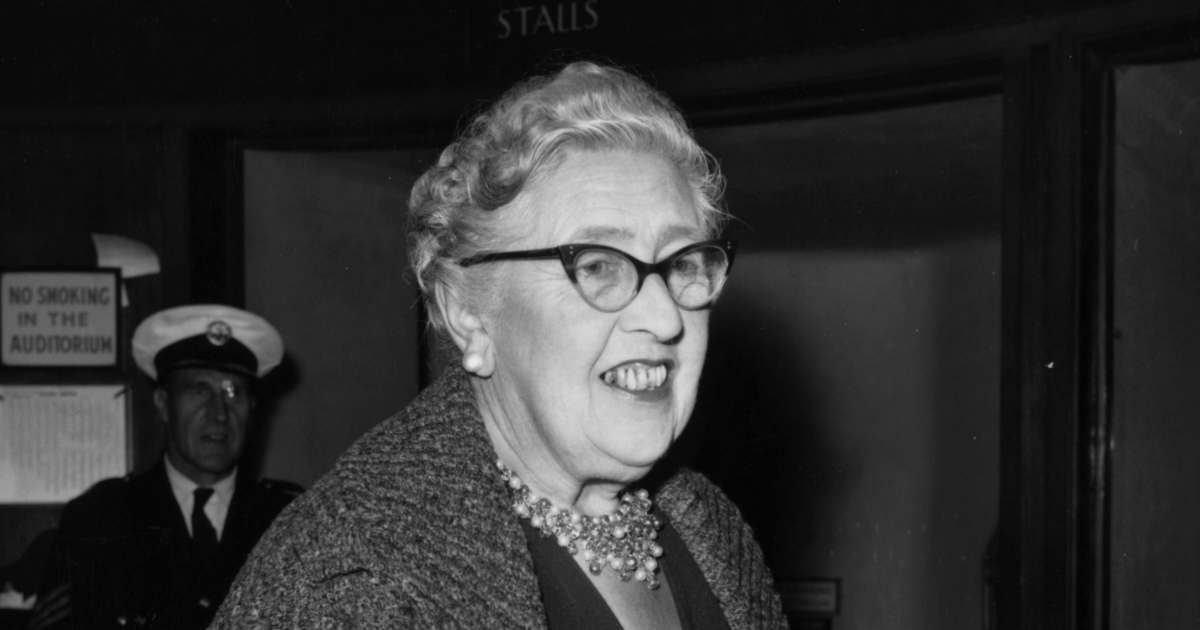
Discovering the works of Agatha Christie has been one of my literary highlights of the past year. The journey began with The Murder of Roger Ackroyd, a book which immediately cemented Christie’s genius in my mind. Here, as elsewhere, she writes with unadorned but compelling prose, and the plot functions like an intricately designed piece of clockwork. As the story reaches its conclusion, the audacious ingenuity of this Queen of Crime becomes readily apparent.

Nowadays it would not be too much of a stretch to say that my initiation into the world of Christie has left me convinced that there must be a special place in Purgatory for souls cruel enough to give away the ending of one of her books. (This happened to me with Murder on the Orient Express, to my great consternation.) Be that as it may, something I would highlight in Christie’s storytelling is the profound psychological insight her novels convey. Indeed, it takes only a passing acquaintance with her work to realise that she is an exceptional student of human nature.

Christie’s approach in this respect is clearly the fruit of her distinctively Christian outlook on the world. Although the breakdown of her first marriage led her to stop receiving Communion in the Church of England, Christie remained a devout believer all her life, and she is well known for having kept her mother’s copy of The Imitation of Christ at her bedside.

Near the heart of Christie’s biblically informed anthropology is the assumption that sin is a cancer to which none of us is wholly immune. This proves to be a central theme in what might be her most famous novel, And Then There Were None. When I started watching the BBC adaptation of this riveting work a few months back, sadly, I was left unimpressed. As my brother-in-law astutely observed, a central flaw in the BBC’s presentation is that the different characters in the story are all portrayed as moral monsters. From the perspective of the screenwriters, only someone who is obviously depraved could ever commit a crime like murder.

This is not Christie’s perspective. As stories like Five Little Pigs attest, a recurring theme in her work is that ordinary people are capable of grave evils. Here the words of 1 John 1:8 function as a kind of mantra undergirding many of her stories: ‘If we say we have no sin, we deceive ourselves, and the truth is not in us’. For Christie, it is not monsters but ordinary men and women who commit sins of gossip, envy, lying, stealing, adultery and, yes, murder as well. As such, the characters in And Then There Were None were never intended to be seen as cartoonish villains. They are intended to be a reflection of you and me, to the extent that we allow sin to gain a foothold in our hearts.

This point is powerfully conveyed by Hercule Poirot in The Murder of Roger Ackroyd. In a scene that gave me the chills on first reading, the Belgian detective invites his listeners to imagine ‘a man – a very ordinary man’. This man has no thought of murder, and yet there is a strain of weakness somewhere in his heart. If this man’s life plays out without difficulty, then the strain of weakness might never make itself known. But suppose the man does encounter difficulties. Or suppose he stumbles upon an opportunity to obtain a large amount of money through immoral means. Now what will this man do?

Here is where the weakness begins to assert itself. ‘The desire for money grows,’ Poirot tells us. ‘He must have more – and more!’ And so the cancer spreads. But then comes the day when the man is confronted over his wrongdoing. He faces public exposure. But now his soul is too far gone: ‘[H]e is not the same man he was – say, a year ago. His moral fibre is blunted. He is desperate. He is fighting a losing battle, and he is prepared to take any means that come to his hand, for exposure means ruin to him. And so – the dagger strikes!’

Through this scene and others like it, Christie provides her readers with a sobering reminder of the warning that Cain received at the dawn of salvation history. We all know the story: when Cain sees God’s preference for his brother’s offering, he becomes angry and bitter. In response, God cautions Cain to turn away from the path he is heading down before it is too late: ‘If you do well, will you not be accepted? And if you do not do well, sin is crouching at the door; its desire is for you, but you must master it’ (Gen 4:7). Cain could have mastered his sinful desires, but instead he gave in to them, and death is the result.

The tragic tale of Cain and Abel finds distinct echoes in one of Christie’s longest works, Death on the Nile. Early on in the narrative, a troubled female character contemplates carrying out a serious crime. In a haunting exchange, Poirot pleads with this woman to repent while she still can: ‘Do not open your heart to evil… Because – if you do – evil will come… Yes, very surely, evil will come… It will enter in and make its home within you, and after a little while it will no longer be possible to drive it out.’

Time and again, Agatha Christie’s storytelling drives home the fact that we all need saving from our strains of weakness. And yet her fiction does not leave the reader with the sense that salvation is impossible. While tragic elements fill her novels, Christie’s Christian vision of reality ensures that truth and some form of goodness always prevail in the end. As one character remarks to Hercule Poirot at the end of Death on the Nile, ‘But thank God, there is happiness in the world.’ To which the incisive detective responds, ‘As you say, Madame, thank God for it.’

Discovering the works of Agatha Christie has been one of my literary highlights of the past year. The journey began with The Murder of Roger Ackroyd, a book which immediately cemented Christie’s genius in my mind. Here, as elsewhere, she writes with unadorned but compelling prose, and the plot functions like an intricately designed piece of clockwork. As the story reaches its conclusion, the audacious ingenuity of this Queen of Crime becomes readily apparent.

Nowadays it would not be too much of a stretch to say that my initiation into the world of Christie has left me convinced that there must be a special place in Purgatory for souls cruel enough to give away the ending of one of her books. (This happened to me with Murder on the Orient Express, to my great consternation.) Be that as it may, something I would highlight in Christie’s storytelling is the profound psychological insight her novels convey. Indeed, it takes only a passing acquaintance with her work to realise that she is an exceptional student of human nature.

Christie’s approach in this respect is clearly the fruit of her distinctively Christian outlook on the world. Although the breakdown of her first marriage led her to stop receiving Communion in the Church of England, Christie remained a devout believer all her life, and she is well known for having kept her mother’s copy of The Imitation of Christ at her bedside.

Near the heart of Christie’s biblically informed anthropology is the assumption that sin is a cancer to which none of us is wholly immune. This proves to be a central theme in what might be her most famous novel, And Then There Were None. When I started watching the BBC adaptation of this riveting work a few months back, sadly, I was left unimpressed. As my brother-in-law astutely observed, a central flaw in the BBC’s presentation is that the different characters in the story are all portrayed as moral monsters. From the perspective of the screenwriters, only someone who is obviously depraved could ever commit a crime like murder.

This is not Christie’s perspective. As stories like Five Little Pigs attest, a recurring theme in her work is that ordinary people are capable of grave evils. Here the words of 1 John 1:8 function as a kind of mantra undergirding many of her stories: ‘If we say we have no sin, we deceive ourselves, and the truth is not in us’. For Christie, it is not monsters but ordinary men and women who commit sins of gossip, envy, lying, stealing, adultery and, yes, murder as well. As such, the characters in And Then There Were None were never intended to be seen as cartoonish villains. They are intended to be a reflection of you and me, to the extent that we allow sin to gain a foothold in our hearts.

This point is powerfully conveyed by Hercule Poirot in The Murder of Roger Ackroyd. In a scene that gave me the chills on first reading, the Belgian detective invites his listeners to imagine ‘a man – a very ordinary man’. This man has no thought of murder, and yet there is a strain of weakness somewhere in his heart. If this man’s life plays out without difficulty, then the strain of weakness might never make itself known. But suppose the man does encounter difficulties. Or suppose he stumbles upon an opportunity to obtain a large amount of money through immoral means. Now what will this man do?

Here is where the weakness begins to assert itself. ‘The desire for money grows,’ Poirot tells us. ‘He must have more – and more!’ And so the cancer spreads. But then comes the day when the man is confronted over his wrongdoing. He faces public exposure. But now his soul is too far gone: ‘[H]e is not the same man he was – say, a year ago. His moral fibre is blunted. He is desperate. He is fighting a losing battle, and he is prepared to take any means that come to his hand, for exposure means ruin to him. And so – the dagger strikes!’

Through this scene and others like it, Christie provides her readers with a sobering reminder of the warning that Cain received at the dawn of salvation history. We all know the story: when Cain sees God’s preference for his brother’s offering, he becomes angry and bitter. In response, God cautions Cain to turn away from the path he is heading down before it is too late: ‘If you do well, will you not be accepted? And if you do not do well, sin is crouching at the door; its desire is for you, but you must master it’ (Gen 4:7). Cain could have mastered his sinful desires, but instead he gave in to them, and death is the result.

The tragic tale of Cain and Abel finds distinct echoes in one of Christie’s longest works, Death on the Nile. Early on in the narrative, a troubled female character contemplates carrying out a serious crime. In a haunting exchange, Poirot pleads with this woman to repent while she still can: ‘Do not open your heart to evil… Because – if you do – evil will come… Yes, very surely, evil will come… It will enter in and make its home within you, and after a little while it will no longer be possible to drive it out.’

Time and again, Agatha Christie’s storytelling drives home the fact that we all need saving from our strains of weakness. And yet her fiction does not leave the reader with the sense that salvation is impossible. While tragic elements fill her novels, Christie’s Christian vision of reality ensures that truth and some form of goodness always prevail in the end. As one character remarks to Hercule Poirot at the end of Death on the Nile, ‘But thank God, there is happiness in the world.’ To which the incisive detective responds, ‘As you say, Madame, thank God for it.’
subscribe to
the catholic herald

Continue reading your article with a subscription.
Read 5 articles with our free plan.
Subscribe

subscribe to the catholic herald today

Our best content is exclusively available to our subscribers. Subscribe today and gain instant access to expert analysis, in-depth articles, and thought-provoking insights—anytime, anywhere. Don’t miss out on the conversations that matter most.
Subscribe