
June 1, 2026

The dangers of AI in a decadent society

Patrick Neve
More
Related
Min read
share

Most people in the West feel an uncanny sense that our society is in decay. In his 2020 book, The Decadent Society, Ross Douthat gives words to this malaise. He calls our society “decadent” – successful but stuck. Our institutions, politics, economy and even our entertainment are no longer seeking to go beyond themselves and improve.

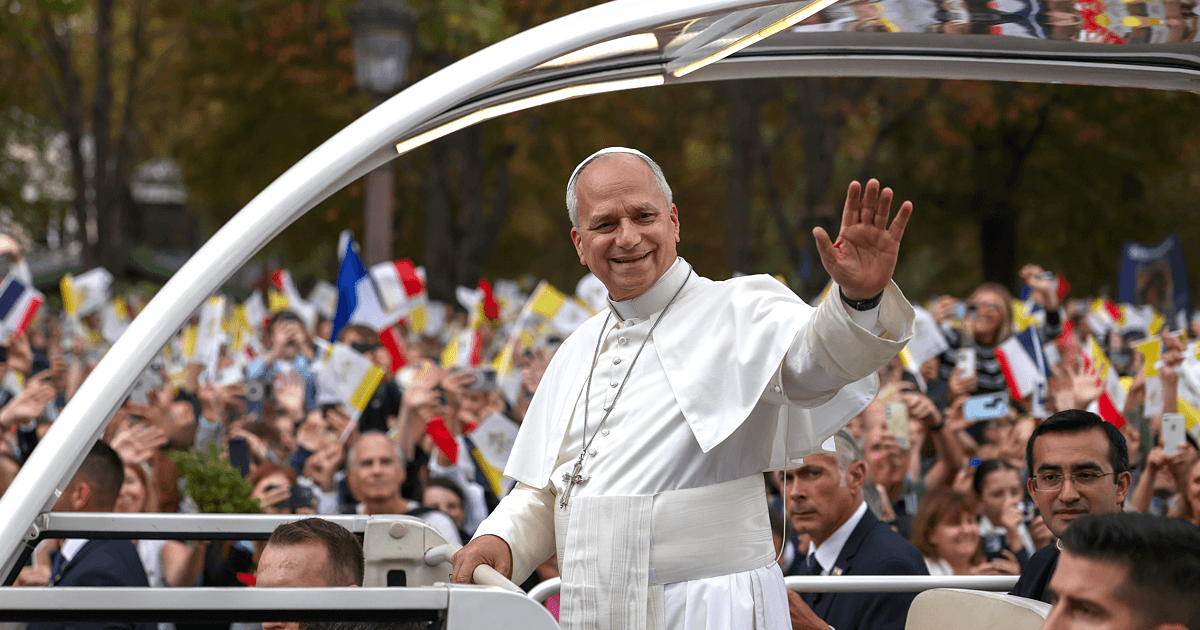
Pope Leo XIV’s recent encyclical Magnifica Humanitas warns that artificial intelligence – despite the optimistic prophecies of its architects – may be forcing us into a state of permanent decadence. If we heed his words, we might escape it.
Our society is stuck in a self-referential loop. Every year the Oscars insist movies are groundbreaking when they are telling the same stories and reinforcing the same cultural narratives. Our political discourse keeps appealing to the same handful of historical events – civil rights, the Civil War, slavery, World War II – as if nothing else has happened in a century. Our institutions, including universities and even churches, have stopped producing great minds at the volume they once did.

Douthat argues decadence does not necessarily mean the death of the West, but it is a disease. It keeps us from being able to reach new heights.

This is the world AI is being sold into. The pitch is that AI is the next stage in human development. The opposite is true. AI will not cure our decadence: it will perfect it.

Artificial intelligence is a system trained on the corpus of what humans have already produced, which then recombines that into output that might feel new but is not. It cannot, by design, generate anything from outside what it was trained on. It is our civilisation talking to itself in a mirror.

Pope Leo XIV’s recent encyclical Magnifica Humanitas names this almost exactly. He warns against what he calls “the Babel syndrome. The pretense that a single language, even a digital one, can translate everything, including the mystery of the person, into data and performance.”

AI presents itself as the universal translator, the single algorithm that can handle every question. But what it is actually doing is flattening the plurality of human thought into one self-referential loop.

Later, Leo says: “When intelligence becomes self-referential, its true purpose of serving life and the human person is lost.” The thing AI’s architects sell as its greatest strength – that it has absorbed the entirety of human knowledge – is also the precise mechanism that makes us more decadent. It can shuffle what already exists faster than any human. It keeps us stuck.

The AI debate usually gets framed around jobs, misinformation or bias. Some people are frustrated that their creative work was stolen to train AI models. Those are real concerns, but they miss a greater theft taking place.

AI robs you of your time – not clock time, but generative time. It takes time for an idea to gestate inside a human mind, to be tested against lived experience, to be argued out with other people and to be revised in light of that feedback, until it becomes something only you could have made. That kind of time is the precondition for every genuinely new thing humans have ever produced.

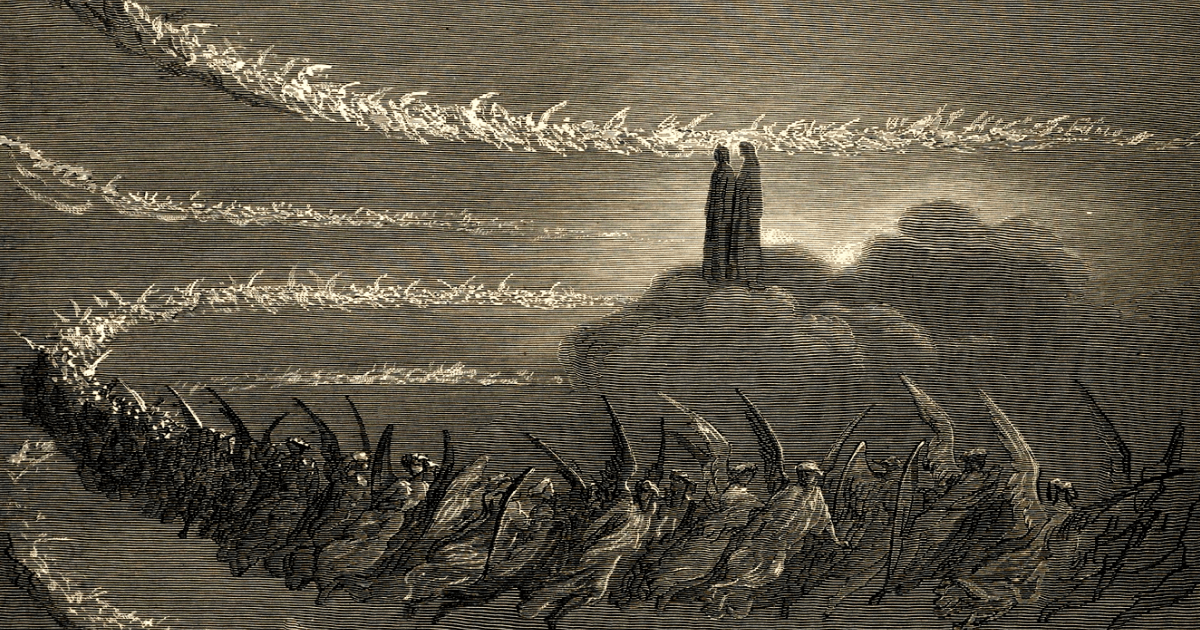
Imagine Dante typing: “Generate me a nine-part structure for hell.” Dante’s masterpiece could only have come from Dante. First, from his deep involvement in the real world – the politics of Florence, his love for Beatrice, his allies and enemies, and so on. Second, from time. His exile gave him years to sit with his experience, to let it deepen.

AI steals both of these conditions. It fills your silence with noise and it cuts you off from communion with other people, because you do not have to engage your ideas with another human being any more. You just have the feedback loop with the machine. The machine always agrees with you, or at least has an answer ready. The machine never makes you sit with a hard question long enough for it actually to change you.

Leo XIV puts it this way: “The speed and ease with which answers or summaries can be obtained risk extinguishing the desire to ask questions, which is a process that bears fruit only over time.” Then he warns about “the promise of the perfect machine, from that subtle temptation which renders human thought seemingly superfluous precisely when it is most needed”.

AI offers the illusion of speed and it often proves irresistible. Will future thinkers be able to resist? If they do not, we risk what Leo calls “‘having more’ without ‘being more’”.

So what do we actually do? Leo uses a phrase I keep coming back to: we need to disarm AI. We need to strip it of its power to control us, so that it serves us when we want it to and stays out of our way the rest of the time.

We have already failed this test once. Our phones control us. Most people reading this know it. We lost that fight before we knew it was happening. AI is going to do the same thing to our thinking that phones did to our attention, unless we are radically intentional right now.

Once your generative capacity is gone, it is almost impossible to get back. Your ability to read deeply, to sit with a hard problem and to create new solutions are muscles. If you outsource that work to machines, the muscles atrophy.

A decadent civilisation cannot produce a Dante because a decadent civilisation no longer believes there is anywhere outside itself worth looking. The way out is not a better AI model. The way out is the recovery of the conviction that human beings are made for something no machine can simulate, and the discipline to protect our time.

AI disarmament goes beyond personal willpower and responsibility, though it does include it. Boundaries must be enforced on these models both by their creators and by our leaders.

We must disarm AI and make it serve us lest it become our master.

Continue reading with a free account

Create a free account to read up to five articles each month
Create free account

You have # free articles remaining this month.

Subscribe to get unlimited access.
Sign up

subscribe to the catholic herald today

Our best content is exclusively available to our subscribers. Subscribe today and gain instant access to expert analysis, in-depth articles, and thought-provoking insights—anytime, anywhere. Don’t miss out on the conversations that matter most.
Subscribe